Microblading on Oily Skin: Does It Work, How Long It Lasts & Everything You Need to Know
Unlike a traditional tattoo, microblading works in the upper layers of the skin, which is why it fades over time and needs periodic touch-ups. It has become one of the most popular permanent makeup services over the past decade because the results look so natural when done well.
However, how well microblading holds up and how long it lasts depends heavily on one thing: your skin type. And if you have oily skin, that is an important conversation to have before you sit down in the chair.
Learn More- What is Microblading?
Understanding Your Skin Type and Why It Matters for Microblading
Before we talk specifically about microblading and oily skin, it helps to understand how different skin types respond to the procedure. Your skin is not just a canvas, it is an active, living surface that heals differently depending on its characteristics.
Normal Skin
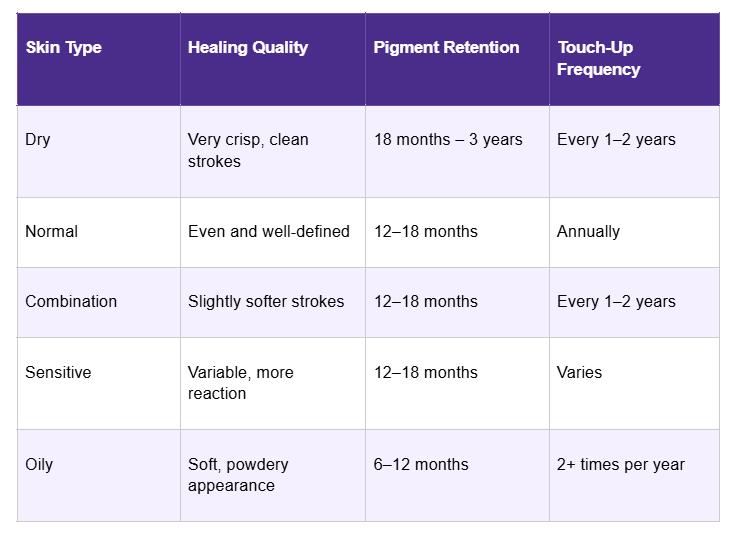
Normal skin has a balanced moisture level and moderate sebum production. The brow area heals evenly, pigment retention is strong, and strokes tend to stay crisp and well-defined. Results typically last between 12 and 18 months with annual touch-ups.
Dry Skin
Dry skin is the ideal candidate for microblading. Because there is very little oil to dilute or push out the pigment, strokes stay sharp and color holds beautifully. Results can last anywhere from 18 months to 3 years, with touch-ups needed only every one to two years.
Combination Skin
Combination skin is oily in the T-zone, which includes the forehead and brow area, but drier on the cheeks. Since the brow region tends to be the oilier part, results are similar to mildly oily skin. Strokes may heal slightly softer, and touch-ups are typically needed every 12 to 18 months.
Sensitive Skin
Sensitive skin is not technically a skin type on its own, but it affects how the skin heals after microblading. People with sensitive skin may experience more redness, swelling, or irritation during and after the procedure. It is important to let your artist know before your appointment so they can adjust their approach.
Oily Skin
Oily skin produces excess sebum throughout the day, and that excess oil directly affects how microblading pigment is absorbed and retained. Strokes tend to heal with a softer, more powdery look rather than the sharp, defined lines you see on dry skin. Pigment fades faster, and touch-ups are needed more frequently. We will go into full detail on this below.
How Does Oily Skin Affect Microblading? The Science Behind It
This is the section that most people with oily skin really need to read. Understanding the "why" behind the challenges will help you set realistic expectations and make a more informed decision about whether microblading is right for you- or whether a different technique might serve you better.
The Sebum Problem- Why Oil and Pigment Don't Mix Well
Your skin has sebaceous glands that produce oil (sebum) to keep the skin moisturized and protected. In oily skin, these glands are overactive — producing more oil than the skin actually needs. This excess oil sits on the surface and also works its way through the skin.
When a microblading artist deposits pigment into the skin, that pigment needs to settle and be held in place as the skin heals. But in oily skin, the constant flow of sebum essentially surrounds the pigment and gradually pushes it outward. Think of it like trying to write with ink on wet paper- the ink spreads, blurs, and eventually fades faster than it would on a dry surface.
On top of that, oily skin typically has a faster skin cell turnover rate. The skin replaces itself more quickly, which means the layers containing the pigment shed faster — taking the color with them.
Three Main Problems Oily Skin Creates for Microblading
- Faster Fading: Because sebum continuously works against pigment retention, the color fades much sooner than it would on normal or dry skin. Where a dry skin client might go 18 months or more before needing a touch-up, an oily skin client may start seeing significant fading at the 6-month mark.
- Stroke Spreading and Blurring: The crisp, hair-stroke look that makes microblading so appealing can be harder to maintain on oily skin. As the skin heals, oil can cause the pigment in each stroke to spread slightly into the surrounding tissue — making strokes look softer, thicker, or blurry rather than sharp and defined.
- Longer and More Complex Healing: Excess oil can interfere with the scabbing and healing process. It may cause more lymph fluid to weep from the area, which can pull pigment out as it dries. This makes the healing stage more demanding and requires more careful aftercare.
Mild Oily vs. Extremely Oily- Why the Difference Matters
Not all oily skin is the same, and this distinction is important when deciding whether microblading is right for you.
If your skin is mildly oily — meaning you notice some shine by midday but do not have noticeably large pores around the brow area — microblading can still deliver good results with the right artist and technique. You will need more frequent touch-ups than someone with dry skin, but the procedure is very much doable.
If your skin is extremely oily — you have visible, enlarged pores around your brows, your skin looks shiny within an hour or two of washing your face, and makeup breaks down quickly throughout the day — you may find that microblading strokes heal very soft or even indistinct, no matter how skilled your artist is. In those cases, an alternative technique like powder brows or nano brows will likely give you better, longer-lasting results.
Can You Get Microblading With Oily Skin? The Honest Answer
Yes — but with a clear understanding of what to expect.
Microblading on oily skin is not a "one size fits all" situation. Here is a straightforward breakdown of who it works well for and who might want to consider alternatives.
Microblading May Be a Good Fit If You Have Oily Skin When:
• Your oiliness is mild to moderate, not extreme
• You do not have noticeably enlarged pores in the brow area
• You are comfortable with touch-up appointments every 6 to 8 months
• You can commit to the aftercare routine, especially the extra blotting steps for oily skin
• You are working with an experienced permanent makeup artist who has specific experience with oily skin clients
You May Want to Consider an Alternative If:
• Your skin is extremely oily and shiny for most of the day
• You have large, visible pores around the brow region
• The cost of frequent touch-ups is a concern for your budget
• You have had microblading before and noticed the strokes healed very blurry or faded very quickly
• You are prone to scarring — repeated microblading sessions on oily skin can cause scar tissue buildup over time, which is something many guides do not mention but is an important consideration
The most important first step is having an honest consultation with your artist before committing to any treatment. At Symetrie Studio Spa in Lafayette, every brow service starts with a thorough skin assessment so you get the technique that is truly right for your skin type.
How Long Does Microblading Last on Oily Skin?
This is one of the most searched questions about microblading and oily skin, and the honest answer is: significantly less time than it does on dry or normal skin.
On oily skin, microblading results typically last between 6 and 12 months before noticeable fading requires a touch-up. Compare that to dry skin, where results can last 2 to 3 years, and you can see why skin type matters so much.
Factors That Can Make It Fade Even Faster
• Retinol or AHA/BHA skincare products — these accelerate cell turnover and speed up fading
• Sun exposure — UV rays break down pigment; always protect your brows with SPF after healing
• Heavy sweating or frequent workouts — sweat is oil-based and works against pigment retention
• Hormonal changes — PCOS, pregnancy, or thyroid issues can affect how skin behaves and how long pigment lasts
• Harsh cleansers — stripping the skin too aggressively can accelerate fading
Recommended Touch-Up Schedule for Oily Skin
- 4–6 Weeks After Initial Session: This is the mandatory first touch-up for all microblading clients, but it is especially critical for oily skin. This session fills in any gaps where pigment was pushed out during healing.
- 6–8 Months After: Oily skin clients will likely notice significant fading around this point and will benefit from a color refresh touch-up.
- Ongoing Maintenance: Plan for at least 2 touch-up appointments per year to keep your brows looking their best.
Book Into our Symetrie Studio Spa
Ready to take the next step? Book a consultation with a qualified permanent makeup artist.
Book Now
How to Tell If Your Skin Is Too Oily for Microblading
Not sure where your skin falls on the oily spectrum? Here are two simple ways to assess your skin type at home before your consultation.
The Blotting Paper Test
Wash your face with your regular cleanser, then wait one to two hours without applying any products. Take a clean blotting paper and press it gently against your forehead and brow area. Hold it there for a few seconds, then pull it away and hold it up to the light.
• Little to no oil on the paper: Your skin is likely dry or normal.
• A moderate amount of oil: Combination or mildly oily skin.
• The paper is very oily and nearly translucent: You likely have significantly oily skin, and microblading may not give you the results you are hoping for.
Other Signs Your Skin Leans Very Oily
• Your makeup breaks down or disappears within 2 to 3 hours
• Your skin looks shiny by midday even without moisturizer
• You have visible, enlarged pores around the brow area or forehead
• You frequently get congestion or blackheads near the brow region
Sharing these observations with your artist during a consultation helps them recommend the technique that will actually work for you.
Expert Techniques for Microblading on Oily Skin
The skill and experience of your artist make an enormous difference when it comes to microblading on oily skin. Here is what a knowledgeable artist does differently for oily skin clients.
Choosing the Right Pigment
Water-based pigments absorb better into oily skin and are less likely to migrate or spread. Glycerin-heavy pigments, on the other hand, do not hold up as well in a sebum-rich environment. An experienced artist will match the pigment formulation to your skin type — not use the same pigment for every client.
Adjusting the Stroke Technique
For oily skin, experienced artists space their strokes farther apart and keep the number of strokes lower than they would for dry skin. This is intentional. Because sebum causes strokes to spread slightly as they heal, placing them too close together causes them to merge — losing the defined, hair-like look entirely. Fewer, well-spaced strokes result in a cleaner final appearance.
Artists may also go slightly deeper with each stroke to ensure better pigment retention. However, going too deep causes excessive trauma to the skin — a good artist knows exactly where that balance is.
Planning for Multiple Sessions
With oily skin, a single microblading session rarely gives you the full, finished result. Most experienced artists plan for at least two sessions — the initial appointment and a mandatory touch-up 4 to 6 weeks later. Some oily skin clients may benefit from a third session to build up enough pigment for lasting results.
Each session layers pigment and refines the strokes, so the final result after touch-ups is significantly better than what you see right after the first appointment.
Questions to Ask Your Artist Before You Book
Before committing to a microblading appointment anywhere in Lafayette, make sure to ask your artist these specific questions:
• Do you have experience working with oily skin clients specifically?
• What type of pigment do you use for oily skin — is it water-based?
• How do you adjust your stroke technique for clients with excess sebum production?
• How many sessions should I plan for given my skin type?
• What aftercare do you recommend specifically for oily skin?
An artist who can answer these questions confidently not just with generalities — is someone who genuinely understands how skin type affects microblading outcomes.
Pre-Treatment Preparation for Oily Skin
Preparing your skin properly before a microblading appointment can improve how well the pigment takes and how smoothly the healing process goes. Here is what to do and what to avoid — in the weeks leading up to your appointment.
What to Do Before Your Appointment
• Stop using retinol, AHA, and BHA skincare products at least 2 weeks before your appointment — these accelerate cell turnover and can prevent the pigment from setting properly
• Avoid chemical peels, laser treatments, or facials in the 2 weeks before
• Skip Botox or dermal fillers in the brow area for at least 2 weeks prior
• Do not take blood thinners or drink alcohol 24 to 48 hours before your appointment
• Come to your appointment with a clean, makeup-free face — especially in the brow area
• Let your artist know upfront about your skin type so they can plan accordingly
What to Avoid Before Your Appointment
• Heavy oily moisturizers or face oils the night before
• Sunbathing or tanning beds — burned or sun-damaged skin does not heal as predictably
• Any new skincare products you have not used before — introduce nothing new to your routine in the week before
Microblading Aftercare for Oily Skin: A Day-by-Day Guide
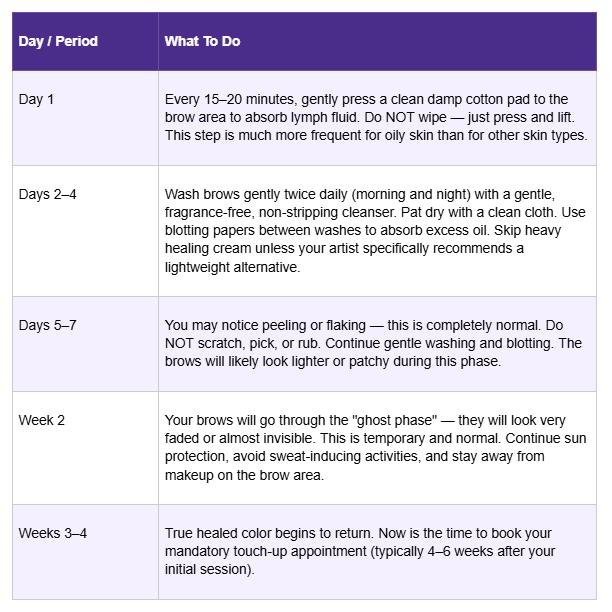
Aftercare is where oily skin clients need to pay extra attention. The steps for oily skin are more involved than standard aftercare guides describe — and skipping or rushing them is one of the main reasons oily skin clients end up with disappointing results.
How Oily Skin Aftercare Differs from Standard Aftercare
Most general microblading aftercare guides tell you to apply a thin layer of healing ointment or balm to your brows after washing them. For oily skin clients, this step is often skipped entirely or replaced with an ultra-lightweight alternative. Adding a heavy healing cream on top of already oily skin traps sebum and can actively pull pigment out of the strokes during healing.
The other key difference is blotting. Oily skin clients need to absorb excess oil from the brow area regularly during the healing period — something dry skin clients never have to think about.
Day-by-Day Aftercare Timeline for Oily Skin
Aftercare Products That Work for Oily Skin
• Gentle, fragrance-free cleanser (look for something formulated for sensitive skin — nothing with sulfates or harsh foaming agents)
• Blotting papers — your best friend during the healing period for keeping excess oil at bay
• Lightweight healing balm if your artist recommends one — choose gel-based over cream-based
• SPF 50 sunscreen on the brow area once fully healed — UV protection is essential for pigment longevity
What to Avoid During Healing (Especially with Oily Skin)
• Heavy workouts or activities that cause significant sweating — avoid for the first 10 days
• Swimming, hot tubs, or saunas — chlorine and salt water actively damage healing skin
• Direct sun exposure — UV rays are one of the fastest ways to fade new pigment
• Makeup on or near the brow area — wait at least 10 to 14 days
• Retinol, exfoliants, or acids — avoid for at least 4 weeks after microblading
• Touching, rubbing, or scratching the brow area — even when it itches
Alternatives to Microblading for Oily Skin: Which One Is Best?
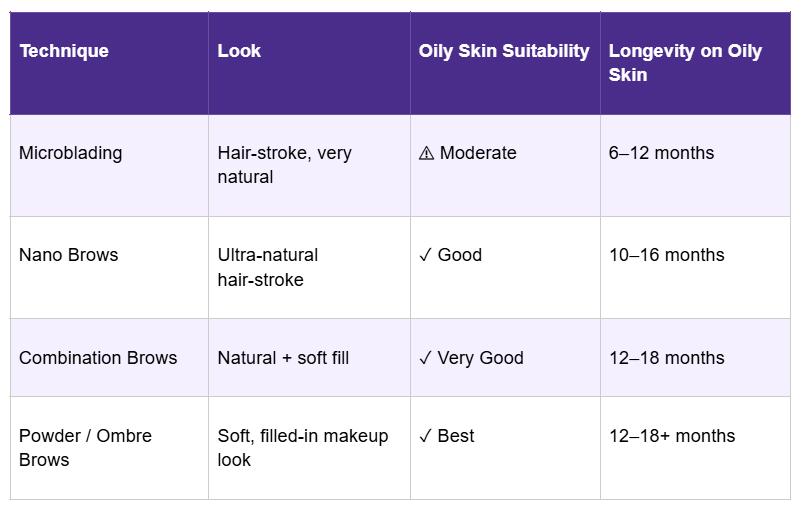
If you have very oily skin and microblading does not seem like the right fit, you are not out of options. There are several permanent makeup techniques that are actually better suited to oily skin than traditional microblading — and all of them are available at Symetrie Studio Spa in Lafayette.
Powder Brows / Ombre Brows
Powder brows (also called ombre brows) use a dotting or pixel technique rather than hair strokes. Instead of drawing individual lines, the artist builds up a soft, filled-in brow using thousands of tiny dots of pigment. The result looks like a softly filled-in brow — similar to the look of brow powder or pencil.
Because the pigment is distributed across a larger area using a stippling method, it holds up much better against sebum than hair strokes do. Oily skin clients typically see results lasting 12 to 18 months with powder brows — noticeably longer than microblading.
If you want defined, filled-in brows and have very oily skin, powder brows are likely your best option.
Nano Brows (Nanoblading)
Nano brows use a digital machine with an ultra-fine needle to create hair-stroke results similar to microblading — but with greater precision and better pigment placement. Because the needle is finer and the technique more controlled, pigment retention tends to be better on oily skin compared to traditional microblading.
For oily skin clients who love the natural, hair-stroke look of microblading but want something that holds up longer, nano brows are worth considering. Results on oily skin typically last 10 to 16 months.
Combination Brows (Microblading + Shading)
Combination brows blend microblading hair strokes at the front and edges of the brow with powder shading in the body of the brow. This gives you the natural look of hair strokes at the arch while the shading adds definition and structure — and because the shaded areas hold pigment better than strokes alone, the overall result lasts longer and holds up better on oily skin.
This technique is a great middle-ground option for people with moderate oily skin who want a natural but defined look. Results typically last 12 to 18 months on oily skin.
Frequently Asked Questions: Microblading on Oily Skin
Yes, microblading is safe for oily skin. The procedure itself does not carry additional health risks because of your skin type. The main considerations are around results — specifically that strokes fade faster and may heal softer than they would on dry or normal skin. Working with an experienced artist who understands oily skin is key to getting the best outcome.
On oily skin, microblading typically lasts between 6 and 12 months before significant fading requires a touch-up. This is considerably shorter than the 18 months to 3 years that dry skin clients experience. Factors like sun exposure, skincare products, sweating, and hormonal changes can cause it to fade even faster.
They may heal with a softer or less defined look than you see in photos of microblading on dry skin. This happens because sebum causes the pigment in each stroke to spread slightly into surrounding tissue as the skin heals. An experienced artist can minimize this by spacing strokes strategically and using the right pigment type — but some softening of the strokes is normal for oily skin.
Most oily skin clients need at least two sessions — the initial appointment and a mandatory touch-up 4 to 6 weeks later. Some clients benefit from a third session to build up enough pigment. After that, plan for refresh touch-ups every 6 to 8 months to keep your brows looking their best.
For very oily skin, powder brows or ombre brows are generally considered the best option. They hold up against excess sebum far better than microblading strokes do, last longer between touch-ups, and still deliver beautiful, natural-looking results. Combination brows (microblading + shading) are a great option for those who want a blend of hair strokes and definition. At Symetrie Studio Spa in Lafayette, we offer all of these techniques and can help you identify which is the right fit during your consultation.
Ready to Refresh Your Brows?
Whether you're due for your first follow-up session or it's been over a year and your brows are starting to fade, there's no better time to get them looking their best again.
Book Now