Eyebrow Tattoo vs Microblading: Key Differences
Recent Post
What Is Microblading?
Microblading is a semi-permanent cosmetic tattooing technique that creates incredibly natural-looking eyebrows. Instead of a machine, a trained artist uses a small handheld tool with a series of tiny needles arranged in a blade shape. This tool is used to make fine, hair-like strokes in the upper layers of the skin.
The result looks like real eyebrow hairs — not a block of color. This is why microblading has become one of the most requested permanent makeup services at studios like Symetrie Studio Spa in Lafayette.
Because the pigment is deposited into the superficial layers of the skin (not as deep as a tattoo), it naturally fades over time. Most clients need a touch-up every 12 to 18 months to keep the results looking fresh.
What you need to know: Microblading looks extremely natural, fades softly, and does not turn blue or gray the way traditional tattoo ink does.
Eyebrow Tattoo vs Microblading — Full Comparison at a Glance
Before we dive into each difference, here is a side-by-side comparison so you can see the big picture quickly:
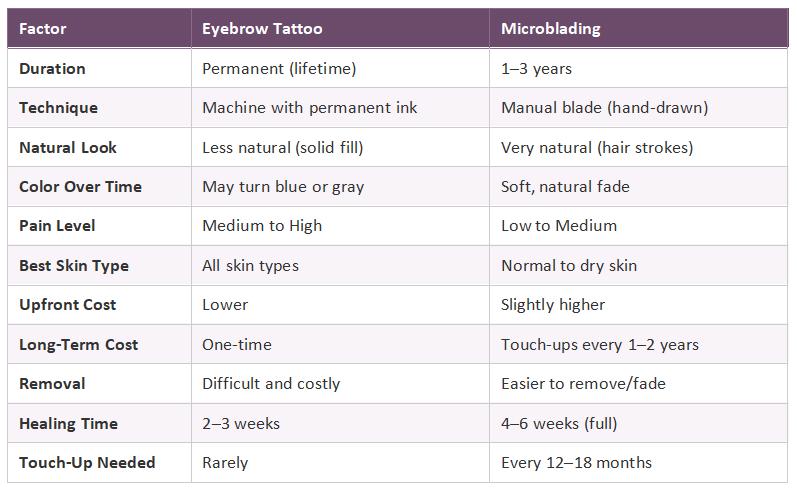
Now let us break down the three most important differences in detail.
3 Key Differences Between Eyebrow Tattoo and Microblading
1. Permanence: Microblading Fades Naturally — Tattoos Last Forever
This is the biggest difference. When you get an eyebrow tattoo, it is permanent. The ink is pushed deep into the dermis, where your body cannot break it down easily. Over the years, it will fade somewhat — but it will never fully disappear without laser removal.
Microblading, on the other hand, is semi-permanent. The pigment sits closer to the surface of the skin, so your body gradually breaks it down over time. Most clients see their microblading last between 1 and 3 years, depending on their skin type, lifestyle, and aftercare routine.
Why this matters: If you are not 100% sure you want the same eyebrow shape forever, microblading gives you flexibility. You can adjust your shape or style at your next touch-up as beauty trends change or your preferences evolve.
2. Color Over Time: Microblading Fades Softly — Tattoos Can Turn Blue or Gray
Here is something many people do not know before they get an eyebrow tattoo: the ink color can change significantly over time. Traditional tattoo ink was not formulated with facial skin in mind. Over the years, the pigment can oxidize and shift, often turning a blue-gray or greenish shade. This is a very common complaint from people who got eyebrow tattoos in the early 2000s.
Microblading uses specialized cosmetic pigments that are designed to fade gracefully. Instead of turning an odd color, the strokes simply become lighter and softer over time. The fading looks natural — almost like your brows just need a refresh.
Why this matters: If having natural-looking brows long-term is a priority for you, microblading is the safer, more predictable choice.
3. Technique: Microblading Is Hand-Drawn — Tattoos Use a Machine
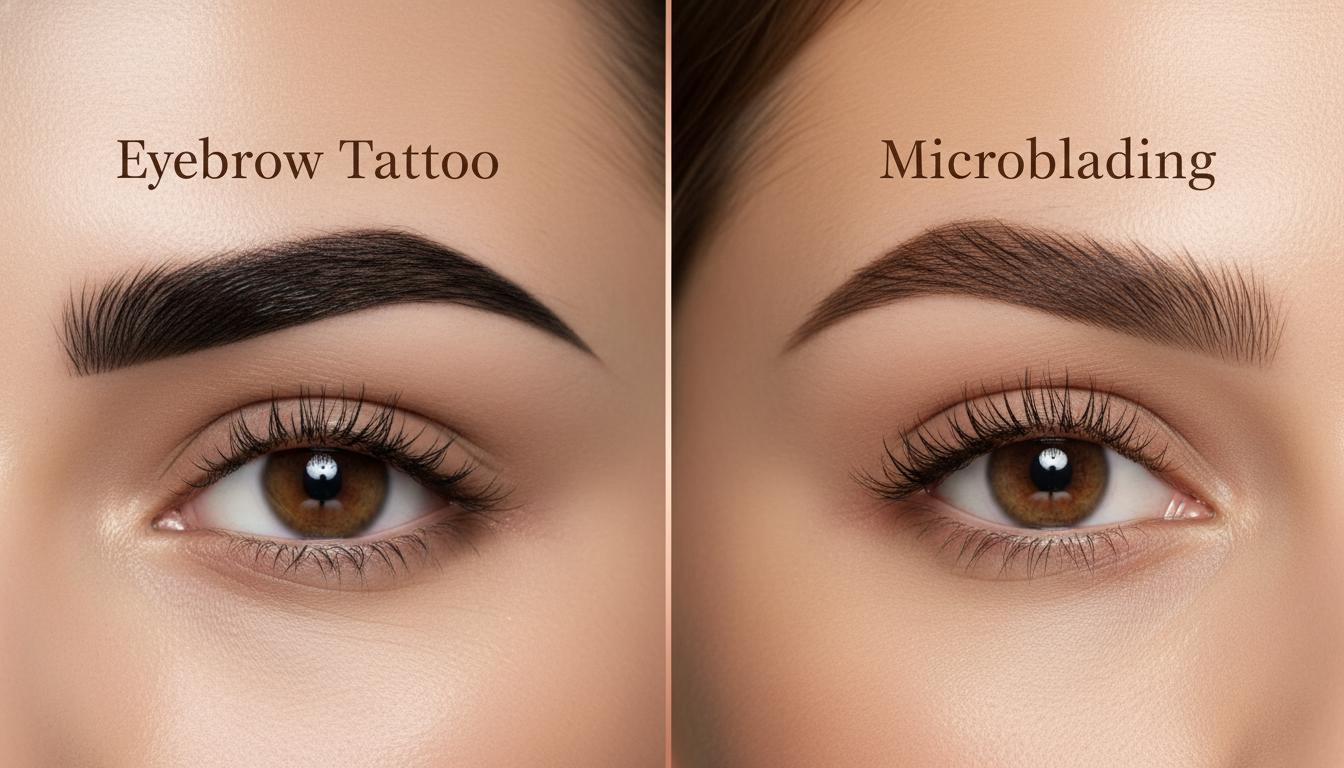
Eyebrow tattooing uses an electric machine — similar to a traditional tattoo gun — which pushes ink into the skin with vibrating needles. The result is typically a solid fill of color across the brow area.
Microblading uses a manual handheld tool to create precise, individual hair strokes. Each stroke is drawn by hand, mimicking the direction and pattern of your natural brow hairs. This is what gives microbladed brows that incredibly realistic, textured appearance.
Because of the hand-drawn technique, microblading requires a high level of skill and artistry. At Symetrie Studio Spa, our Lafayette microblading specialists take time to design a custom brow shape that fits your face before making a single stroke.
Why this matters: If you want brows that look like you were just born with them — not like you drew them on — microblading is the technique that delivers that result.
Pain and Healing: What to Expect
Eyebrow Tattoo Healing Process
Getting an eyebrow tattoo feels similar to getting any other tattoo — a buzzing, scratching sensation. Most clients rate the pain as medium to high, although numbing cream can help reduce discomfort.
After the procedure, expect redness, swelling, and some scabbing. The area typically heals in about 2 to 3 weeks. During this time, you should:
• Avoid getting the area wet for the first few days
• Do not pick at any scabs
• Stay out of direct sunlight
• Avoid heavy exercise that causes sweating
Microblading Healing Process
Microblading is generally less painful than a traditional tattoo. Most clients describe it as a light scratching sensation. Numbing cream is applied before the procedure to keep you comfortable.
The full healing process takes about 4 to 6 weeks, though the initial redness and tenderness fade within a few days. Here is what the healing stages typically look like:
• Days 1–3: Brows look bold and dark, slight redness and tenderness
• Days 4–7: Brows begin to peel and flake (do not pick!)
• Days 8–14: Brows look lighter as the outer skin heals — this is normal
• Weeks 3–6: Color settles and strokes become more defined
You will also need a touch-up appointment about 6 to 8 weeks after your initial microblading session. This is standard practice and allows your artist to perfect the shape and fill in any areas that faded unevenly during healing.
Cost Comparison: Eyebrow Tattoo vs Microblading
Cost is one of the most common questions we hear at Symetrie Studio Spa in Lafayette. Here is a realistic breakdown:
Eyebrow Tattoo: The upfront cost is typically lower than microblading, often ranging from $150 to $400 depending on your location and the artist's experience. Because it is permanent, you will not need regular touch-ups — but if you ever want to change or remove it, that process (laser removal) can cost significantly more.
Microblading: The initial session usually ranges from $400 to $900, which typically includes a follow-up touch-up appointment. After that, maintenance touch-ups every 12 to 18 months cost around $150 to $300 each time.
Long-term cost: Over 5 years, microblading touch-ups can add up. But many clients find the investment worth it because the results are more natural and they avoid the risk of an unfixable color change that can come with permanent tattoos.
For specific pricing at Symetrie Studio Spa, we recommend checking our permanent makeup services page or contacting us directly for a consultation.
Book Into our Symetrie Studio Spa
Ready to take the next step? Book a consultation with a qualified permanent makeup artist.
Book Now
For most people who want natural-looking brows, yes — microblading tends to produce more realistic, hair-like results. However, if you want something permanent and low-maintenance long-term, an eyebrow tattoo may be a better fit. The right answer depends on your personal goals, skin type, and lifestyle.
Microblading typically lasts 1 to 3 years before a touch-up is needed. Eyebrow tattoos are permanent — they will not fully disappear, though they do fade somewhat over many years.
Traditional eyebrow tattoos create a solid fill of color, which can look less natural than microblading's individual hair strokes. Newer techniques like powder brows (which use a machine but create a softer look) can appear more natural, but microblading still leads the field in creating realistic-looking brows.
Eyebrow tattoos tend to be more painful because the machine goes deeper into the skin. Microblading is generally described as less painful — most clients feel only a light scratching sensation, especially with numbing cream applied beforehand.
Yes, microblading can fade significantly over time — sometimes to the point of being barely visible. This is actually considered a benefit by many clients, as it means the procedure is not a lifetime commitment. However, fading speed varies based on skin type, sun exposure, and skincare habits.
Yes, eyebrow tattooing is safe when performed by a licensed, trained professional using sterile equipment. As with any procedure that breaks the skin, following aftercare instructions and choosing a reputable studio are key to minimizing risk.
Eyebrow tattoos are generally less expensive upfront, ranging from $150 to $400. Microblading typically costs between $400 and $900 for the initial session, plus $150 to $300 for maintenance touch-ups every 12 to 18 months. For current pricing at Symetrie Studio Spa in Lafayette, we recommend visiting our permanent makeup services page or scheduling a consultation.
Ready to Refresh Your Brows?
Whether you're due for your first follow-up session or it's been over a year and your brows are starting to fade, there's no better time to get them looking their best again.
Book Now