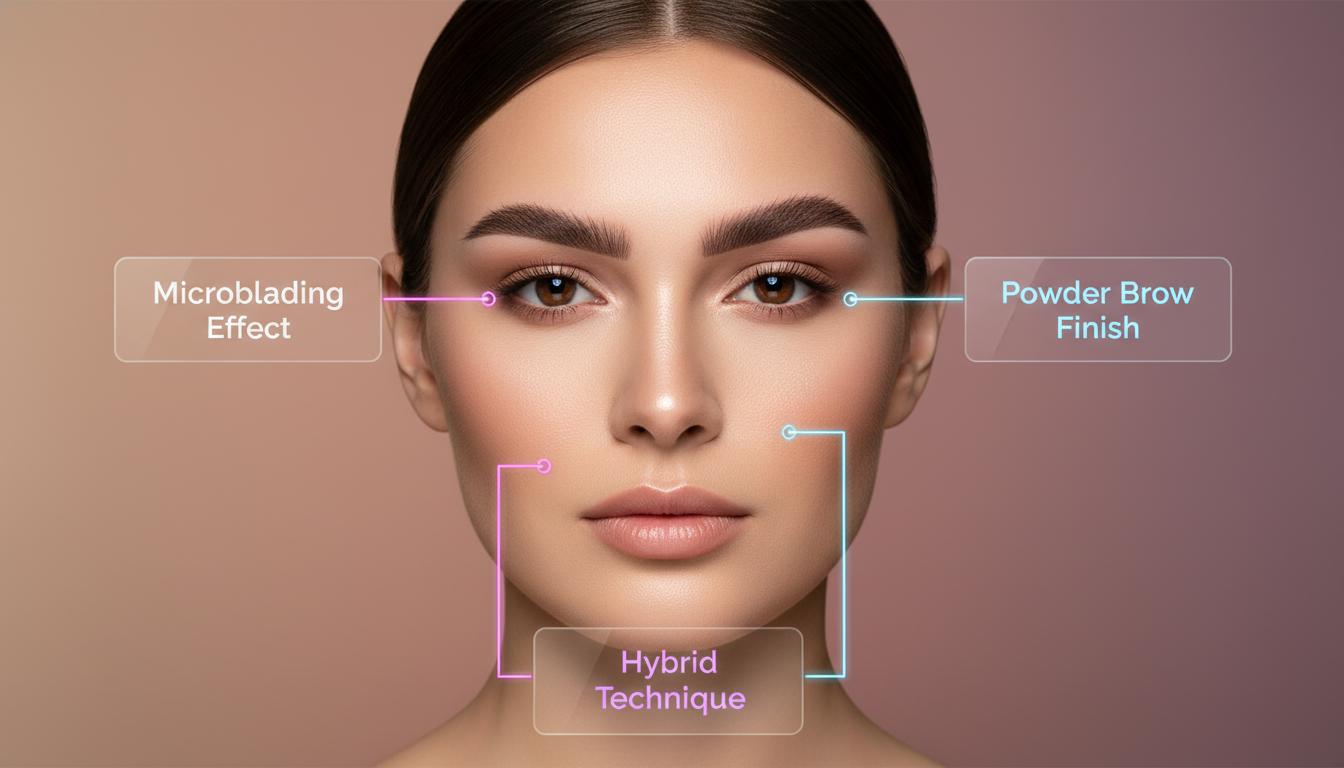
Combo brows are a semi-permanent eyebrow technique that combines microblading hair strokes with powder or ombre shading in a single treatment. The result is a fuller, more defined brow that looks natural up close and polished from a distance, typically lasting one to three years with proper care.
Key Takeaways
- Combo brows suit more skin types than microblading alone, including oily and mature skin, because the shading component holds better over time.
- Healing takes four to six weeks, and your brows will look darker and more intense immediately after the procedure before softening to their true color.
- A touch-up appointment at four to eight weeks is included in most pricing and is required to complete the look.
- Results typically last one to three years, depending on your skin type, sun exposure, and skincare routine.
- Choosing a licensed PMU artist with a portfolio of healed results is the single most important factor in getting brows you will love.
What Are Combo Brows?
If you have spent any time researching permanent eyebrow options, you have probably noticed that the choices are overwhelming. Microblading, powder brows, ombre, nano, combo. Each technique promises beautiful results, so how do you know which one is actually right for you?
Combo brows offer a middle ground that works for a wider range of clients than any single technique on its own. They bring together two methods in one session, giving you the realistic texture of hand-drawn hair strokes along the front of the brow and the depth and fullness of soft shading through the body and tail. The combination creates a brow that looks like well-groomed, filled-in natural hair rather than a solid block of color or an overly sparse, barely-there look.
This technique has grown significantly in popularity across the permanent makeup industry. According to the Society of Permanent Cosmetic Professionals, combo and combination brow techniques now represent one of the most requested PMU services in North America, largely because they address the limitations that come with using either microblading or shading alone.
How Do Combo Brows Combine Hair Strokes and Shading?
The artist uses two distinct tools and methods within the same appointment. First, a microblading or nano blade creates fine, hair-like incisions in the skin at the front of the brow, where the brow naturally starts. Pigment is deposited into those incisions, mimicking the look of individual hairs growing from the skin.
Then, using a digital PMU machine, the artist adds a soft powder or pixel shading effect through the middle and tail of the brow. The shading is lighter toward the bulb and gradually builds to a slightly deeper tone at the arch and tail, creating dimension and the appearance of density without looking drawn on.
The two methods blend where they meet, so there is no visible line separating them. When the brows are healed, the overall effect reads as a naturally full, groomed brow with realistic texture.
Are Combo Brows Semi-Permanent?
Yes. Combo brows are a form of semi-permanent makeup (PMU), also called cosmetic tattooing. Unlike traditional body tattoos, PMU artists use pigments specifically formulated to fade gradually over time. The pigment is deposited into the upper dermis rather than deep into the skin, which is why the color softens and eventually fades rather than turning blue-gray the way old tattoo ink can.
Most clients see their combo brows fade over one to three years, after which a color refresh or touch-up session can restore the look. The semi-permanent nature is actually a benefit: it gives you the flexibility to adjust shape or color as your preferences and face change over time.
Why Are Combo Brows Popular in Lafayette, LA?
Louisiana's climate plays a real role in why combo brows perform better than microblading alone for many locals. The heat and humidity in Lafayette can cause pure microbladed strokes to fade faster, blur, or lose crispness over time, particularly on skin that tends to run oily.
The shading component in combo brows holds more reliably in humid climates because the pixel shading technique places pigment in a broader pattern rather than relying solely on fine incisions. For clients in and around Lafayette and the broader Acadiana region, combo brows offer a more durable result that still looks natural season after season.
Combo Brows vs Other Brow Techniques
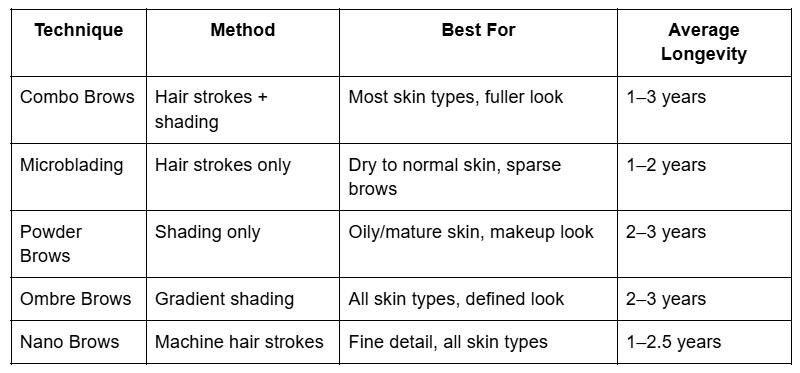
Understanding where combo brows sit among the other options helps you make a confident decision. Each technique has real strengths and real limitations, and the right choice depends on your skin type, lifestyle, and the look you want.
How Do Combo Brows Compare to Microblading?
Microblading uses a hand tool to create hair-stroke incisions across the entire brow. The result can look incredibly realistic on the right skin type, but it has one significant limitation: it works best on dry to normal skin. On oily skin, the strokes tend to blur and heal with less definition because excess sebum disrupts how the pigment settles.
Combo brows solve that problem. By adding shading through the body of the brow, the artist creates a result that holds better on a wider range of skin types. The hair strokes at the front still give you that natural, realistic texture, but the shading ensures you do not end up with brows that fade unevenly.
How Do Combo Brows Compare to Powder Brows?
Powder brows use shading only, with no hair strokes at all. The result resembles filled-in brows from a brow powder or pencil, with a soft, diffused finish. Many clients love this look, particularly those with oily skin or those who prefer a more made-up appearance.
The difference is that combo brows feel more dimensional and textured. The hair strokes at the front of the brow make the beginning of the brow blend naturally into the skin, which is especially helpful for clients who have very little natural brow hair. Pure powder brows can sometimes look like a solid shape sitting on the skin rather than brows growing from it.
How Do Combo Brows Compare to Ombre Brows?
Ombre brows are a shading-only technique, similar to powder brows, but they feature a gradient effect: lighter at the front, building to a deeper tone at the arch and tail. They work beautifully on all skin types and tend to hold well over time.
Combo brows add hair strokes to the front portion of that gradient. For clients who want some of the softness of ombre with added texture and realism, combo brows are often the stronger choice.
How Do Combo Brows Compare to Nano Brows?
Nano brows use a digital machine with a very fine single needle to draw individual hair strokes. The result can be even more precise than microblading because the machine allows for greater consistency in depth and stroke width. Nano brows also tend to hold better on oily skin than traditional microblading.
Combo brows differ in that they add shading on top of the hair-stroke work. Some clients prefer the shading for added fullness; others prefer the cleaner, more minimal look of nano strokes alone. The best choice depends on how much definition and density you want in your finished brows.
Which Brow Technique Looks Most Natural?
Combo brows and nano brows consistently produce the most natural-looking results. The hair strokes in both techniques mimic real eyebrow hair closely enough that most people cannot tell the brows are tattooed from a normal conversational distance. The addition of soft shading in combo brows adds a layer of depth that can make sparse brows look genuinely full without looking overdone.
Which Brow Technique Lasts Longer?
Powder brows and ombre brows generally last the longest, averaging two to three years before a significant refresh is needed. Combo brows fall in the middle, typically lasting one to three years, depending on skin type and aftercare. Microblading tends to fade the fastest on oily skin, sometimes requiring a touch-up within twelve months.
Who Is a Good Candidate for Combo Brows?
One of the biggest advantages of combo brows is that they work for a broader range of clients than most other techniques. That said, candidacy still depends on your skin condition, health, and brow goals.
What Skin Types Work Best for Combo Brows?
Oily Skin
Oily skin is one of the most common reasons clients are steered away from microblading alone. The excess oil in the skin can cause pure hair strokes to appear blurry or faded. Combo brows address this directly: the shading component holds more reliably on oily skin, giving the brows structure even if some of the hair strokes soften over time.
Mature Skin
As skin ages, it loses some of its elasticity and texture. Fine hair strokes alone can sometimes spread or heal less crisply on mature skin. The shading in combo brows compensates for this by providing defined color that does not rely on sharp stroke edges for impact. Many clients in their 40s, 50s, and beyond find that combo brows give them their most natural, youthful-looking result.
Sparse or Over-Plucked Brows
If your natural brows are very thin from years of over-plucking, genetics, or medical hair loss, combo brows can create the appearance of a full brow from scratch. The combination of strokes and shading builds density in a way that looks believable even when there is very little natural hair to work with.
Who Should Avoid Combo Brows?
Pregnancy and Nursing
Most reputable PMU artists will not perform combo brows on clients who are pregnant or nursing. Numbing agents used during the procedure have not been studied for safety during pregnancy, and the body's hormonal changes can affect how the pigment heals. Waiting until after nursing is complete is the standard recommendation.
Active Skin Conditions
Eczema, psoriasis, rosacea, or any active breakout in the brow area can interfere with how the skin accepts pigment. Performing the procedure over compromised skin increases the risk of poor retention, uneven healing, and potential infection. A skilled artist will ask you to reschedule until the skin has fully cleared.
Recent Cosmetic Procedures
Botox, chemical peels, and laser treatments near the brow area can affect skin texture and sensitivity. Most artists recommend waiting at least four weeks after Botox and three to six months after any laser resurfacing before booking a combo brow appointment. Always disclose recent cosmetic procedures during your consultation.
Book Into our Symetrie Studio Spa
Ready to take the next step? Book a consultation with a qualified permanent makeup artist.
Book Now
How Do Combo Brows Work?
The procedure itself is more methodical than most people expect. A skilled PMU artist spends a significant portion of the appointment in design and preparation before any pigment touches your skin.
How Does Brow Mapping and Face Shape Design Work?
Brow mapping is the process of measuring and marking the ideal brow shape for your face. Your artist uses thread, string, or a ruler to identify three key points: the start, arch, and tail of each brow. These measurements are based on your facial proportions, the distance between your eyes, and the natural contour of your face.
Good mapping is what separates brows that look right for your face from brows that look like they belong on someone else. Expect to spend ten to fifteen minutes reviewing and approving the mapped shape before the procedure begins.
How Are Hair-Like Strokes Created?
Using a microblading blade or nano needle, your artist draws fine strokes through the brow area, following the natural direction your existing hairs grow. Each stroke is placed individually. The depth, spacing, and angle are adjusted based on your brow density and the effect you want.
This step requires significant skill. Strokes placed too deeply can cause scarring; strokes placed too shallowly will not retain pigment. A well-trained artist calibrates their pressure and technique to your specific skin.
How Is Soft Pixel Shading Added?
After the hair strokes are complete, the artist switches to a PMU machine with a shading needle configuration. Working in small, circular or dotting motions, they build up color gradually through the body and tail of the brow. The shading starts lighter toward the front and deepens as it moves toward the tail, creating a gradient that adds dimension without harsh edges.
How Is the Right Pigment Color Chosen?
Your artist will select a pigment color or blend it from multiple shades to match your natural brow hair or your preferred brow look. For most clients, this means choosing a tone that is one to two shades lighter than your hair color, since healed PMU pigment tends to appear slightly deeper than the shade looks in the cap.
Undertone matters too. Warm skin tones often need a pigment with warm undertones to avoid the color looking ashy. Your artist should discuss this with you during the consultation.
How Do Artists Customize Results?
No two combo brow appointments should look identical, because no two faces are the same. Skilled artists adjust stroke direction, spacing, and density based on your existing hair pattern. They adjust shading intensity based on your skin type. They map shape based on your facial structure, not a one-size template. This level of customization is one of the reasons why reviewing a portfolio of healed results, not just fresh photos, matters so much when choosing an artist.
What Should You Expect During a Combo Brow Appointment?
Knowing what happens from the moment you walk in to the moment you leave helps you feel prepared and confident on appointment day.
What Happens During the Consultation?
Before any work begins, your artist will review your brow goals, your medical history, and any skin concerns. This is the right time to ask questions, share reference photos, and discuss any previous brow tattoo work you may have had done. A thorough consultation is a sign that your artist takes their work seriously.
What Are Numbing and Comfort Levels Like?
A topical numbing cream is applied to the brow area before the procedure begins and is left on for fifteen to twenty minutes. Most clients describe the sensation during the procedure as a light scratching or pressure. A secondary numbing agent is typically applied during the procedure as well. Most clients rate their discomfort at a three or four out of ten.
Pain tolerance varies, and some areas of the brow can feel more sensitive than others, particularly near the inner corners. Your artist can take breaks if needed.
What Is the Step-by-Step Procedure?
- Consultation and paperwork review
- Brow mapping and shape approval
- Numbing cream application (15–20 minutes)
- Hair stroke application with a microblading blade or nano needle
- Secondary numbing agent applied
- Powder or pixel shading applied
- Final review and pigment wipe-down
- Aftercare instructions provided
How Long Do Appointments Take?
A full combo brow appointment typically runs two to three hours. The design and numbing phases take up a significant portion of that time. Rushing through them is never a good sign.
What Happens at the 4–8 Week Touch-Up Appointment?
The initial appointment is considered session one. At the four-to-eight-week mark, once healing is fully complete, you return for a perfecting touch-up. This appointment allows your artist to:
- Add pigment to any areas that healed unevenly or faded more than expected
- Adjust hair stroke placement if needed
- Refine shading depth and color
- Address any gaps caused by skin texture variations
This touch-up is a standard part of the process and is typically included in the initial cost of the service. Do not skip it; it is what completes the look.
How Does the Combo Brows Healing Process Work?
Healing is where many clients feel the most anxiety. Understanding what is normal at each stage removes that worry and helps you follow your aftercare correctly.
What Do Brows Look Like Immediately After Treatment?
Right after your appointment, your brows will look significantly darker and bolder than the healed result. The skin is slightly swollen, and the pigment is sitting at the surface before it begins to settle. This is completely normal and temporary.
What Happens During Days 1–7?
During the first week, your brows will begin to flake and peel. This is the skin shedding the top layer and is part of normal healing. Do not pick, scratch, or rub the brows during this period. Picking can pull pigment out of the skin and create gaps.
You may notice the color looks patchy or uneven as peeling occurs. This is normal. The pigment that appears to be gone during peeling is not actually gone; it is still settling deeper into the skin.
What Happens During Weeks 2–4?
After the surface peeling is complete, the brows often appear lighter or even ghost-like. Many clients panic during this phase, believing their brows have disappeared. They have not. The color is still there beneath a thin layer of new skin and will resurface gradually over the following two to four weeks.
By week four, most clients begin to see the true healed color and shape returning. Full healing assessment happens at the six-week mark.
What Should You Avoid During Healing?
- Do not get the brows wet for at least ten days (showering with the brow area protected, no swimming, no saunas)
- Avoid sun exposure on the brow area
- Do not apply makeup over the brows
- Avoid sweating heavily, as salt can pull pigment from the skin
- Do not apply anti-aging skincare products, retinol, or AHAs near the brows
How Does Proper Aftercare Improve Retention?
Aftercare directly affects how much pigment your skin retains. Clients who follow their aftercare instructions carefully consistently see better color retention, more defined healed strokes, and less patchiness than those who do not.
Your artist will provide written aftercare instructions. Follow them precisely, and reach out with questions if anything seems unusual.
What Are Signs That Something Is Not Healing Properly?
Signs that warrant contacting your artist or a medical professional include prolonged redness beyond day three, increasing rather than decreasing swelling, discharge or oozing, a rash or hives developing around the brow area, or a sharp burning sensation that persists after the first day. These are uncommon but worth addressing promptly.
How Long Do Combo Brows Last?
Longevity is one of the most common questions clients have before booking. The honest answer is that it varies, but you can reasonably expect one to three years from a well-executed combo brow treatment.
What Is the Average Retention Timeline?
Most clients see strong, defined combo brows for the first twelve to eighteen months. Between eighteen months and two years, the color begins to soften, and some clients notice the shading fading before the hair strokes do. By year two to three, a color refresh appointment will restore the look to its original vibrancy.
What Factors Affect How Long Combo Brows Last?
Skin Type
Oily skin tends to break down pigment faster. Clients with very oily skin may find their combo brows need a refresh closer to the twelve-to-eighteen-month mark rather than two to three years.
Sun Exposure
UV rays are one of the fastest ways to fade PMU pigment. Regular sun exposure without SPF protection on the brow area will noticeably shorten how long your combo brows hold their color. Wearing SPF on the face daily extends retention meaningfully.
Skincare Products
Retinol, glycolic acid, and other exfoliating skincare products accelerate cell turnover, which fades PMU pigment faster. Clients who use these products regularly, particularly near the brow area, should expect shorter retention and plan for more frequent touch-ups.
How Do Combo Brows Fade Over Time?
The pigment lightens gradually and evenly in most cases, rather than changing to an unusual color. Professionally formulated PMU pigments from reputable brands are designed to fade to a lighter version of the original tone rather than shifting to a blue, red, or orange undertone. This is one reason why pigment quality and artist skill matter so much.
When Are Maintenance and Touch-Ups Needed?
Most clients schedule an annual or every-eighteen-month color refresh to maintain their combo brows. These sessions are shorter than the initial appointment, typically sixty to ninety minutes, and are priced lower. Staying on a consistent refresh schedule means you never have to start from scratch.
Book Into our Symetrie Studio Spa
Ready to take the next step? Book a consultation with a qualified permanent makeup artist.
Book Now
What Do Combo Brow Before and After Results Look Like?
Before and after photos tell part of the story. Understanding what they show and what they do not, helps you set realistic expectations.
What Is the Difference Between Fresh and Healed Brows?
Fresh brows, photographed immediately after the appointment, will always look darker, bolder, and more intense than the healed result. Healed photos, taken six weeks or more after the procedure, show the true outcome. When evaluating an artist's portfolio, always prioritize healed photos over fresh ones.
What Do Natural Combo Brows Look Like?
Well-executed combo brows at the healed stage look like naturally full, well-groomed brows. The hair strokes at the front blend seamlessly with the surrounding skin, and the shading through the body adds depth without looking like drawn-on makeup. From a normal conversational distance, most people cannot tell the brows have been tattooed.
What Are Realistic Expectations for Shape and Color?
Your healed brows will be twenty to forty percent lighter than they appear immediately after the procedure. Some asymmetry between the two brows is normal and expected; the touch-up appointment addresses any significant differences. Perfectly symmetrical brows are not a realistic goal because faces are naturally asymmetrical, but balanced and complementary brows absolutely are.
Can Combo Brows Correct Previous Brow Tattoo Work?
In some cases, yes. Faded, discolored, or misshapen previous brow work can sometimes be corrected or improved with a new combo brow treatment. This depends on how much pigment remains, what colors are present, and the skin's condition. Not all correction cases are straightforward, so always disclose any previous brow tattooing during your consultation so your artist can assess whether correction is possible or whether laser removal is needed first.
Are Combo Brows Safe?
When performed by a trained, licensed artist using sterile equipment and professional-grade pigments, combo brows are considered safe. Like any procedure that involves the skin, there are risks, but they are minimized significantly by choosing the right artist.
What PMU Safety Standards Apply?
Reputable PMU artists follow bloodborne pathogen safety protocols, which include using single-use disposable needles and blades, wearing gloves throughout the procedure, and working in a clean, properly sanitized environment. According to the American Academy of Micropigmentation, practitioners should adhere to OSHA bloodborne pathogen standards to minimize cross-contamination risk. (Source: American Academy of Micropigmentation)
Why Does Sterile Equipment Matter?
Every tool that breaks the skin during a combo brow procedure must be single-use and sterile. Blades, needles, and pigment caps should be opened in front of you at the start of your appointment. If you do not see this, ask. Reusing any tool that contacts skin is a serious health risk and is not an acceptable practice.
How Do You Choose a Licensed PMU Artist in Louisiana?
In Louisiana, permanent makeup artists are regulated under the Louisiana State Board of Cosmetology or the Office of Public Health, depending on the service category. A licensed artist should be able to provide proof of their credentials and training. Choosing someone who has completed formal PMU training from an accredited program and who maintains their continuing education is the standard you should hold to.
What Questions Should You Ask Before Booking?
- Can you show me healed results from clients with my skin type?
- What pigment brand do you use, and how does it fade over time?
- Are your needles and blades single-use and opened in front of me?
- What is your process if I am unhappy with my healed results?
- Do you have a valid state license for performing permanent cosmetic services?
How Much Do Combo Brows Cost in Lafayette, LA?
Pricing for combo brows in Lafayette reflects the skill level and experience of the artist, the quality of the pigments used, and what is included in the service.
What Is the Average Combo Brow Price in Lafayette?
Combo brow pricing in the Lafayette, Louisiana area generally ranges from $400 to $800 for the initial service, including the required perfecting touch-up at four to eight weeks. Pricing at the lower end of that range typically reflects newer artists building their portfolio; mid-to-upper range pricing reflects experienced artists with advanced training and a strong portfolio of healed work.
What Is Included in the Cost?
Most reputable artists include the following in their combo brow pricing:
- Initial consultation
- Full combo brow procedure
- Aftercare products or instructions
- Perfecting touch-up at four to eight weeks
- Follow-up support for healing questions
Why Does an Artist's Experience Affect Pricing?
A PMU artist with five or more years of experience, advanced certifications, and hundreds of documented healed results has invested significantly in their training and skill development. That experience reduces your risk of poor results, difficult corrections, and wasted money. Higher pricing from a skilled artist is almost always the more economical choice compared to paying for a cheaper service and then paying again for correction work.
Are Annual Touch-Ups Required?
Annual or every-eighteen-month touch-ups are not strictly required, but they are strongly recommended if you want to maintain your brows at their best. Without periodic refreshes, combo brows will fade to a soft, lighter version of themselves and eventually disappear entirely. Touch-up sessions are priced separately from the initial service and typically cost $150–$350, depending on how much work is needed.
How Do You Choose the Best Combo Brow Artist in Lafayette, LA?
The artist you choose matters more than almost any other variable in your experience. Two clients with the same skin type and the same technique can have very different results based solely on the skill of their artist.
Why Do Healed Results and Portfolios Matter?
Fresh brow photos are easy to take and do not reflect how the work actually heals. Ask to see healed photos, specifically, taken at least six weeks after the procedure. Look for consistency across different skin types, even color retention, natural-looking hair stroke placement, and shading that looks soft rather than blocky. A strong, consistent portfolio of healed results is the clearest evidence of a skilled artist.
What Certifications and Licenses Should You Check?
Look for artists who hold current Louisiana state licensing, have completed a formal PMU training program from a recognized training body, and maintain their education with advanced courses. Certifications from organizations like the Society of Permanent Cosmetic Professionals (SPCP) indicate that an artist holds themselves to a professional standard.
How Do Local Client Reviews Help?
Reading reviews from local Lafayette and Acadiana clients gives you specific insight into what the experience of working with that artist is actually like. Look for mentions of the consultation process, how the artist communicated during healing, and whether the healed results matched the client's expectations. Pay attention to how the artist responds to any negative feedback, which reveals a lot about their professionalism.
What Should You Ask During a Consultation?
- How many combo brow procedures have you performed?
- Can I see your healed portfolio for clients with skin similar to mine?
- What is your approach if my skin type presents challenges during healing?
- What does the touch-up process look like if my results heal unevenly?
- What aftercare products do you recommend, and do you provide them?
What Areas Around Lafayette and Acadiana Are Served?
Clients from across the Acadiana region travel to Lafayette for permanent makeup services, including those from Broussard, Youngsville, Scott, Breaux Bridge, Opelousas, New Iberia, and surrounding communities. If you are located outside Lafayette proper, a service provider centrally located in the area can serve you without requiring a long drive.
Conclusion
Combo brows are one of the most versatile and consistently beautiful permanent eyebrow techniques available today. They work on more skin types than microblading alone, hold better in Louisiana's humid climate, and produce results that look natural rather than drawn on. Whether your brows are sparse, uneven, or simply exhausting to fill in every morning, combo brows offer a real solution that lasts.
The key to getting combo brows you love is choosing the right artist. Review healed portfolios, check licensing, ask direct questions during your consultation, and trust an artist who takes the time to customize the shape and technique to your face.
If you are ready to stop spending time on your brows every morning and start walking out the door feeling confident, you can explore permanent brow services at Symetrie Studio Spa's permanent brows or visit Symetrie Studio Spa to learn more about the full range of services available in Lafayette.
Frequently Asked Questions About Combo Brows
Do combo brows hurt?
Most clients rate combo brow discomfort at a three or four out of ten with numbing cream applied. The inner corners of the brows tend to feel the most sensitive. A secondary numbing agent applied mid-procedure keeps most clients comfortable throughout. The sensation is typically described as light scratching or pressure, not sharp pain.
Can I get combo brows if I already have some natural brow hair?
Yes. Combo brows work with your existing hair rather than against it. Your artist will map the shape around your natural growth pattern and place hair strokes to fill gaps and create symmetry. The shading adds density without covering or concealing the natural hair you already have.
How do I know if my healed results are normal?
Expect your brows to look darker immediately after the procedure and to lighten by twenty to forty percent once healed. Some patchiness or uneven fading during the first four weeks is normal. If you still see significant gaps or color loss at the six-week mark, your touch-up appointment addresses those areas.
What is the difference between a touch-up and a color refresh?
A touch-up, performed at four to eight weeks after your initial session, is part of the original treatment process and corrects any areas that healed unevenly. A color refresh, performed twelve to twenty-four months later, restores the color and detail that have faded over time. Both are standard parts of maintaining combo brows.
Can combo brows be removed if I do not like the results?
Semi-permanent PMU pigment fades naturally over time, so unsatisfactory results will lighten on their own. For faster removal or significant correction, saline removal or laser treatment performed by a qualified professional can accelerate the process. This is another reason why choosing a skilled artist from the start is so important.
Are combo brows worth the cost?
For most clients, yes. Consider that a quality combo brow service in Lafayette costs $400 to $800 and lasts one to three years. That breaks down to roughly $0.40 to $2.20 per day to wake up with full, even brows without picking up a pencil. The time saved and the consistency of the look are what most clients cite as the primary reason they would do it again. (According to a 2023 survey by the PMU Industry Insights Report, over 87% of PMU clients reported high satisfaction with semi-permanent brow treatments.)
Book your combo brow consultation today
by calling or booking directly online. Your brows deserve work; you will love them every time you look in the mirror.
Book Now