

Sparse Eyebrows: Causes, Regrowth & Permanent Fixes
The reasons behind sparse eyebrows span a wide spectrum. Some causes are cosmetic. Others are medical. And some are a combination of both. As brow specialists at Symetrie Studio Spa in Lafayette, LA, we see clients every week who have been living with thinning brows for years, unaware that real, lasting solutions exist.
In this article, you will learn exactly what causes sparse eyebrows, how to tell whether the loss is temporary or permanent, how diagnosis works, and which solutions, cosmetic and medical, are available right now in 2025.
What Are Sparse Eyebrows?
Sparse eyebrows refer to eyebrow hair that is noticeably thinner, patchier, or less dense than normal. This can affect the full brow, the outer tail, or specific segments. The thinning may be gradual or sudden, and it may or may not come with other hair loss symptoms on the scalp or body.
Sparse brows are not a single condition. They are a symptom with many possible causes, each requiring a different approach to treat.
| Key Takeaways |
| • Sparse eyebrows are a symptom, not a standalone condition — the root cause determines the right treatment path. |
| • Thinning in the outer third is often linked to thyroid dysfunction and warrants medical evaluation. |
| • Not all sparse brows look the same; patterns and locations of thinning carry diagnostic meaning. |
Sparse Eyebrows vs. Naturally Thin Eyebrows: What Is the Difference?
A naturally thin eyebrow is your genetic baseline. It has always been thin, has consistent density, and has not changed over time. Sparse eyebrows are different. They represent a change from your previous brow density, whether that change happened fast or slowly over months.
If your brows used to be fuller and are now thinner, that is a meaningful shift worth investigating. Natural thinness does not change. Acquired sparseness does.
What Are the Common Signs of Eyebrow Thinning?
You may notice one or more of the following signs:
- Fading outer tail: The outer third of the brow disappears or becomes very faint.
- Patchy gaps: Random bare spots appear within the brow.
- Reduced density: The overall brow looks thinner even without obvious gaps.
- Shorter hair: Brow hairs no longer grow to their previous length.
- Asymmetry: One brow is noticeably sparser than the other.
- Slow or stopped regrowth: Hairs that fall out do not grow back at the usual rate.
What Do Common Thinning Patterns Indicate?
Where the thinning occurs often points to a specific cause. Here is what the patterns suggest:
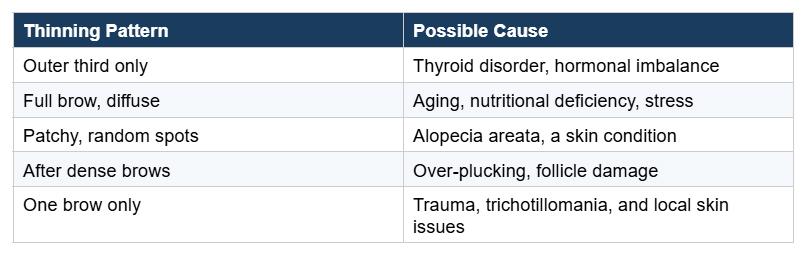
Understanding your thinning pattern is the first step toward finding the right solution. The next section covers each cause in depth.
What Causes Sparse Eyebrows?
Sparse eyebrows have many possible causes, ranging from habitual hair removal to systemic medical conditions. Identifying the root cause matters because the treatment path differs significantly. Below are the nine most common causes, with guidance on what makes each one unique.
| Key Takeaways |
| • Over-plucking is the most preventable cause and affects a large portion of women who had heavily shaped brows in the 1990s. |
| • Thyroid disorders are one of the most overlooked medical causes — outer brow thinning is a classic clinical marker. |
| • Multiple causes can occur simultaneously, making professional assessment important before starting any treatment. |
Does Over-Plucking Cause Sparse Eyebrows?
Yes. Repeated over-plucking or excessive waxing is among the most common causes of sparse eyebrows. Each time a hair is pulled from the root, it causes minor trauma to the follicle. When done repeatedly over the years, that trauma accumulates.
Many clients in their 30s and 40s over-plucked through the 1990s thin-brow era. Some follicles recover fully with time. Others become permanently scarred and stop producing hair entirely. How much damage occurred depends on how aggressively and how often the hair was removed.
If regrowth does not return within several months after stopping, follicle scarring is likely, and a cosmetic solution becomes the most practical path forward.
How Does Aging Affect Eyebrow Growth?
Aging is a natural and universal cause of eyebrow thinning. Hair follicles throughout the body, including the brows, gradually produce thinner, shorter, and lighter hairs as hormone levels shift with age.
According to the American Academy of Dermatology, follicle miniaturization accelerates significantly after age 50 in women, largely driven by declining estrogen levels. The result is overall brow density loss that progresses slowly but does not reverse on its own.
Aging-related brow thinning is permanent in the sense that follicles will not reactivate without medical or cosmetic intervention.
Can Genetics Cause Sparse Eyebrows?
Yes. Genetics plays a significant role in eyebrow density, growth cycles, and hair thickness. If sparse brows run in your family, you may have inherited a baseline that produces less dense brow hair, shorter growth cycles, or follicles that are more sensitive to hormonal and environmental factors.
Genetic predisposition does not mean nothing can be done. It simply means the expectation for natural regrowth should be calibrated honestly, and cosmetic solutions are often the most effective long-term strategy.
Do Thyroid Disorders and Hormonal Imbalances Cause Eyebrow Loss?
Thyroid dysfunction is one of the most clinically recognized causes of eyebrow thinning. Both hypothyroidism (underactive thyroid) and hyperthyroidism (overactive thyroid) can cause hair loss, and the eyebrows are often affected early.
A classic clinical marker is madarosis, the loss of eyebrow hair in the outer third of the brow. Physicians routinely look for this sign when assessing thyroid function. Similarly, polycystic ovary syndrome (PCOS), menopause-related hormonal shifts, and postpartum hormone changes can all trigger brow thinning.
Treating the underlying hormonal condition often leads to partial or full regrowth. However, if the thinning has been present for years, some follicle damage may already be permanent.
Can Nutritional Deficiencies Cause Sparse Eyebrows?
Yes. Deficiencies in iron, biotin, zinc, vitamin D, and protein are all linked to hair loss, including eyebrow thinning. Hair follicles are among the most nutrient-hungry structures in the body. When the body is deficient, it redirects resources away from non-essential functions like hair growth.
For example, iron-deficiency anemia reduces oxygen delivery to follicles, slowing or stopping the growth phase (anagen). Biotin deficiency, though less common than often marketed, can impair keratin production, the protein that builds hair fibers.
A blood panel can confirm whether nutritional deficiency is contributing to your brow loss. Correcting deficiencies typically improves regrowth within three to six months.
Does Stress Cause Eyebrow Thinning?
Telogen effluvium is a condition where physical or emotional stress pushes a large number of hair follicles into the resting phase simultaneously. When those resting hairs shed two to four months after the stressful event, the result looks like sudden, diffuse hair loss across the scalp and sometimes the brows.
Major surgery, illness, pregnancy, crash dieting, or extreme emotional stress are the typical triggers. The good news: telogen effluvium is typically reversible. Regrowth usually begins within six to nine months once the stressor is removed or resolved.
What Is Alopecia Areata and How Does It Affect Eyebrows?
Alopecia areata is an autoimmune condition where the immune system mistakenly attacks hair follicles. It can affect the scalp, brows, lashes, or any hair-bearing area of the body. The hair loss is often patchy and unpredictable.
According to the National Alopecia Areata Foundation, approximately 6.8 million people in the United States have alopecia areata. The eyebrows are affected in a significant portion of cases, sometimes without scalp involvement.
Treatment with corticosteroids or JAK inhibitors may stimulate regrowth in some cases. However, outcomes are variable, and cosmetic solutions are often part of the long-term management plan.
Can Skin Conditions Affect Eyebrow Growth?
Several skin conditions can impair eyebrow growth. Eczema, psoriasis, seborrheic dermatitis, and contact dermatitis can inflame the skin around the brow follicles, disrupting the growth cycle.
Chronic inflammation from these conditions can cause scarring over time, especially if the skin is repeatedly scratched or treated with harsh topicals. Treating the underlying skin condition early reduces the risk of permanent follicle damage.
Which Medications and Medical Conditions Are Linked to Eyebrow Loss?
Several medications list hair loss as a known side effect. These include:
- Chemotherapy and radiation therapy
- Anticoagulants (blood thinners)
- Retinoids (high-dose vitamin A derivatives)
- Beta-blockers and certain antidepressants
- Lithium and anti-seizure medications
Beyond medications, systemic conditions like lupus, sarcoidosis, and leprosy can directly damage follicles. If you suspect a medication is causing your brow thinning, speak with your prescribing physician before stopping it.
With the root causes identified, the next important question is whether the loss is temporary or permanent.
Are Sparse Eyebrows Permanent or Temporary?
Whether your sparse eyebrows are permanent or temporary depends entirely on the cause and how long the follicles have been affected. Some causes resolve naturally. Others result in lasting follicle damage that no regrowth treatment can reverse.
| Key Takeaways |
| • Follicle damage from over-plucking or inflammation is often permanent once scarring sets in. |
| • Telogen effluvium, stress, and nutritional deficiencies are typically reversible with the right treatment. |
| • If no regrowth has occurred within 12 months of addressing a known cause, permanent follicle loss is likely. |
What Causes Temporary Eyebrow Loss?
The following causes are generally temporary, meaning regrowth is possible once the trigger is removed or treated:
- Telogen effluvium from stress, surgery, or illness
- Nutritional deficiencies, particularly iron, zinc, and biotin
- Thyroid disorders, when caught and treated early
- Pregnancy-related hormonal shifts (typically resolve within a year postpartum)
- Certain medications, when discontinued under medical guidance
What Causes Permanent Eyebrow Loss?
The following causes tend to result in permanent or long-term loss:
- Repeated over-plucking or waxing has caused follicle scarring
- Advanced alopecia areata resistant to treatment
- Radiation therapy directed at the brow area
- Scarring skin conditions like discoid lupus or lichen planopilaris
- Aging-related follicle miniaturization
What Are the Signs of Permanent Follicle Damage?
You may have permanent follicle damage if:
- The brow area feels smooth with no stubble or short hairs when touched
- No regrowth has occurred in six to twelve months despite addressing known causes
- The skin in the brow area appears shiny or scarred
- A dermatologist has confirmed follicle scarring via biopsy
Can Sparse Eyebrows Grow Back?
Yes, sparse eyebrows can grow back when the cause is temporary, and the follicles remain intact. The key condition is whether the follicle itself is alive and functional. Damaged but not fully scarred follicles may still respond to treatment. Fully scarred follicles will not regenerate hair naturally.
A dermatologist can assess follicle health through physical examination and, when needed, a scalp or brow biopsy.
What Is the Typical Regrowth Timeline?
Regrowth timelines depend on the cause:
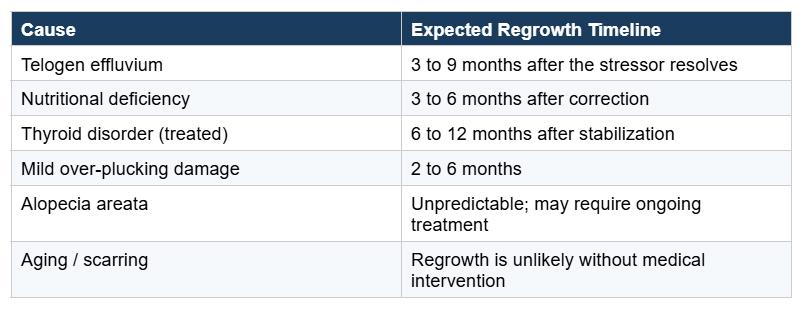 |
Understanding whether your loss is temporary or permanent shapes which treatment path makes the most sense. The next section explains how sparse eyebrows are formally diagnosed.
Book Into our Symetrie Studio Spa
Ready to take the next step? Book a consultation with a qualified permanent makeup artist.
Book Now
How Are Sparse Eyebrows Diagnosed?
Diagnosing the cause of sparse eyebrows involves a combination of patient history, physical examination, and targeted testing. No single test identifies all causes, which is why a systematic approach works best.
| Key Takeaways |
| • A complete blood panel is often the fastest way to rule out medical causes of brow thinning. |
| • Physical examination of the brow area can reveal whether follicles are still present or have been replaced by scar tissue. |
| • A dermatologist should be the first specialist consulted when the cause is unclear. |
What Does Medical History and Physical Examination Reveal?
A clinician will ask about:
- When the thinning started, and how quickly it progressed
- Family history of hair loss or thyroid conditions
- Recent life stressors, illness, or pregnancy
- Medications currently or recently taken
- Cosmetic procedures performed on the brow area
Physical examination checks for brow density, the location of thinning, the condition of the skin, and whether any hair stubs are visible, which indicate follicle activity.
What Blood Tests and Hormone Tests Are Used?
A targeted blood panel typically includes:
- TSH, T3, T4: Thyroid function markers
- CBC with iron panel: Checks for anemia and iron deficiency
- Ferritin: A sensitive marker for iron stores that affects hair growth
- Zinc and biotin levels: Nutritional hair growth factors
- Hormone panel (ANA, cortisol, estrogen): Rules out autoimmune or hormonal causes
What Do Nutritional Assessments Include?
Beyond blood tests, a nutritional assessment may review dietary intake, caloric adequacy, and protein consumption. Crash diets and restrictive eating patterns are a common but often overlooked trigger. A registered dietitian can identify patterns that impair hair growth and recommend targeted supplementation.
When Should You See a Dermatologist or Hair Restoration Specialist?
See a dermatologist when:
- Thinning is sudden, severe, or accompanied by scalp hair loss
- You have an existing autoimmune or thyroid condition
- Regrowth has not occurred within six to twelve months of addressing known causes
- The skin in the brow area looks inflamed, scaly, or abnormal
Have you been living with sparse brows for months and still do not know why? That uncertainty is exactly what a specialist consultation is designed to resolve.
What Are the Permanent Solutions for Sparse Eyebrows?
Eyebrow hair transplants are the only truly permanent solution for sparse eyebrows, as they physically restore living follicles to the brow area. For those who want a surgical solution with lasting natural results, this procedure is the gold standard.
| Key Takeaways |
| • Eyebrow hair transplants use your own donor hair, typically from the scalp, and can produce permanent, natural results. |
| • FUE is the preferred technique for brows due to minimal scarring and precise placement. |
| • Not all candidates are suitable for transplant — follicle health, donor hair quality, and expectations all factor in. |
How Does an Eyebrow Hair Transplant Work?
An eyebrow hair transplant involves harvesting individual hair follicles from a donor site, usually the back of the scalp, and implanting them into the brow area at precise angles and directions to replicate natural brow growth.
The procedure is performed under local anesthesia as an outpatient surgery. Results are permanent because the transplanted follicles retain their original growth characteristics once established in the new location.
What Is the FUE Eyebrow Transplant Technique?
Follicular Unit Extraction (FUE) is the preferred technique for eyebrow transplants. Unlike older strip methods, FUE extracts individual follicular units one at a time using a small punch tool, leaving no linear scar at the donor site.
In the brow area, FUE allows the surgeon to place each follicle at the exact angle and direction required to mimic natural brow hair, which grows at a very shallow angle compared to scalp hair. This precision is critical for natural-looking results.
Who Is a Good Candidate for an Eyebrow Transplant?
Ideal candidates have:
- Confirmed or suspected permanent follicle loss (not a reversible cause)
- Adequate donor hair at the back of the scalp
- Realistic expectations about density and natural appearance
- No active autoimmune conditions affecting the brow area
Candidates with active alopecia areata are generally not suited for transplant, as the autoimmune process may attack the transplanted follicles.
What are the Recovery, Aftercare, and Long-Term Results of an Eyebrow Transplant?
Recovery typically involves:
- Mild swelling and crusting around the brow area for 7 to 10 days
- Transplanted hairs shedding within 2 to 4 weeks (expected; follicles remain intact)
- New hair growth begins at 3 to 4 months
- Final results visible at 9 to 12 months
Long-term, transplanted hairs continue to grow and require regular trimming because they retain scalp hair growth patterns. Periodic grooming is part of the maintenance commitment.
What Are the Risks and Potential Complications?
Potential risks include:
- Ingrown hairs at the transplant sites
- Unnatural growth direction if the angle placement is imprecise
- Lower-than-expected density if graft survival rates are suboptimal
- Scarring at the donor or recipient site, in rare cases
Choosing a board-certified surgeon with documented experience in facial hair restoration minimizes these risks significantly.
What Are the Long-Lasting Cosmetic Solutions for Sparse Eyebrows?
For most people with sparse eyebrows, semi-permanent cosmetic treatments offer the most practical, accessible, and immediate solution. These procedures deposit pigment into the skin to create the appearance of fuller, defined brows. They do not restore hair growth, but they do provide results that last one to three years or more.
At Symetrie Studio Spa, we offer several permanent brow treatments tailored to each client's skin type, brow shape, and lifestyle goals.
| Key Takeaways |
| • Microblading, nano brows, and powder brows all use different tools and techniques, and suit different skin types. |
| • Nano brows are the most precise technique and are suitable for all skin types, including oily and mature skin. |
| • Combination brows blend two techniques for clients who want both definition and soft fill. |
| • Brow lamination is a non-pigment treatment that restructures existing brow hairs for a fuller appearance. |
What Is Microblading?
Microblading is a semi-permanent technique that uses a hand tool with micro-needles to deposit pigment in thin, hair-like strokes into the upper layers of the skin. Each stroke mimics a natural brow hair.
Microblading works best on normal to slightly dry skin types. On oily or mature skin, the strokes tend to blur and heal with less definition, which can affect the longevity and crispness of the result.
What Are Nano Brows?
Nano brows use a digital machine with a single ultra-fine needle to deposit pigment with greater precision than a hand tool. The result is sharper, more consistent hair strokes that maintain their definition longer, particularly on oily, combination, or mature skin types.
Many clients who have had disappointing microblading results choose nano brows for their superior retention and suitability across a broader range of skin types. At Symetrie Studio Spa, nano brows are among our most requested treatments for clients with sparse eyebrows.
What Are Powder Brows?
Powder brows use a machine to create a soft, shaded effect that mimics the appearance of filled-in brows with brow powder or pencil. The technique does not create hair strokes. Instead, it builds a gradient of pigment that is lighter at the front of the brow and more concentrated toward the tail.
Powder brows tend to heal more evenly on oily skin and often last longer than hair stroke techniques. They are ideal for clients who prefer a more made-up, defined look.
What Are Combination Brows?
Combination brows blend microblading or nano brow hair strokes at the front of the brow with a powder-shaded body and tail. This creates a natural, textured look at the arch while providing soft definition throughout.
Combination brows suit clients who want the best of both techniques: a natural-looking head with more polished definition from the arch onward.
What Is Brow Lamination?
Brow lamination is a non-pigment treatment that restructures existing brow hairs using a chemical process similar to a lash lift. The hairs are set in an upward direction, creating the appearance of thicker, fuller, more defined brows without any pigment deposit.
Brow lamination does not address sparse areas where hair is missing, but it adds significant visual fullness to brows that have hair but lack shape or density. It is often combined with a tint for added depth.
How Long Does Each Treatment Last?
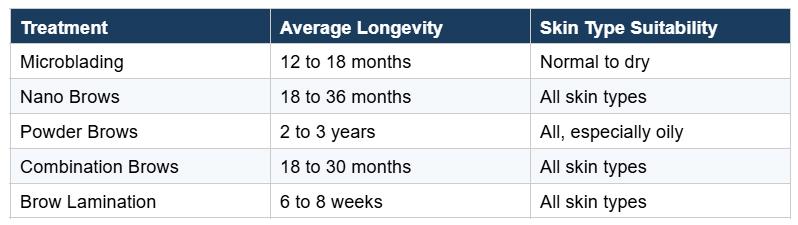
Touch-up appointments extend the life of all pigment-based treatments. Individual results vary based on skin type, sun exposure, skincare habits, and the depth at which pigment is deposited.
What Medical Treatments Are Available for Sparse Eyebrows?
Medical treatments for sparse eyebrows target the underlying cause rather than masking the appearance. They work best when the cause is identified early, and the follicles are not yet permanently scarred.
| Key Takeaways |
| • Bimatoprost (Latisse) is the only FDA-approved topical treatment for eyebrow hypotrichosis (inadequate growth). |
| • Topical minoxidil is used off-label for eyebrow growth and shows some evidence of effectiveness in early-stage loss. |
| • Treating an underlying medical cause, like hypothyroidism, often produces the most reliable regrowth outcomes. |
What Is Bimatoprost (Latisse) and How Does It Work?
Bimatoprost, sold under the brand name Latisse, is an FDA-approved prostaglandin analogue originally developed to treat glaucoma. A documented side effect was eyelash and eyebrow growth, which led to its approval for eyebrow hypotrichosis (sparse or inadequate eyebrow growth).
It works by extending the anagen (growth) phase of the hair cycle and increasing the number of hairs in that phase. Applied to the brow area daily, results typically appear after 8 to 16 weeks. Latisse requires a prescription and must be used consistently to maintain results.
Can Topical Minoxidil Help With Eyebrow Growth?
Topical minoxidil, commonly known as Rogaine, is used off-label for eyebrow growth. While not FDA-approved for this specific use, it is one of the most widely used topical treatments for hair loss overall.
Minoxidil works by prolonging the anagen phase and improving blood flow to the follicle. Some clinical case series have reported improvement in eyebrow density with daily application of 2% to 5% minoxidil. It works best on follicles that are dormant but not permanently damaged.
How Does Treating the Underlying Medical Condition Help?
When a systemic condition causes brow thinning, treating that condition is often the most effective intervention. For example:
- Hypothyroidism: Levothyroxine therapy normalizes thyroid hormone levels, and brow regrowth typically follows over several months.
- Alopecia areata: Corticosteroid injections, topical immunotherapy, or JAK inhibitors may stimulate regrowth in affected patches.
- PCOS: Hormonal treatments that address androgen excess can reduce hormonally driven hair loss.
How Does Correcting Nutritional Deficiencies Help Eyebrow Growth?
Once blood tests confirm a deficiency, targeted supplementation can restore follicle function. Recommended supplementation for hair growth typically includes:
- Iron (with vitamin C for absorption): Particularly important for women with heavy menstrual cycles
- Zinc: Supports follicle cell division and protein synthesis
- Biotin: Supports keratin production, though benefits are primarily seen in true deficiency
- Vitamin D: Regulates the hair cycle and follicle cycling
Avoid high-dose supplementation without testing. Excess zinc and vitamin A, for example, can actually worsen hair loss.
Book Into our Symetrie Studio Spa
Ready to take the next step? Book a consultation with a qualified permanent makeup artist.
Book Now
Eyebrow Transplant vs. Microblading vs. Nano Brows: Which Is Right for You?
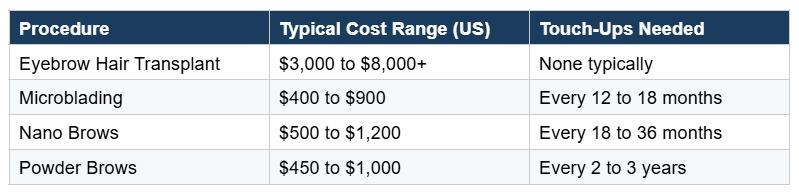
Choosing between a surgical transplant and a cosmetic procedure depends on several personal factors: your budget, how permanent you want the result to be, your tolerance for downtime, and whether your goal is natural hair growth or the appearance of fuller brows. Here is a direct comparison.
| Key Takeaways |
| • Transplants are permanent but cost significantly more and require surgical recovery — best for candidates with confirmed permanent follicle loss. |
| • Nano brows offer 1.5 to 3 years of results with no surgical downtime and suit nearly all skin types. |
| • Microblading is best suited for clients with dry skin who prefer hair stroke results at a lower entry cost. |
How Do the Procedures Differ?
Each approach works through a fundamentally different mechanism:
- Eyebrow transplant: Surgical. Transplants living hair follicles from a donor site to the brow area. Results grow as real hair.
- Microblading: Semi-permanent. Deposits pigment manually in hair stroke patterns into the upper dermis.
- Nano brows: Semi-permanent. Uses a digital machine for finer, more consistent pigment strokes. No actual hair growth.
How Do the Costs Compare?
How Does Longevity and Maintenance Compare?
Transplants are permanent but require ongoing grooming because transplanted hairs continue growing as scalp hairs do. Cosmetic procedures fade over time and need periodic touch-ups. For clients who want a one-time surgical result, transplant wins on longevity. For those who want flexibility to adjust their brow shape over time, cosmetic procedures offer more adaptability.
How Does the Natural Appearance Compare?
Transplants produce real hair growth that is indistinguishable from natural brows when performed skillfully. Nano brows produce very realistic-looking strokes that closely mimic hair. Microblading can look natural on dry skin types, but blurring over time on oily skin can reduce that naturalism.
Who Is the Best Candidate for Each Option?
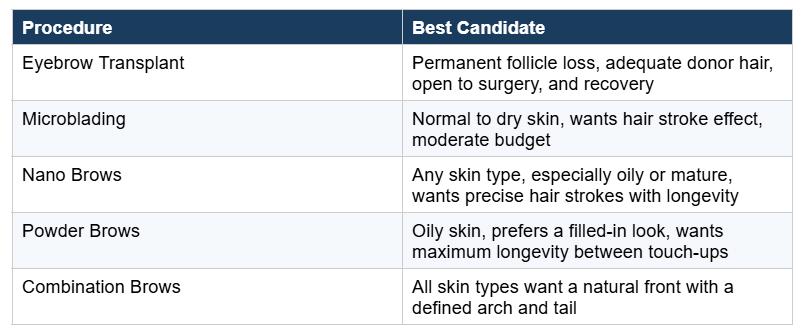
Not sure which option fits your situation? A brow consultation allows a specialist to assess your skin type, existing brow structure, and goals before recommending the right path.
How Can You Prevent Further Eyebrow Thinning?
Preventing further eyebrow thinning is possible in many cases, especially when the cause is behavioral or nutritional. Even if some damage has already occurred, protective habits can preserve the follicles that remain active.
| Key Takeaways |
| • Stopping aggressive hair removal is the single most impactful preventive step for over-plucking-related thinning. |
| • A diet that supports keratin production — adequate protein, iron, and zinc — directly supports follicle health. |
| • Sun protection matters for brow follicles; UV damage to the skin can impair follicle function over time. |
Why Should You Avoid Excessive Hair Removal?
The most actionable step for many people is simply stopping aggressive plucking, waxing, or threading of the brow area. Give follicles at least three to six months of complete rest before assessing regrowth.
If professional shaping is important to you, work with a brow artist who uses the softest approach possible and removes only the hairs that clearly fall outside your desired shape.
How Does Nutrition Support Eyebrow Growth?
A diet rich in complete protein, leafy greens, nuts, seeds, and iron-rich foods supports hair follicle health. If your diet restricts entire food groups or runs below 1,200 calories regularly, speak with a healthcare provider about nutritional support.
Hydration also matters. Dehydration affects skin barrier function, which in turn affects the micro-environment around follicles. Eight glasses of water daily is a practical baseline.
How Does Managing Underlying Health Conditions Help?
Annual thyroid panels and routine blood work catch conditions like hypothyroidism and iron-deficiency anemia before they cause significant follicle damage. If you have a family history of thyroid disease, autoimmune conditions, or early hair loss, proactive monitoring is worthwhile.
Managing stress through consistent sleep, physical activity, and stress-reduction practices also supports normal hair cycling by reducing cortisol, which can push follicles into the resting phase prematurely.
How Can You Protect Your Eyebrow Follicles?
Practical follicle protection steps include:
- Apply SPF to the brow area daily to protect follicles from UV-induced damage
- Avoid rubbing or scratching the brow area aggressively when cleansing
- Use gentle, fragrance-free skincare in the brow area to prevent contact dermatitis
- Be cautious with retinoids and other potent actives near the brow follicles
- Consider a gentle brow serum with peptides or bimatoprost if early thinning is present
Prevention is always easier than restoration. But for the thinning that has already occurred, the solutions in this guide offer real, tested paths forward.
Conclusion
Sparse eyebrows have real causes, and those causes have real solutions. Whether the thinning in your brows stems from years of over-plucking, a hormonal imbalance, an autoimmune condition, or natural aging, the first step is understanding what you are actually dealing with. Temporary causes like nutritional deficiency and stress-induced telogen effluvium often resolve with the right support. Permanent causes like follicle scarring or aging-related miniaturization require a more deliberate intervention.
The range of solutions available today is broader than most people realize. Medical treatments like bimatoprost and minoxidil can support regrowth when follicles remain viable. Surgical options like FUE eyebrow transplants restore permanent, natural hair. And semi-permanent cosmetic treatments like nano brows, powder brows, and combination brows provide accessible, long-lasting results without surgery or recovery time. The right choice depends on your specific cause, skin type, budget, and how permanent you want the result to be.
At Symetrie Studio Spa in Lafayette, LA, we work with clients at every stage of this journey, from those exploring options for the first time to those who have already tried other treatments and are looking for better results. We offer complimentary brow consultations to assess your brow structure, discuss your goals, and recommend the approach that fits your situation. Book your consultation today and take the first step toward brows that look exactly the way you want them to.
Frequently Asked Questions
Can sparse eyebrows grow back naturally without treatment?
Sometimes. If the cause is temporary, such as stress, nutritional deficiency, or a treatable medical condition, regrowth often occurs once the trigger is resolved. However, if follicle scarring has occurred from over-plucking or chronic inflammation, natural regrowth is unlikely. A dermatologist can assess follicle viability.
How do I know if my thyroid is causing my eyebrow thinning?
The most telling sign is thinning specifically in the outer third of the brow, sometimes called the Hertoghe sign. Other thyroid symptoms include fatigue, weight gain, dry skin, and cold sensitivity. A TSH blood test from your primary care doctor can confirm or rule out thyroid dysfunction.
Is microblading or nano brows better for sparse eyebrows?
Nano brows are generally better for sparse eyebrows across most skin types. They use a finer needle and digital machine, producing crisper, longer-lasting strokes, particularly on oily, combination, or mature skin. Microblading is still suitable for those with dry skin who prefer a hand-tool technique.
How long does it take to see results from eyebrow treatments?
Cosmetic procedures like nano brows show results immediately after healing, which takes approximately two to four weeks. Medical treatments like bimatoprost take eight to sixteen weeks of consistent application. Eyebrow transplants produce visible new growth at three to four months, with final results at nine to twelve months.
Is an eyebrow transplant worth it compared to semi-permanent makeup?
It depends on your goals and budget. A transplant offers permanent, natural hair growth but costs significantly more and requires surgical recovery. Semi-permanent treatments like nano brows cost a fraction of the price and require no recovery. For many clients, cosmetic procedures are the practical first step, with transplant considered only if permanent surgical results are a priority.
What should I do first if I notice my eyebrows thinning?
Stop aggressive hair removal immediately to preserve existing follicles. Schedule a blood panel with your doctor to rule out thyroid dysfunction, anemia, or nutritional deficiencies. Then consult a brow specialist to assess your options. Addressing the cause and exploring cosmetic coverage can happen simultaneously for most people.
Book Into our Symetrie Studio Spa
Ready to take the next step? Book a consultation with a qualified permanent makeup artist.
Book Now