Over-Plucked Eyebrows: Can They Be Fixed?

Over-Plucked Eyebrows: Can They Be Fixed?


21 minute read · 06/27/2026 06:49:18

Yes, over-plucked eyebrows can often be fixed, but the answer depends on how much follicle damage has occurred. Many cases of sparse brows respond to natural regrowth given time, proper nutrition, and a hands-off approach. When follicles are permanently damaged, semi-permanent solutions like powder brows or nano brows deliver full, natural-looking results.


Key Takeaways
Most overplucked eyebrows can regrow if follicles are still intact, but recovery takes 4 to 6 months on average.
Repeated trauma from tweezing, waxing, or threading over many years can permanently damage follicles and stop regrowth.
Growth serums with peptides or bimatoprost can support regrowth, but results are modest and not guaranteed.
Powder brows, microblading, and nano brows offer reliable fixes when natural regrowth has stalled or failed.
A licensed brow specialist can assess your follicle health and recommend the right path, whether that is natural recovery or semi-permanent restoration.

Recent Post

You have looked in the mirror and realized your eyebrows are barely there anymore. Years of following thin brow trends, chasing stray hairs, or just a habit of over-tweezing have left your brows thin, patchy, or almost invisible. It is frustrating. And the question that keeps coming up is a simple one: can they actually come back?


The truth is, the answer depends on what has happened to your follicles beneath the skin. Some brows recover beautifully with the right care. Others have been through enough repeated trauma that natural regrowth becomes unreliable. Knowing which situation you are in makes all the difference.


This guide breaks down exactly what happens to your eyebrows after years of over-plucking, which natural regrowth methods actually work, when serums and medical treatments are worth trying, and when a semi-permanent brow solution is the smarter path forward. By the end, you will have a clear picture of your options and know what to do next.


What Happens to Eyebrows After Repeated Over-Plucking?

Every time you tweeze a hair, you pull it from the follicle root. Do that once or twice, and the follicle bounces back. Do it for years, and the story changes.


How Do Follicles Respond to Repeated Trauma?

Hair follicles are small, delicate structures embedded in the skin. Each follicle goes through cycles of growth, rest, and shedding. Repeated plucking forces the follicle out of its natural cycle. Over time, the surrounding tissue can become scarred or inflamed. When that happens, the follicle produces thinner, weaker hairs or stops producing hair entirely.

Think of a follicle like a small seed in the ground. Dig it out once, replant it, and it likely grows again. Dig it out twenty times in the same spot, and the soil around it gets compacted and damaged. The seed may not grow back at all.


What Are the Signs of Temporary Thinning vs. Permanent Follicle Damage?

Not all brow loss is permanent. Here is how to tell the difference:

Temporary thinning: Brows look sparse, but you can still see fine, short hairs or faint growth. The skin in the brow area looks normal. Regrowth is likely with time and patience.

Permanent follicle damage: Certain areas show no growth at all for a year or more. The skin may look smooth or slightly shiny where hair used to grow. No response to growth serums after 3 to 4 months of consistent use.

If you are unsure which category you fall into, a licensed brow specialist or dermatologist can assess your follicle health directly. That assessment shapes every decision that follows.


What Causes Over-Plucked and Sparse Eyebrows?

Sparse brows rarely come from one cause. Most people deal with a combination of factors, some within their control and some not.


Does Excessive Tweezing, Waxing, and Threading Cause Permanent Loss?

Yes, it can. Mechanical removal methods like tweezing, waxing, and threading all pull hairs from the root. A single session causes no lasting damage. But regular sessions over months and years create cumulative trauma. The follicle tissue gradually weakens, and hair regrowth becomes patchy or stops in the most frequently plucked zones.


Did Following Thin Eyebrow Trends Lead to Permanent Damage?

The ultra-thin brow trend of the 1990s and early 2000s left many women with permanently sparse brows. Achieving that look required aggressive plucking across the entire brow, not just the stray hairs. For women who followed that trend during their teens and twenties, the follicle damage had decades to settle in. Many of those follicles simply do not recover.


How Does Aging Affect Eyebrow Hair?

As you age, hair growth across the body naturally slows down. Eyebrows are no exception. Follicles become less active in the outer third of the brow, which is why thin, sparse tails are so common in women over 40. Age-related thinning tends to affect the outer brow first and can make over-plucked areas look even worse over time.


Can Hormonal Changes and Nutritional Deficiencies Cause Brow Loss?

Hormonal shifts play a significant role in eyebrow hair growth. Thyroid imbalances are one of the most common medical causes of eyebrow thinning, particularly in the outer third of the brow. Low estrogen levels after menopause, postpartum hormonal changes, and polycystic ovarian syndrome (PCOS) can all affect hair follicle activity.

Nutritional deficiencies also matter. Low iron, low biotin, low zinc, and inadequate protein intake can all slow hair growth across the body, including the eyebrows. If your brows are not responding to regrowth efforts, it is worth reviewing your diet and checking for deficiencies with a doctor.


What Medical Conditions Are Linked to Eyebrow Hair Loss?

Several medical conditions can cause eyebrow thinning beyond what over-plucking explains:

  1. Hypothyroidism: Low thyroid hormone production often causes thinning in the outer brow.
  2. Alopecia areata: An autoimmune condition where the immune system attacks hair follicles.
  3. Eczema and psoriasis: Chronic inflammation near the brow area can disrupt follicle function.
  4. Trichotillomania: A compulsive hair-pulling disorder that causes direct follicle damage.
  5. Chemotherapy: Cancer treatment can cause temporary full brow loss.

If you suspect a medical condition is driving your brow loss, see a dermatologist before starting any cosmetic treatment.


Can Over-Plucked Eyebrows Grow Back?

This is the question most people are really asking. The short answer is yes, often but not always.


How Does the Eyebrow Growth Cycle Work?

Eyebrow hairs follow a three-stage growth cycle. The anagen phase is the active growth stage, lasting around 30 to 45 days for brow hairs. The catagen phase is a short transition period. The telogen phase is the resting and shedding stage, lasting roughly 100 days. Unlike scalp hair, eyebrow hairs have a much shorter active growth period, which is why brows grow slowly compared to head hair.

When a follicle is damaged, it may skip or shorten the anagen phase, producing weaker hairs or none at all. This is why regrowth after years of over-plucking looks patchy rather than full.


What Are the Signs Your Eyebrows Are Likely to Regrow?

Your brows have a good chance of recovering if:

  1. You can still see fine, light hairs or short stubble anywhere in the brow area.
  2. You stopped plucking within the last 1 to 2 years.
  3. Your brow skin looks and feels normal, no smooth or shiny patches.
  4. You are under 45 and do not have any underlying medical conditions.
  5. You had full brows naturally before the over-plucking started.


Can Eyebrows Grow Back After Years of Over-Plucking?

Yes, in many cases they can, even after several years. Research shows that follicles can remain dormant and still regrow hair when the trauma stops and conditions improve. However, if a follicle has been repeatedly damaged for 10 or 20 years, the chances of full regrowth decrease significantly. In those cases, some areas of the brow may recover while others do not.

This is not a reason to give up. Even partial regrowth, combined with a targeted cosmetic approach, can produce full and natural-looking brows.


How Long Does Regrowth Take?

Most people see noticeable regrowth within 4 to 6 months after stopping regular plucking. Full regrowth, assuming healthy follicles, can take up to 12 months. If no visible improvement appears after 6 months of consistent care and a hands-off approach, follicle damage may be permanent in that area.


What Factors Affect Regrowth Speed?

Several factors influence how quickly your brows return:

  1. Age: Younger follicles respond faster. Growth slows after 40.
  2. Duration of over-plucking: The longer the damage has been done, the slower the recovery.
  3. Nutritional status: Low iron, zinc, or biotin slows all hair growth.
  4. Hormonal health: Thyroid function and estrogen levels both affect follicle activity.
  5. Stress levels: Chronic stress elevates cortisol, which can suppress hair growth cycles.
  6. Skin health: Dry, inflamed skin around the brow area can impede follicle recovery.


How to Regrow Over-Plucked Eyebrows Naturally

Natural regrowth is the lowest-risk path, and it costs almost nothing. The catch is patience. Here is what actually works.


Should You Stop Tweezing and Let Brows Recover?

Stopping all plucking is the single most important step. This sounds obvious, but many people continue to tweeze stray hairs during the regrowth phase and undo their own progress. Every hair you pull is a hair that could have been part of the fuller brow you are growing toward. Commit to a complete hands-off period for at least 3 to 4 months.

If stray hairs bother you during this phase, use a brow pencil or gel to groom visually without pulling. An eyebrow brush can keep growth looking tidy while you wait.

Book Into our Symetrie Studio Spa

Ready to take the next step? Book a consultation with a qualified permanent makeup artist.

Book Now

How Can You Support Growth Through Proper Nutrition?

Your brows grow from the inside out. What you eat directly affects follicle health. Focus on:

  1. Protein: Hair is made of keratin, a protein. Adequate protein intake is non-negotiable.
  2. Biotin (Vitamin B7): Found in eggs, nuts, and seeds. Low biotin is directly linked to hair thinning.
  3. Iron: Iron deficiency is one of the most common and overlooked causes of hair loss in women.
  4. Zinc: Supports cell repair and follicle regeneration.
  5. Omega-3 fatty acids: Found in salmon, flaxseed, and walnuts. They reduce scalp and skin inflammation.

A basic blood panel with your doctor can reveal whether any deficiencies are slowing your regrowth.


How Do You Protect Brow Hairs From Damage?

Regrowth hairs are fragile. They break easily and fall out faster than established hairs. To protect them:

  1. Avoid rubbing your brows when washing your face or removing makeup.
  2. Do not use harsh exfoliants directly on the brow area during regrowth.
  3. Sleep on a silk or satin pillowcase to reduce friction on facial hair.
  4. Apply a nourishing oil like castor oil or argan oil to brows at night. This may support moisture and follicle health, though evidence is largely anecdotal.


What Mistakes Should You Avoid During the Regrowth Phase?

The regrowth phase is fragile. These common mistakes set people back:

  1. Plucking even one or two hairs: Every follicle counts during recovery.
  2. Using retinol or strong exfoliants on the brow area: These can thin the skin and stress follicles.
  3. Expecting results in 4 to 6 weeks: Regrowth takes months, not weeks. Quitting early is the biggest mistake.
  4. Overusing brow gels with alcohol: These dry out hair and cause breakage.


Do Eyebrow Growth Serums and Treatments Work?

The brow serum market is massive and full of overpromising. Here is an honest breakdown of what works and what does not.


Do Over-the-Counter Eyebrow Serums Work?

OTC serums vary widely in ingredients and effectiveness. The better-performing ones contain peptides, biotin, panthenol, and plant stem cell extracts that condition follicles and reduce breakage. Brands like RevitaBrow and RapidBrow have published user studies showing modest improvements in brow density over 8 to 12 weeks. They will not regenerate permanently damaged follicles, but they can support follicles that are struggling.

Apply any serum consistently for at least 8 weeks before judging results. Most people give up at week three, which is too early to see real change.


Does Bimatoprost (Latisse) Help Eyebrow Regrowth?

Bimatoprost, sold under the brand name Latisse, is an FDA-approved treatment for eyelash growth. It is also used off-label by dermatologists for eyebrow regrowth. Bimatoprost works by extending the anagen (active growth) phase of the hair cycle, allowing hairs to grow longer and thicker. According to a study published in the Journal of the American Academy of Dermatology, bimatoprost improved eyebrow growth in participants with eyebrow hypotrichosis (thinning). It requires a prescription and ongoing use.


Does Topical Minoxidil Help Eyebrows?

Minoxidil, better known as Rogaine, is an over-the-counter treatment originally developed for scalp hair loss. Some dermatologists recommend it off-label for eyebrow regrowth in low concentrations (2% solution). It works by stimulating blood flow to follicles and extending the growth phase. Results are modest and take 3 to 6 months to appear. Use on the brow area requires care, as the skin is thin and sensitive.


What Are the Potential Side Effects and Realistic Results?

Both bimatoprost and minoxidil carry potential side effects:

  1. Bimatoprost: skin darkening around the application area, eye irritation, and changes in iris color if it contacts the eye.
  2. Minoxidil: skin irritation, unwanted facial hair growth if applied outside the brow zone, and initial shedding.

Realistic expectations matter here. Serums and topical treatments improve what is already present. They cannot bring back a follicle that has permanently shut down. If you see no improvement after 4 to 5 months of consistent use, a permanent brow solution is likely the more practical path.


When Should You See a Dermatologist?

Natural regrowth methods work well for most people. But there are situations where professional medical help makes sense.


What Prescription Treatments Exist for Persistent Thinning?

A dermatologist can prescribe options beyond what OTC products offer. These include bimatoprost (Latisse), platelet-rich plasma (PRP) injections directly into the brow area, and, in some cases, low-dose topical steroids to reduce follicle inflammation. PRP therapy involves drawing a small amount of your blood, concentrating the growth factors, and injecting it into the brow. Early research, including studies cited by the American Academy of Dermatology, suggests PRP can reactivate dormant follicles. Results vary.


What Medical Treatments Address Underlying Conditions?

If a thyroid condition, autoimmune disorder, or nutritional deficiency is driving your brow loss, treating the underlying cause is the first priority. Correcting hypothyroidism with hormone therapy, for example, often leads to noticeable brow regrowth within several months. Similarly, resolving an iron deficiency removes one of the most common barriers to hair regrowth. A dermatologist or endocrinologist can run the right tests and guide treatment appropriately.


What Are the Semi-Permanent and Permanent Brow Restoration Options?

When natural regrowth is not enough, semi-permanent techniques deliver the most reliable results. These treatments deposit pigment into the upper layers of skin to create the appearance of fuller, shaped brows. The right technique depends on your skin type, the level of sparseness, and your desired look. You can explore the full range of options at Symetrie Studio Spa's permanent brows.


What Is Microblading and Who Does It Suit?

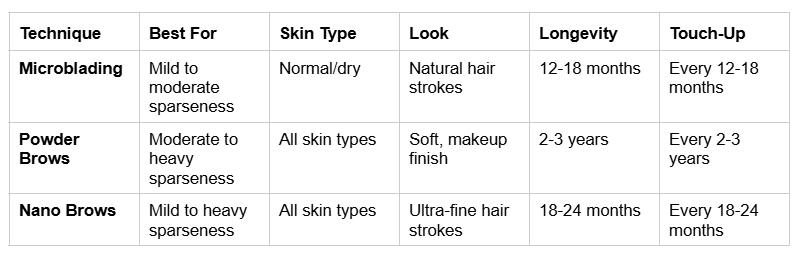
Microblading: a semi-permanent tattooing technique that uses a fine blade to deposit pigment into the skin in hair-like strokes.

Microblading creates very realistic individual hair strokes that mimic natural brows. It works best on normal to dry skin types with some existing brow hair to anchor the strokes around. For people with oily skin, the pigment tends to blur over time, reducing the crispness of the strokes. Results typically last 12 to 18 months before a touch-up is needed.


What Are the Benefits of Powder Brows for Sparse Brows?

Powder brows: a semi-permanent technique that uses a digital machine to deposit tiny dots of pigment, creating a soft, powdered-makeup effect.

Powder brows are one of the best solutions for over-plucked brows because they fill in sparse areas with soft, even color. Unlike microblading, they work well on all skin types, including oily skin. The result looks like you are wearing a perfectly filled-in brow pencil, all day, every day. Results last 2 to 3 years with proper care.


What Are Nano Brows?

Nano brows: a semi-permanent technique that uses a nano needle attached to a digital machine to deposit pigment in ultra-fine hair strokes.

Nano brows combine the natural look of microblading with the precision and durability of machine work. The nano needle creates finer, more detailed strokes than a traditional blade, with less trauma to the skin. They last longer than classic microblading, typically 18 to 24 months, and are suitable for a wider range of skin types.


How Do Microblading, Powder Brows, and Nano Brows Compare?


Book Into our Symetrie Studio Spa

Ready to take the next step? Book a consultation with a qualified permanent makeup artist.

Book Now

When Is an Eyebrow Transplant Worth Considering?

An eyebrow transplant involves taking hair follicles from another part of your body, usually the scalp, and surgically implanting them into the brow area. It is a medical procedure performed by a plastic surgeon or hair transplant specialist. It is most appropriate for people with severe, permanent follicle loss across large brow areas who want a long-term solution without ongoing semi-permanent touch-ups. Results look natural but require some care, as transplanted scalp hair grows faster than natural brow hair and needs regular trimming.


How Do You Choose a Licensed Brow Specialist?

Not all brow artists are equal. When selecting a specialist, look for:

  1. A state-issued permanent makeup license in Louisiana or a relevant jurisdiction.
  2. A portfolio showing before-and-after results on clients with similar brow sparseness to yours.
  3. Clean, sterilized equipment and a professional studio environment.
  4. A clear consultation process before any treatment begins.
  5. Experience with your specific concern, whether that is over-plucked brows, sparse tails, or full brow loss.


At Symetrie Studio Spa in Youngsville, LA, every brow restoration consultation starts with an honest assessment of your brow health and a personalized recommendation based on your skin type and goals.


How Do You Choose the Right Fix for Your Eyebrows?

The right solution depends on your timeline, how long your brows have been sparse, and what your follicles are actually capable of doing right now.


What Should You Do if Your Brows Were Recently Overplucked?

If you over-plucked within the last 6 to 12 months, start with the natural approach. Stop plucking entirely, optimize your nutrition, and give the anagen cycle time to restart. Use a peptide-based brow serum to support the process. Most cases of recent over-plucking respond well to this approach, provided no underlying condition is involved.


What Should You Do if Your Brows Have Been Sparse for Several Years?

Years of sparse brows suggest some follicle compromise has already occurred. Natural regrowth is still worth attempting for 3 to 6 months, especially if you can see some fine hairs in the brow area. However, consulting with a brow specialist about semi-permanent options at the same time is a practical move. You can pursue both paths at once and let the results guide the next decision.


What Should You Do if You Suspect Permanent Follicle Damage?

If you have gone a full year or more with no visible brow regrowth despite stopping plucking and using serums, follicle damage may be permanent in affected areas. See a dermatologist to confirm the diagnosis. From there, a semi-permanent technique like powder brows or nano brows gives you full, consistent brows without depending on follicle recovery. This is not a consolation prize. Many clients say their permanent brows are the best their brows have ever looked.


What Are Realistic Expectations for Each Solution?

Set realistic expectations before committing to any path:

  1. Natural regrowth: 4 to 12 months, partial results possible, not guaranteed.
  2. OTC serums: modest density improvement in 8 to 12 weeks if follicles are still active.
  3. Bimatoprost or minoxidil: more reliable but requires a prescription or careful self-application.
  4. Microblading: realistic, natural-looking strokes lasting 12 to 18 months.
  5. Powder brows: full, consistent coverage lasting 2 to 3 years, best for heavily sparse brows.
  6. Nano brows: highly detailed and durable, suits nearly all skin types and sparseness levels.


Conclusion

Over-plucked eyebrows can be fixed, but the right approach depends on your specific situation. For recently sparse brows, a natural regrowth plan with proper nutrition, a hands-off policy, and a quality serum gives your follicles the best chance at a comeback. For long-term sparseness or confirmed follicle damage, semi-permanent techniques like powder brows, microblading, and nano brows deliver full, beautiful results without waiting for biology to cooperate.


The most important step is getting an honest assessment of where your brows actually stand. Understanding whether your follicles are temporarily dormant or permanently damaged changes everything about the plan. A dermatologist handles the medical side of that conversation, and a qualified brow specialist handles the cosmetic side. Both perspectives matter.


At Symetrie Studio Spa in Youngsville, LA, we work with clients at every stage of brow recovery, from those just starting their regrowth journey to those ready for a lasting semi-permanent solution. If you are tired of filling in sparse brows every morning and want to know what is actually possible for yours, book a brow consultation with us today. We will assess your brow health, walk you through your options, and put together a plan that fits your goals and your timeline.


Frequently Asked Questions


Can eyebrows grow back after 20 years of over-plucking?

In some cases, yes. Follicles can remain dormant for years and reactivate when trauma stops. However, two decades of repeated plucking significantly increase the chance of permanent follicle damage in heavily plucked zones. A combination of natural regrowth attempts and semi-permanent restoration often delivers the best outcome.


How long does it take for over-plucked eyebrows to grow back?

Most people see noticeable regrowth within 4 to 6 months after stopping all plucking. Full regrowth, when possible, takes 10 to 12 months. If no visible change appears after 6 months of consistent care and a hands-off approach, some follicle damage may be permanent.


Does castor oil actually help eyebrow regrowth?

Evidence for castor oil is largely anecdotal. It does not directly stimulate follicle growth, but its ricinoleic acid content may reduce inflammation around the follicle and condition existing hairs. It is safe to apply and may support the overall health of the brow area, though it should not replace proven treatments.


What is the difference between powder brows and microblading for over-plucked brows?

Microblading deposits pigment in individual hair strokes using a manual blade, best for mild sparseness on normal or dry skin. Powder brows use a machine to create a soft, filled-in look, making them better for heavier sparseness and all skin types. Nano brows offer a middle ground with machine-precision hair strokes.


How do I know if my eyebrow follicles are permanently damaged?

Signs of permanent follicle damage include no visible hair growth in an area for 12 or more months after stopping plucking, smooth or slightly shiny skin where hair once grew, and no response to growth serums after 4 to 5 months of consistent use. A dermatologist can assess follicle health with a scalp biopsy or dermoscopy if needed.


Is powder brows or nano brows better for completely sparse eyebrows?

Both work well for fully sparse brows. Powder brows create a soft, powdered-makeup finish that provides excellent coverage for areas with no hair. Nano brows can simulate individual hair strokes even on bare skin, which may look more natural. A brow specialist will recommend the best option based on your skin type and the look you want.

Book Into our Symetrie Studio Spa

Ready to take the next step? Book a consultation with a qualified permanent makeup artist.

Book Now