Microblading Healing Process: Day-by-Day Guide
Recent Posts
Because microblading creates small cuts in your skin to deposit pigment, your body treats it like any other wound. This means you'll experience a natural healing process that includes scabbing, flaking, and temporary color changes. Understanding this process helps you avoid panic when your brows don't look perfect immediately!
How Long Does Microblading Take to Heal Completely?
Here's the timeline you need to know:
Surface healing: 7-14 days Complete healing: 4-6 weeks Final results visible: 6-8 weeks (after touch-up)
The surface of your skin heals relatively quickly, usually within two weeks. However, the deeper layers of skin where the pigment sits take longer to fully heal and settle. This is why your microblading results won't be final until after your touch-up appointment, which typically happens 6-8 weeks after your initial procedure.
During your consultation at Symetrie Studio Spa, we'll give you a personalized timeline based on your skin type, age, and lifestyle factors. Everyone heals slightly differently, so your experience might vary from your friend who also got microblading done.
Microblading Healing Stages: Understanding the Three Phases
Your microblading healing process happens in three distinct phases. Understanding these phases helps you know what's normal and what's not.
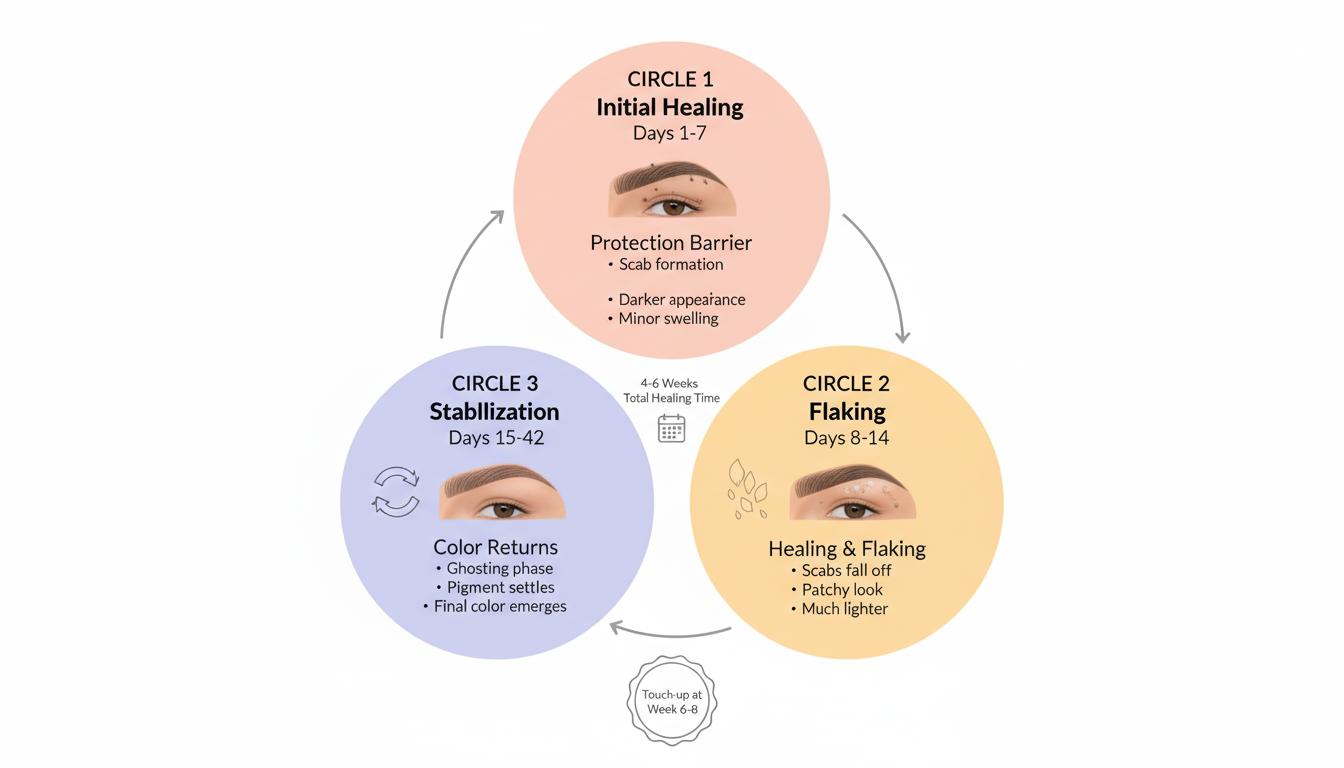
Phase 1 – Initial Healing (Days 1-7)
This is the acute healing phase where your body immediately responds to the procedure. Your skin works to close the tiny cuts made during microblading and forms a protective barrier. You'll notice your brows are darker, bolder, and may feel slightly tender.
During this phase, your body sends healing cells to the area, which causes slight swelling and redness. A thin layer of lymph fluid may appear on your brows, which eventually forms scabs. This is completely normal and part of your body's natural healing response.
Phase 2 – Flaking and Regeneration (Days 8-14)
The scabs that formed during Phase 1 start to flake off naturally. This is when many people get nervous because their brows can look patchy and uneven. But don't worry! This is exactly what should happen.
As the scabs fall off, they take some pigment with them. This is why your brows will appear much lighter than they did immediately after your procedure. Your skin is also regenerating new cells during this phase, which pushes the pigment deeper into the skin layers.
Phase 3 – Color Stabilization (Days 15-42)
This final phase is all about the pigment settling into its permanent position. Many clients experience what we call the "ghosting phase" during weeks 2-4, where their brows appear very light or almost invisible. This can be alarming, but it's temporary!
The pigment is actually still there, sitting beneath the fresh layer of skin that regenerated during Phase 2. As your skin continues to heal and the new cells mature, the color gradually comes back. By week 6-8, you'll see your true results emerge, though you'll still need that touch-up appointment to perfect everything.
Microblading Healing Process Day by Day: What to Expect
Now let's get into the detailed, day-by-day breakdown. We'll tell you exactly what's happening with your brows and what you should be doing each step of the way.
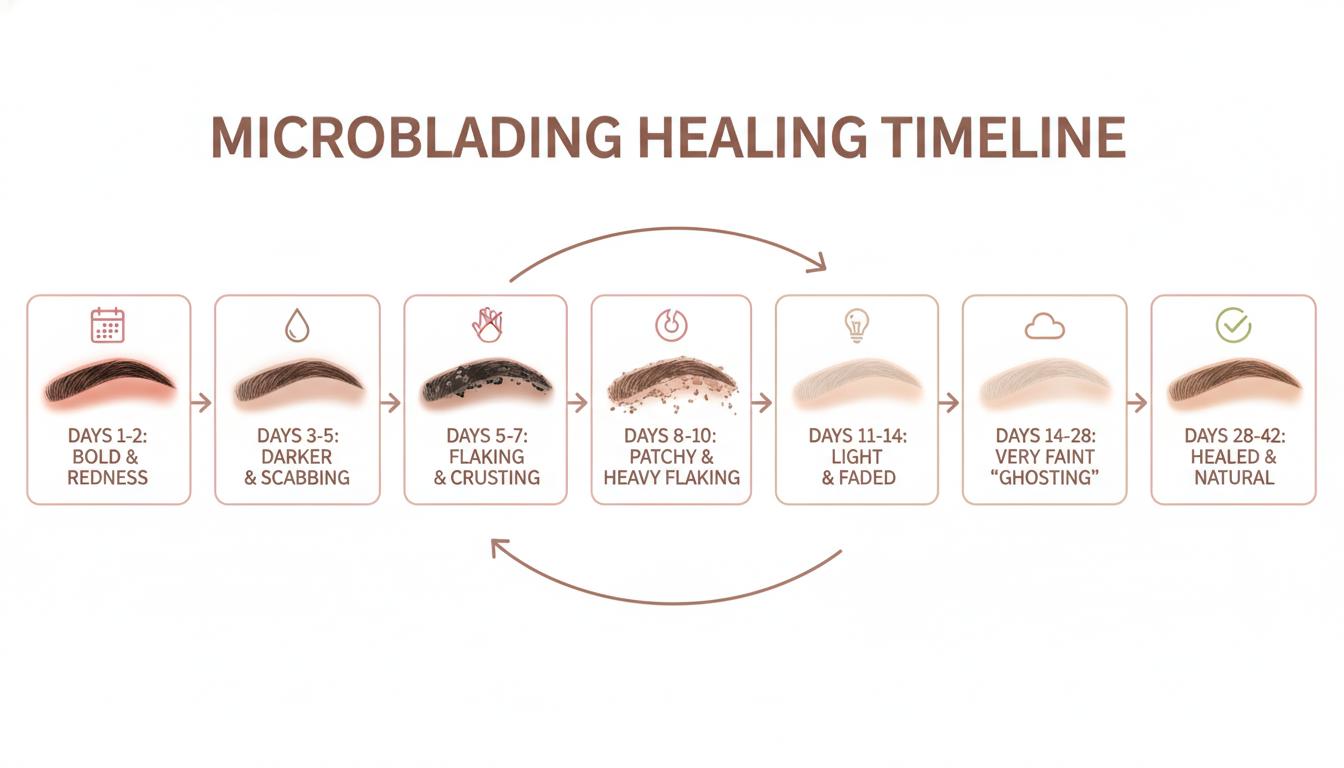
Day 1-2 (Immediately After the Procedure)
- What you'll see: Your brows look absolutely amazing! They're bold, dark, and perfectly shaped. Many clients take tons of selfies during these first two days because their brows look so good. However, they're actually about 30-40% darker than your final result will be.
- What you'll feel: Your eyebrow area might feel slightly tender, similar to a sunburn. Some people experience minor swelling or redness, but this is usually minimal. You might also notice a small amount of lymph fluid (clear liquid) on your brows.
- What to do: Keep your brows clean and dry as much as possible. Gently blot away any lymph fluid with a clean tissue. Avoid touching your brows except during cleaning. Sleep on your back with your head slightly elevated to reduce any swelling.
- What to avoid: Water, sweat, makeup, and direct sun exposure. Don't work out or do any activities that make you sweat. Stay away from steamy showers and don't let water hit your face directly.
Day 3-5 (Color Darkening Phase)
- What you'll see: Your brows may appear even darker than they did on days 1-2. This is because the pigment is oxidizing (reacting with oxygen) and the scabs are beginning to form. Don't panic! This darkness is temporary.
- What you'll feel: You might start experiencing some itching. This is a sign that your skin is healing, but it can be uncomfortable. The area might also feel slightly tight as scabs start to form.
- What to do: Continue your gentle cleaning routine 2-3 times daily. Use the approved cleanser provided by your microblading artist. Pat your brows dry with a clean tissue or let them air dry. Apply a very thin layer of healing ointment if recommended by your technician.
- What to avoid: Do not scratch or touch your brows, even if they itch! Avoid steam rooms, saunas, and hot yoga. Keep your hair away from your brows and continue avoiding makeup in the area.
Day 5-7 (Flaking Begins)
- What you'll see: Small scabs start forming and your brows might look a bit crusty. You'll notice tiny flakes beginning to come off. Your brows may look uneven as some areas flake before others. This is the phase where most people start to worry, but it's completely normal!
- What you'll feel: The itching usually gets worse during this phase. You might feel like your skin is tight and dry. Resist the urge to pick or scratch! Some people describe this feeling as similar to a healing sunburn.
- What to do: Keep up with your cleaning routine but be extra gentle now that flaking has started. Continue applying a thin layer of healing ointment if your technician recommended it. Some artists prefer the "dry healing" method, so follow your specific aftercare instructions.
- What to avoid: This is crucial – do not pick, peel, or scratch off the flakes! Let them fall off naturally. Picking can remove pigment and cause scarring or infection. Continue avoiding water, sweat, and makeup.
Day 8-10 (Heavy Flaking Phase)
- What you'll see: This is peak flaking time. Your brows might look patchy, uneven, and much lighter than before. Some areas might flake completely while others still have scabs. It's not pretty, but it's temporary! Your brows might look like they're disappearing in some spots.
- What you'll feel: The itching should start to decrease as more flakes come off. Your skin might feel dry and tight in some areas while other areas feel completely normal.
- What to do: Continue being patient and gentle. Keep cleaning your brows but avoid rubbing or scrubbing. If you're using healing ointment, you might be able to reduce the frequency now. Check with your technician about when to stop using it.
- What to avoid: Still no picking! This is the phase where it's most tempting to help those flakes along, but don't do it. Continue avoiding excessive water, swimming pools, and intense exercise. You can probably return to light exercise if your brows aren't getting sweaty.
Day 11-14 (Flaking Ends)
- What you'll see: Most or all of the flaking should be complete by now. Your brows will look much lighter than they did during the first week – often 40-50% lighter! They might look a bit thin or faded. Some clients even think their microblading didn't work. Stay calm – this is exactly what should happen.
- What you'll feel: The itching should be gone. Your brows should feel back to normal. You shouldn't feel any tenderness, tightness, or discomfort.
- What to do: You can stop using healing ointment now (unless your technician advises otherwise). Continue keeping your brows clean with a gentle cleanser. You can start resuming more normal activities.
- What to avoid: You can resume most normal activities now, but continue avoiding harsh skincare products on your brows. Stay away from retinols, glycolic acid, and exfoliants near the eyebrow area. These can fade your pigment over time.
Day 14-28 (The "Ghosting" Phase)
- What you'll see: Welcome to the ghosting phase! This is when many clients panic because their brows look very light, almost invisible in some spots. You might see mostly your natural brow hairs with barely any pigment showing. Some clients swear their microblading has completely disappeared.
- What you'll feel: Physically, your brows should feel completely normal. No itching, no tenderness, nothing unusual. But emotionally? You might be stressed wondering if something went wrong.
- What to do: Trust the process! The pigment is still there, sitting beneath a fresh layer of skin that regenerated during healing. As this new skin matures, the color will gradually come back. Take progress photos so you can see the subtle changes happening day by day.
- This is also a good time to start thinking about your touch-up appointment. At Symetrie Studio Spa, we schedule touch-ups for 6-8 weeks after your initial procedure. Use this time to note any areas that need adjustment or additional coverage.
- What to avoid: Don't give up on your brows! Many clients consider this phase a "failure," but it's actually a normal part of the healing process. Avoid trying to fix your brows with makeup that might interfere with pigment retention.
Day 28-42 (True Color Emerges)
- What you'll see: Your brows start coming back! The pigment gradually becomes more visible as your skin fully heals. By day 42 (6 weeks), you should see about 60-80% of your final color. Your brows will still be lighter than they'll ultimately be after your touch-up.
- What you'll feel: Your brows should feel completely healed and normal. There should be no lingering tenderness, dryness, or sensitivity.
- What to do: Document any areas where pigment didn't retain well. Take clear photos in natural lighting to show your technician at your touch-up appointment. Notice which areas are too light, uneven, or need additional strokes.
- By week 6-8, you'll be ready for your touch-up appointment. This is a normal and essential part of the microblading process, not a sign that something went wrong. The touch-up allows your technician to perfect your shape, add density where needed, and ensure even color distribution.
- What to avoid: Continue avoiding harsh skincare products and chemical exfoliants on your brows. Be mindful of sun exposure – UV rays can fade your pigment over time.
Microblading Aftercare: Dry Healing vs. Wet Healing Methods
You might hear about different aftercare methods, and it can be confusing. Let's break down the two main approaches.
What is Dry Healing?
Dry healing means keeping your brows as dry as possible and avoiding the use of ointments or creams. With this method, you clean your brows gently but don't apply any products afterward.
- Pros: Some technicians believe dry healing leads to better pigment retention because you're not suffocating the skin with ointments. It's also simpler – fewer products to worry about!
- Cons: Your brows might feel drier and tighter during healing. The scabs might be thicker and more noticeable. Some people find this method uncomfortable during the itchy phase.
- When it's recommended: Dry healing is often recommended for oily skin types who naturally produce more sebum. It's also preferred by some technicians who find their clients get better results this way.
What is Wet Healing?
Wet healing involves keeping your brows moisturized with approved ointments or healing gels throughout the healing process. You clean your brows and then apply a very thin layer of product.
- Pros: Your brows feel more comfortable during healing. The scabs tend to be thinner and less noticeable. Many people find this method more comfortable, especially during the itchy phase.
- Cons: If you apply too much product, you can suffocate the skin and actually prevent proper healing. There's also a risk of removing pigment if you over-moisturize and the scabs become too soft.
When it's recommended: Wet healing is often recommended for dry or mature skin types. It's also good for people who are very active or live in dry climates.
Which Healing Method is Right for You?
At Symetrie Studio Spa, we'll recommend the best healing method based on your specific skin type, lifestyle, and the type of permanent makeup service you received. Always follow your technician's specific instructions rather than generic advice you find online.
The most important thing is consistency. Whatever method your technician recommends, stick with it throughout the entire healing process. Switching methods midway through can affect your results.
Essential Microblading Aftercare Instructions (Do's and Don'ts)
Let's make this super clear with specific do's and don'ts for each phase of healing.
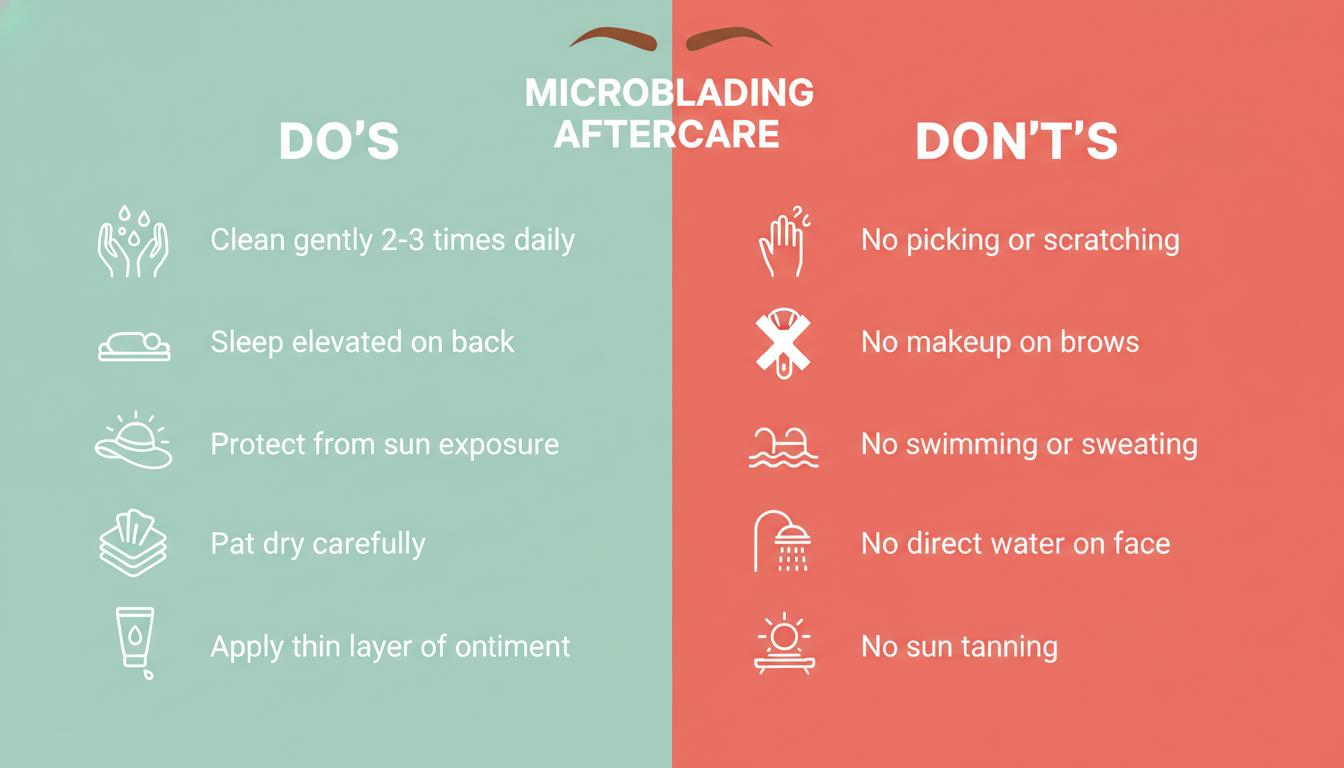
First Week Aftercare Do's
- Clean properly: Wash your brows 2-3 times daily with the approved cleanser. Use your fingertips (make sure they're clean!) and gently work the cleanser over your brows in a soft, circular motion. Rinse with cool water and pat dry with a clean tissue.
- Stay cool: Keep your face cool and avoid situations that make you sweat. Take lukewarm showers instead of hot ones, and keep your face out of the direct stream.
- Sleep smart: Sleep on your back with your head elevated on extra pillows. This helps reduce swelling and prevents you from rubbing your face into your pillow.
- Protect from sun: Wear a hat if you need to be outdoors. Sun exposure can fade your pigment and increase inflammation during healing.
- Follow instructions: Your technician at Symetrie Studio Spa will give you specific aftercare instructions. Follow them exactly! Don't mix and match advice from different sources.
First Week Aftercare Don'ts
- No water sports: Avoid swimming, hot tubs, saunas, and steam rooms completely. Chlorine and excessive moisture can pull pigment out of your skin.
- No sweating: Skip the gym, hot yoga, running, and any intense physical activity. Sweat contains salt, which can pull pigment from your brows.
- No makeup: Don't apply any makeup to your eyebrow area. Even if you think it's safe, just wait. Makeup can introduce bacteria and prevent proper healing.
- No touching: Don't touch your brows except when cleaning them. Your hands carry bacteria that can cause infection.
- No picking: This one is so important it deserves to be repeated. Do not pick, scratch, or rub your brows, no matter how itchy they get!
- No facials or treatments: Avoid any facial treatments, chemical peels, or laser procedures near your brows for at least 4 weeks.
- No sun tanning: Stay away from tanning beds and avoid prolonged sun exposure on your face.
Weeks 2-6 Aftercare Guidelines
Once the initial healing is complete (after about 2 weeks), you can gradually return to normal activities. However, you still need to be careful with your brows:
- Continue gentle cleansing: Use a mild, fragrance-free cleanser on your face, including your brow area.
- Return to exercise: You can resume working out, but try to keep sweat away from your brows when possible. Wipe your forehead frequently during workouts.
- Resume makeup carefully: You can start wearing makeup again, but be gentle when removing it from your brow area. Avoid rubbing harshly.
- Protect from sun: Start using SPF on your brows once they're fully healed (after 2 weeks). Sun exposure is the number one cause of premature fading.
- Avoid certain skincare: Keep retinols, glycolic acid, salicylic acid, and other strong active ingredients away from your brows. These can fade your pigment over time.
Products You Need for Optimal Microblading Healing
Having the right products makes a huge difference in your healing experience. Here's what you need:
Approved Cleansers
Your technician will typically provide or recommend a specific cleanser. At Symetrie Studio Spa, we give our clients detailed product recommendations during their appointment.
Look for gentle, fragrance-free cleansers with a neutral pH. Good options include:
- Cetaphil Gentle Skin Cleanser
- Neutrogena Ultra Gentle Daily Cleanser
- Baby shampoo (diluted)
Avoid cleansers with harsh chemicals, fragrances, or exfoliating ingredients. You want something that will clean your brows without stripping away natural oils or irritating healing skin.
Healing Ointments and Gels
If your technician recommends wet healing, you'll need an approved healing ointment. Common recommendations include:
- Aquaphor Healing Ointment (most popular)
- Aftercare+ Microblading Aftercare Balm
- Hustle Butter Deluxe
- A&D Ointment
Important: Only use ointments recommended by your technician. Some products can actually pull pigment out or cause infections. Apply only a very thin layer – less is more! You want your brows to look moist but not shiny or greasy.
What to Avoid (Products That Can Affect Pigment Retention)
These products can interfere with healing or fade your pigment:
During healing (first 2 weeks):
- Makeup of any kind on the brow area
- Makeup remover or cleansing oils
- Exfoliating scrubs or brushes
- Retinol or retinoid products
- Vitamin C serums
- Glycolic acid or AHA/BHA products
- Neosporin or triple antibiotic ointment
Long-term (after healing):
- Chemical exfoliants directly on brows
- Retinol treatments near brow area
- Chemical peels on the forehead
- Laser treatments near brows
- Self-tanners on the face (can oxidize pigment)
Book Into our Symetrie Studio Spa
Ready to take the next step? Book a consultation with a qualified permanent makeup artist.
Book Now
Ready to transform your brows with microblading?
Schedule a consultation with Symetrie Studio Spa to discuss your goals and learn more about what to expect. We'll assess your skin type, discuss your desired look, and create a personalized plan for beautiful, natural-looking brows that enhance your features.
Book Now