How to Choose Between HydraFacial, Microneedling, and Peels

How to Choose Between HydraFacial, Microneedling, and Peels


17 minute read · 08/05/2026 06:29:56

Choose a HydraFacial for hydration, clogged pores, and instant glow with zero downtime. Choose microneedling for acne scars, texture, and fine lines, since it rebuilds collagen. Choose a chemical peel for pigmentation, sun damage, and dullness. Your skin concern, downtime tolerance, and budget decide the winner.


KEY TAKEAWAYS

  1. HydraFacial works on the surface only, so it cannot fix acne scars or deep wrinkles.
  2. Microneedling reaches the dermis and needs 3 to 6 sessions before scars visibly soften.
  3. Chemical peels come in light, medium, and deep strengths, with downtime from 0 to 14 days.
  4. Louisiana humidity and sun exposure change which treatment your skin can safely handle.
  5. You can combine all three safely, but only in the right order and spacing.


You are staring at three service menus and feeling stuck. One promises glow. One promises collagen. One promises fresh, new skin. Every med spa says its option is best. So you close the tab and do nothing, again.


That hesitation is normal, and it usually comes from missing information, not indecision. After years of treating skin in South Louisiana, I see the same pattern. Clients pick a treatment based on a friend's result, not their own skin type. The right choice depends on which skin layer needs the work.

Recent Post

This guide breaks down the real difference between HydraFacial vs microneedling vs chemical peel treatments. You will see how each one works, what it costs, and how long recovery takes. Then you will match a treatment to your exact concern, from acne scars to melasma.


Quick Answer: Which Skin Treatment Is Right for You?

Here is the fastest way to decide.

  1. Pick a HydraFacial if you want clean, hydrated, glowing skin before an event. No downtime at all.
  2. Pick microneedling if you have acne scars, rough texture, large pores, or early fine lines.
  3. Pick a chemical peel if you have dark spots, melasma, sun damage, or a dull complexion.


Still unsure? Most first-time clients start with a HydraFacial. It is gentle, it reveals your true skin condition, and it costs the least.

However, the details matter more than the summary. Let us look at what each treatment actually does under the surface.


Understanding HydraFacial, Microneedling, and Chemical Peels

All three treatments improve your skin. Yet they work through completely different methods.

One cleans and hydrates. One creates controlled micro-injuries. One dissolves damaged skin cells. Understanding that difference protects your money and your face.


How Each Treatment Works

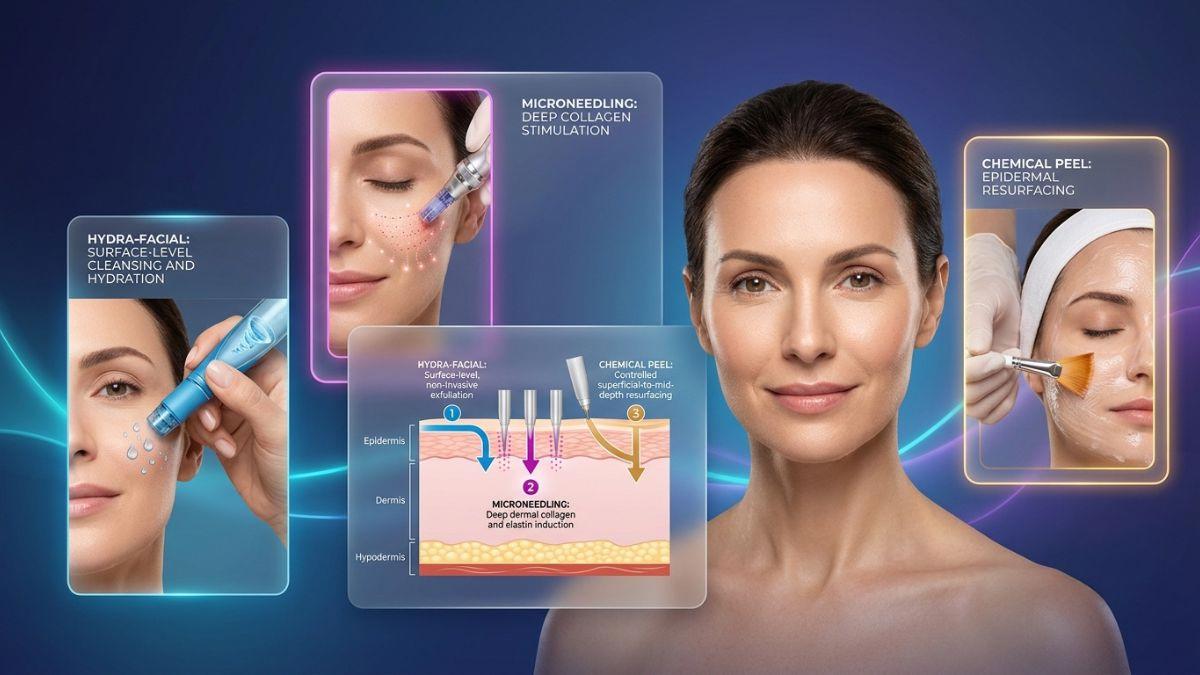
  1. HydraFacial: a patented device treatment that cleanses, exfoliates, extracts debris, and infuses serums in one session.
  2. Microneedling: a collagen induction treatment that uses fine needles to create tiny channels in the skin.
  3. Chemical peel: a professional acid solution that loosens dead skin cells so fresh skin can surface.


Think of it this way. A HydraFacial is a deep clean. Microneedling is a remodel. A peel is a resurface. Each method targets a different depth, which explains the different results.


Which Skin Layer Does Each Treatment Target?

Your skin has two main layers that matter here. The epidermis sits on top. The dermis sits below and holds your collagen.

  1. HydraFacial works on the epidermis only. It never breaks the skin barrier. That is why results feel immediate but fade quickly.
  2. Microneedling passes through the epidermis and reaches the dermis. Collagen and elastin live there. As a result, changes take weeks but last much longer.
  3. Chemical peels vary by strength. Light peels stay in the epidermis. Medium and deep peels reach into the dermis for stronger correction.


Depth drives results, and depth also drives downtime. Keep that trade-off in mind as we go deeper.


HydraFacial: Best for Hydration and Instant Glow

HydraFacial sits at the gentle end of the HydraFacial vs microneedling vs chemical peel comparison. It suits nearly everyone. Clients often book it before weddings, photo sessions, and holidays. There is a reason for that timing.


How HydraFacial Works

The device uses a spiral tip and gentle suction. Treatment follows three steps in about 30 to 45 minutes.

  1. Cleanse and peel. A mild acid blend lifts dead cells and softens the surface.
  2. Extract and hydrate. Painless suction pulls debris from pores while hyaluronic acid goes in.
  3. Fuse and protect. Antioxidants and peptides are applied to seal in moisture.


Your esthetician can add boosters for pigment, aging, or congestion. Therefore, the same machine treats several concerns.


Key Benefits

  1. Instant brightness you can see the same day
  2. Real extraction of blackheads without harsh squeezing
  3. Deep hydration, which helps dehydrated skin in air-conditioned offices
  4. Safe for all skin tones, including deeper Fitzpatrick types
  5. Zero recovery time, so you can wear makeup after


Most clients describe it as a cool, mildly ticklish massage. Pain is not a factor.


Who Is a Good Candidate?

You are a strong candidate if your skin looks tired, congested, or flat. It also suits sensitive skin that reacts to stronger treatments.

Teens with clogged pores do well. So do clients over 50 who want a safe maintenance option.

Pregnant and nursing clients often choose a HydraFacial too. Still, always confirm with your provider first.


Downtime and Limitations

Downtime is zero. Some clients notice mild redness for an hour. Now the honest part. A HydraFacial will not erase acne scars. It will not fade deep melasma. It will not build new collagen.

Results typically last four to six weeks. Monthly sessions keep skin steady. For structural change, you need something that reaches deeper.


Microneedling: Best for Collagen Stimulation and Skin Repair

Microneedling is the repair option in this comparison. It fixes damage instead of polishing it. This is the treatment I recommend most often for scarring. The results build slowly and then hold.


How Microneedling Works

A pen-style device moves sterile needles into the skin at a set depth. Depths usually range from 0.25 mm to 2.5 mm.

Those tiny channels trigger your natural wound-healing response. Your body answers with fresh collagen and elastin.


The FDA has authorized microneedling devices to improve the look of facial acne scars, facial wrinkles, and abdominal scars in patients aged 22 and older (U.S. Food and Drug Administration). That clearance matters, because at-home rollers carry no such backing. Numbing cream goes on 20 to 30 minutes before treatment. Most clients rate discomfort at 3 or 4 out of 10.


Key Benefits

  1. Softens rolling and boxcar acne scars over a series
  2. Smooths rough texture and refines enlarged pores
  3. Reduces early fine lines around eyes and mouth
  4. Improves firmness because new collagen keeps forming for months
  5. Boosts absorption of serums applied during the session


One client came to me after four years of hiding cheek scars under thick makeup. Six sessions later, she wears tinted sunscreen only.

Book Into our Symetrie Studio Spa

Ready to take the next step? Book a consultation with a qualified permanent makeup artist.

Book Now

Who Is a Good Candidate?

Choose microneedling if you have acne scars, uneven texture, or loose-feeling skin. It works well for clients in their 30s and 40s who want prevention.


Microneedling is also safer than many lasers for deeper skin tones. Lasers target pigment, while needles do not.

Skip it if you have active acne, cold sores, or an open infection. Certain medications also require a waiting period.


Downtime and Limitations

Expect redness like a moderate sunburn for 24 to 48 hours. Light flaking can follow on day three.

Makeup waits 24 hours. Sun exposure waits longer, which matters during Louisiana summers.


Microneedling needs patience. Plan on 3 to 6 sessions spaced four weeks apart. Full collagen results appear around month three.

Pigment issues, however, respond better to a different tool.


Chemical Peels: Best for Pigmentation and Skin Resurfacing

Chemical peels remain one of the most requested skin treatments in the country. Skin resurfacing procedures, which include chemical peels, reached over 3.7 million treatments in 2024 (Source: American Society of Plastic Surgeons, 2024 Procedural Statistics).


Popularity aside, peels earn their place for one reason. They handle discoloration better than anything else on this list.


How Chemical Peels Work

Your provider applies an acid solution to clean skin. Common acids include glycolic, salicylic, lactic, and trichloroacetic acid.


The solution loosens the bonds between dead skin cells. Those cells shed over the next several days.

Dermatologists use peels to treat some types of acne and conditions that discolor the skin (American Academy of Dermatology). Strength and timing control how deep the acid travels.


Types of Chemical Peels: Light, Medium, and Deep

  1. Light peel: a surface peel using mild acids, with little to no visible shedding.
  2. Medium peel: a stronger peel that reaches the upper dermis and causes noticeable flaking.
  3. Deep peel: an intensive peel performed in a medical setting, usually once in a lifetime.


Most med spa clients need light or medium peels. In our studio, a series of light peels often outperforms one aggressive treatment.

Gentle and repeated beats harsh and risky, especially for melanin-rich skin.


Key Benefits

  1. Fades sun spots, age spots, and post-acne dark marks
  2. Helps control melasma when paired with the right home care
  3. Clears congested pores using salicylic acid for oily skin
  4. Brightens dull tone within days
  5. Smooths fine surface lines


Peels also cost less per session than microneedling. That makes them budget-friendly for a series.


Who Is a Good Candidate?

You are a good fit if dark spots or uneven tone bother you most. Sun damage from years of outdoor life responds especially well.


Oily and acne-prone skin benefits from salicylic peels. Dry, dull skin does well with lactic peels.

Deeper skin tones need a careful approach. Wrong acid choice can trigger more pigment, not less. A patch test solves this.


Downtime and Limitations

Light peels cause redness for a day and mild flaking for two or three. Medium peels bring visible peeling for five to seven days.


You must avoid the sun during recovery. Broad-spectrum SPF 30 or higher becomes non-negotiable.

Peels do not build collagen the way microneedling does. They also cannot extract congestion the way a HydraFacial can. Seeing all three side by side makes the choice clearer.


HydraFacial vs. Microneedling vs. Chemical Peels: Side-by-Side Comparison
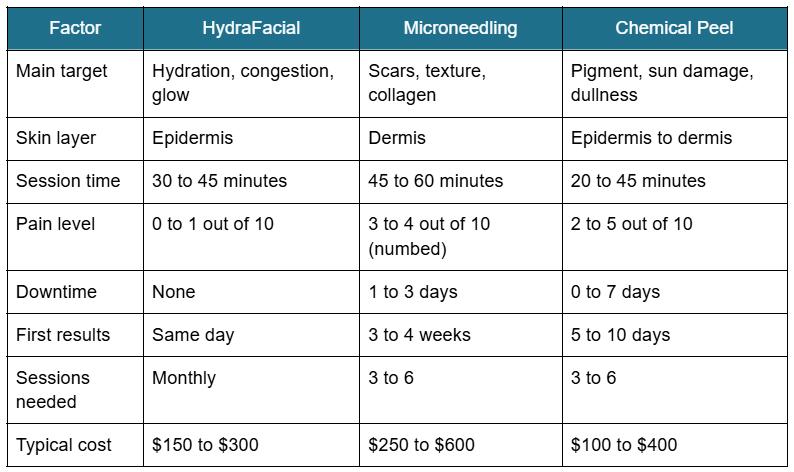


Prices reflect common national ranges and vary by provider and add-ons. You can review our current skin care services and treatment options for local pricing in Youngsville.


Best Skin Concerns Treated

HydraFacial owns hydration and clogged pores. Microneedling owns scars and texture. Peels own pigment.

Overlap exists. All three improve overall tone and glow.


Results Timeline and How Long Results Last

HydraFacial results appear immediately and last four to six weeks. Peel results surface after shedding and last two to three months with care.

Microneedling takes the longest and lasts the longest. Collagen keeps forming for up to six months after your final session.


Pain and Comfort Level

A HydraFacial feels like a facial massage. A light peel feels like tingling or mild heat for a few minutes.

Microneedling feels like a light sandpaper vibration after numbing. Discomfort ends when the session ends.


Downtime Comparison

Zero days for HydraFacial. One to three days for microneedling. Zero to seven days for peels, depending on strength.

Book accordingly. Never schedule a medium peel five days before a wedding.


Cost Comparison

Peels usually cost the least per session. HydraFacial sits in the middle. Microneedling costs the most.

Look at the full series price, not the single visit price. A series of three often includes a package rate.


Maintenance Requirements

HydraFacial: every four weeks. Microneedling: a series, then one session every six to twelve months. Peels: a series of three to six, then quarterly upkeep.

Which one fits your actual life? That answer depends on five personal factors.


How to Choose the Right Treatment for Your Skin

Skip the guesswork. Run your situation through these five filters.


Consider Your Skin Goals

Write down your top concern in one sentence. Not three concerns, one. Wanting glow points to HydraFacial. Wanting a smoother texture points to microneedling. Wanting even tone points to peels. Chasing everything at once wastes money and slows progress.


Consider Your Skin Type

Oily and congested skin loves salicylic peels and HydraFacial extractions. Dry and dehydrated skin prefers HydraFacial and lactic peels.

Sensitive or reactive skin should start gently. Rosacea-prone skin usually avoids aggressive peels entirely. Deeper skin tones need a provider experienced with melanin-rich skin. Ask directly about that experience before booking.


Consider Your Budget

A single session rarely changes stubborn concerns. Budget for the full series instead.

For example, three peels at $150 each beat one microneedling session at $450 for pigment goals. Match the spend to the concern.


Consider Your Downtime Tolerance

Do you meet clients daily? Do you teach, sell, or present?

If yes, HydraFacial and light peels fit your calendar. Save microneedling and medium peels for a long weekend.


Consider Your Lifestyle

South Louisiana brings heat, humidity, and heavy sun. Those conditions affect healing. Peels and microneedling both raise sun sensitivity. If you fish, golf, or work outdoors, schedule during cooler months.

Humidity also means many clients need hydration more than they realize. Dehydrated oily skin is very common here.


Now let us match treatments to specific concerns.

Book Into our Symetrie Studio Spa

Ready to take the next step? Book a consultation with a qualified permanent makeup artist.

Book Now

Which Treatment Is Best for Your Specific Skin Concern?

Acne Scars

  1. Microneedling wins clearly. It rebuilds collagen inside depressed scars and lifts them from below.
  2. Plan on 4 to 6 sessions. Add light peels between rounds to keep pores clear.
  3. HydraFacial cannot correct scars, though it keeps skin clean during your series.


Fine Lines and Wrinkles

Microneedling leads for early lines and a crepey texture. New collagen adds support under the skin.

Medium peels help surface lines around the mouth. Combining both, spaced properly, works better than either alone.

Deep folds need injectables, not resurfacing. Be honest with yourself about that distinction.


Hyperpigmentation and Melasma

Chemical peels lead here. Acids break up pigment clusters and speed cell turnover.

Melasma needs extra caution. Aggressive treatment can worsen it, so light peels plus daily SPF work best.

Research generally supports pairing peels with at-home pigment care for lasting results. Sunscreen is not optional.


Sun Damage

Peels again. Years of Gulf Coast sun leave rough patches and brown spots on the surface.

A series of medium-strength peels restores clarity. Microneedling then improves the underlying texture.


Enlarged Pores

Microneedling shrinks the look of pores by firming surrounding skin. Salicylic peels reduce oil that stretches pores.

HydraFacial clears the debris that makes pores look larger today. Many clients combine all three across a year.


Rosacea and Sensitive Skin

HydraFacial is the safest choice. It hydrates without heat, harsh acids, or trauma.

Avoid strong peels and aggressive needling during flare-ups. Gentle, consistent care calms reactive skin better than intensity.

Always tell your esthetician about rosacea before treatment.


Dull or Dehydrated Skin

HydraFacial delivers the fastest fix. Hydration plus exfoliation restores light reflection immediately.

Light lactic peels extend that brightness. This pairing suits anyone who wants glow without recovery time.


Speaking of pairing, can you actually combine these treatments?


Can You Combine These Treatments?

Yes, and smart combinations produce better results than any single treatment. Timing is what protects your skin.

Never stack two aggressive treatments in the same week.


HydraFacial and Microneedling

This pairing works well. A HydraFacial cleans and preps skin, so needles work on a clear surface.

Do them on separate days when possible. Many providers schedule the HydraFacial two weeks before microneedling.


HydraFacial and Chemical Peels

A HydraFacial with a peel booster is common and safe. The device already includes a mild acid step.

For a standalone medium peel, wait one to two weeks after your HydraFacial. Stacking exfoliation causes irritation.


Microneedling and Chemical Peels

This combination needs the most care. Both create trauma, and both raise sensitivity.

Space them at least two weeks apart. Peel first, heal fully, then needle.

Never apply a peel to skin still healing from needling. That path leads to pigment problems.


Recommended Treatment Schedule

Here is a simple 12-week plan for combination goals:

  1. Week 1: HydraFacial to clean and assess your skin.
  2. Week 3: Light chemical peel for tone and brightness.
  3. Week 6: Microneedling session one.
  4. Week 10: Microneedling session two.
  5. Week 12: HydraFacial to hydrate and maintain.


Your provider will adjust this based on your skin's response. A personalized plan always beats a template.


Conclusion

Choosing between HydraFacial vs microneedling vs chemical peel treatments comes down to depth and goal. HydraFacial cleans and hydrates the surface with no recovery time. Microneedling rebuilds collagen for scars and texture. Chemical peels resurface pigment and sun damage.


Your skin type, budget, and schedule narrow the choice further. Louisiana sun and humidity also affect what your skin can handle each season. At Symetrie Studio Spa in Youngsville, we assess all of these factors before recommending anything. Guessing costs more than a consultation ever will.


You do not have to figure this out alone. Book a free personalized skin consultation with our team at Symetrie Studio Spa, and we will build a plan matched to your skin and your goals. Prefer to ask a quick question first? Call or text the studio, and we will tell you honestly which treatment fits.


Frequently Asked Questions


Which is better for acne scars, microneedling or a chemical peel?

Microneedling works better for depressed acne scars. It reaches the dermis and builds collagen that lifts scar tissue from below. Chemical peels help flat, dark post-acne marks instead. Many clients combine both, spacing sessions at least two weeks apart for safe healing.


How often should I get a HydraFacial?

Every four weeks suits most skin types. That timing matches your natural skin cell turnover cycle. Some clients book every two weeks during acne flare-ups or before events. Because there is no downtime, frequent sessions stay safe for nearly all skin types and tones.


Is microneedling safe for dark skin tones?

Yes. Microneedling creates mechanical injury rather than heat, so pigment risk stays lower than with many lasers. That makes it a preferred option for deeper Fitzpatrick types. Choose a provider experienced with melanin-rich skin, and follow strict sun protection during your healing period.


How much do these treatments cost in Louisiana?

Expect roughly $150 to $300 for a HydraFacial, $250 to $600 for microneedling, and $100 to $400 for a chemical peel. Prices shift with add-ons and provider experience. Package pricing for a series usually lowers the per-session cost noticeably.


Can I get a facial treatment before a wedding or event?

Yes, with the right timing. Book a HydraFacial three to five days before your event for a safe glow. Schedule microneedling at least four weeks ahead. Medium peels need two to three weeks. Never try a new treatment within one week of an important day.


Which treatment gives the fastest visible results?

HydraFacial delivers same-day results, including brighter tone and cleaner pores. Chemical peels show results after shedding finishes, usually within five to ten days. Microneedling takes the longest, with visible change around three to four weeks. Speed and lasting depth tend to work in opposite directions.

Book Into our Symetrie Studio Spa

Ready to take the next step? Book a consultation with a qualified permanent makeup artist.

Book Now