How Long Does Botox Last?
Book Into our Symetrie Studio Spa
Ready to take the next step? Book a consultation with a qualified permanent makeup artist.
Book Now
What Factors Affect How Long Botox Lasts?
No two clients fade at the same rate. These seven factors explain most of the difference we see in the treatment room.
Metabolism
A faster metabolism can break down the toxin more quickly, which sometimes shortens results. Clients who exercise heavily or have a naturally high metabolic rate may notice movement return a few weeks earlier than average.
Dosage and Units Used
Higher doses tend to relax a muscle more fully, which can extend how long results last. Underdosing is one of the most common reasons results fade faster than expected.
Muscle Mass and Strength
Larger, stronger muscles fight back against the toxin sooner. This is why the masseter often needs more frequent dosing per session but still lasts longer overall than smaller facial muscles.
Treatment Area
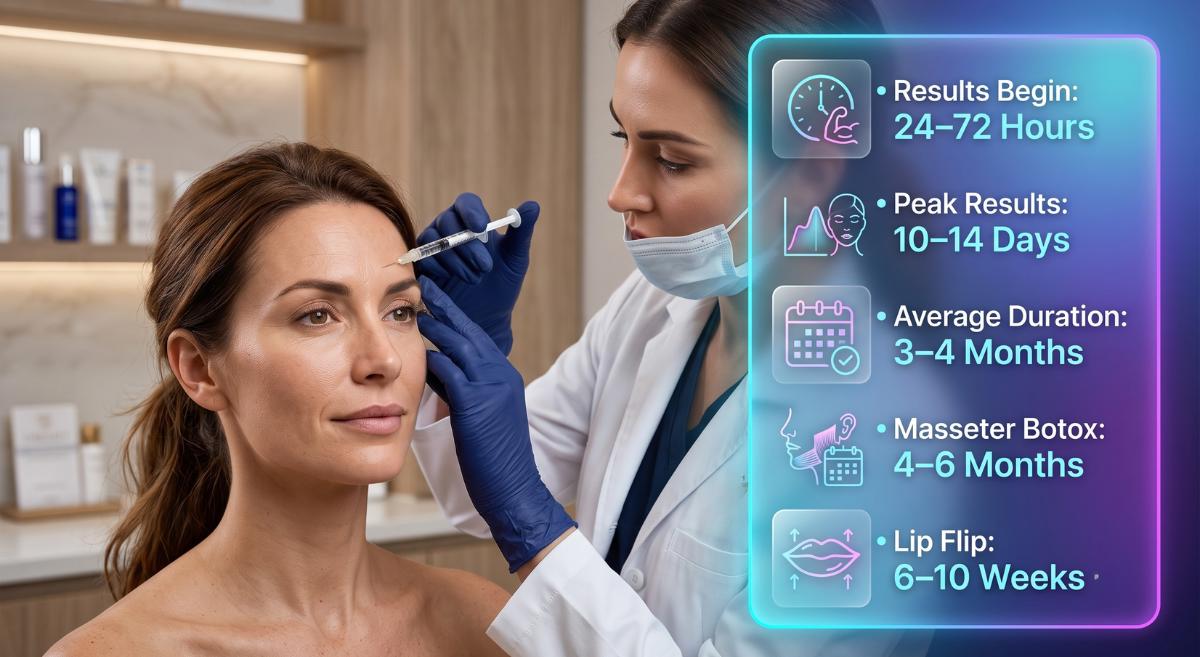
As shown above, different areas simply behave differently. Thin, high-movement muscles fade faster than large, low-movement ones, regardless of dose.
Age
Research suggests that older patients sometimes see slightly longer results, since muscle contraction naturally weakens with age. This is not guaranteed for every client, but it is a pattern we see often.
Lifestyle Habits
Frequent sun exposure, heavy alcohol use, and intense workouts can all speed up how fast your results fade. Protecting your skin and staying consistent with habits help preserve your results longer.
Injector Technique and Experience
Precise placement and accurate dosing make a real difference. An experienced injector targets the exact muscle fibers responsible for movement, which extends results compared to a generalized injection pattern.
Does Botox Last Longer With Regular Treatments?
Many of our long-term clients ask this exact question, and the answer is often yes.
How Repeated Treatments Affect Muscle Activity
Repeated Botox treatments can lead to mild, temporary muscle atrophy in the treated area. A smaller, weaker muscle produces less visible movement, which means the same dose can appear to last longer over time.
Why Longevity Improves for Some Patients
Research suggests that consistent treatment schedules train muscles to sit in a more relaxed resting state between appointments. Some long-term clients eventually stretch their appointments from every three months to every four or five.
How to Make Botox Last Longer
You cannot make Botox permanent, but you can protect your investment with a few simple habits.
• Stay consistent with your treatment timing.
• Limit sun and heat exposure on treated areas.
• Manage stress and jaw clenching where possible.
• Follow post-treatment care instructions closely.
• Support your skin with hydration and gentle skincare.
Stay Consistent With Treatment Timing
Booking your next session before movement fully returns helps maintain a steady muscle memory of relaxation. Waiting too long between appointments can reset the clock and shorten future results.
Avoid Excessive Sun and Heat Exposure
UV exposure and high heat can speed up how your body metabolizes the toxin. Wearing sunscreen daily and limiting time in saunas or hot yoga right after treatment helps your results hold.
Manage Stress and Muscle Overuse
Constant squinting, frowning, or jaw clenching from stress works the treated muscle harder. Reducing repetitive tension where you can gives the toxin less resistance to overcome.
Follow Post-Treatment Care Instructions
Avoid rubbing the treated area, lying flat, or exercising heavily for the first 24 hours. This helps the product settle into the correct muscle fibers instead of spreading to nearby ones.
Support Your Skin With Healthy Habits
Staying hydrated and using a gentle, consistent skincare routine support the skin above the treated muscle. Healthier skin shows subtle movement less easily as results begin to fade.
Signs It's Time for Your Next Botox Treatment
Most clients notice the same early signals before their results are fully gone.
Return of Muscle Movement
You may notice you can raise your eyebrows or frown slightly more than right after treatment. This is usually the first sign that results are starting to wear off.
Reappearance of Fine Lines
Static lines, the ones visible even when your face is at rest, often reappear before dynamic movement fully returns. This is a helpful early cue for scheduling your next visit.
How Often Should You Get Botox?
Most clients rebook every three to four months, though this varies by treatment area and individual metabolism. We recommend booking your next appointment as soon as you notice the first signs of movement returning, rather than waiting until lines are fully back.
Common Myths About Botox Longevity
A few persistent myths cause confusion about how long Botox really lasts. Here is what the evidence actually supports.
Myth: More Units Always Mean Longer-Lasting Results
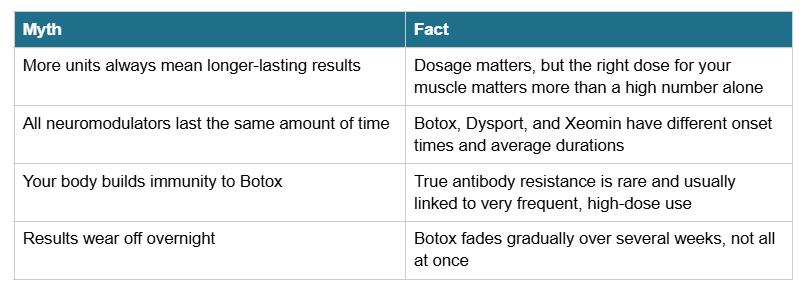
Piling on extra units without matching the muscle's actual strength does not guarantee longer results. It can even lead to an unnatural, frozen look. The right dose for your specific muscle matters more than the total number.
Myth: All Neuromodulators Last the Same Amount of Time
Botox, Dysport, and Xeomin are all neuromodulators, but they are not identical. Onset speed and average duration vary slightly between brands, so switching products can change your personal timeline.
Myth: Your Body Builds Immunity to Botox
True antibody resistance to Botox is uncommon. When it happens, it is usually linked to very frequent, high-dose treatment over years, not typical cosmetic scheduling every few months.
Myth: Results Wear Off Overnight
Botox does not have an expiration switch. Nerve signals return gradually, so your results fade in small, steady steps rather than disappearing in a single day.
Book Into our Symetrie Studio Spa
Ready to take the next step? Book a consultation with a qualified permanent makeup artist.
Book Now
Book Into our Symetrie Studio Spa
Ready to take the next step? Book a consultation with a qualified permanent makeup artist.
Book Now