Eyebrow Shape for Your Face: The Complete Guide

Eyebrow Shape for Your Face: The Complete Guide


24 minute read · 06/27/2026 07:12:12

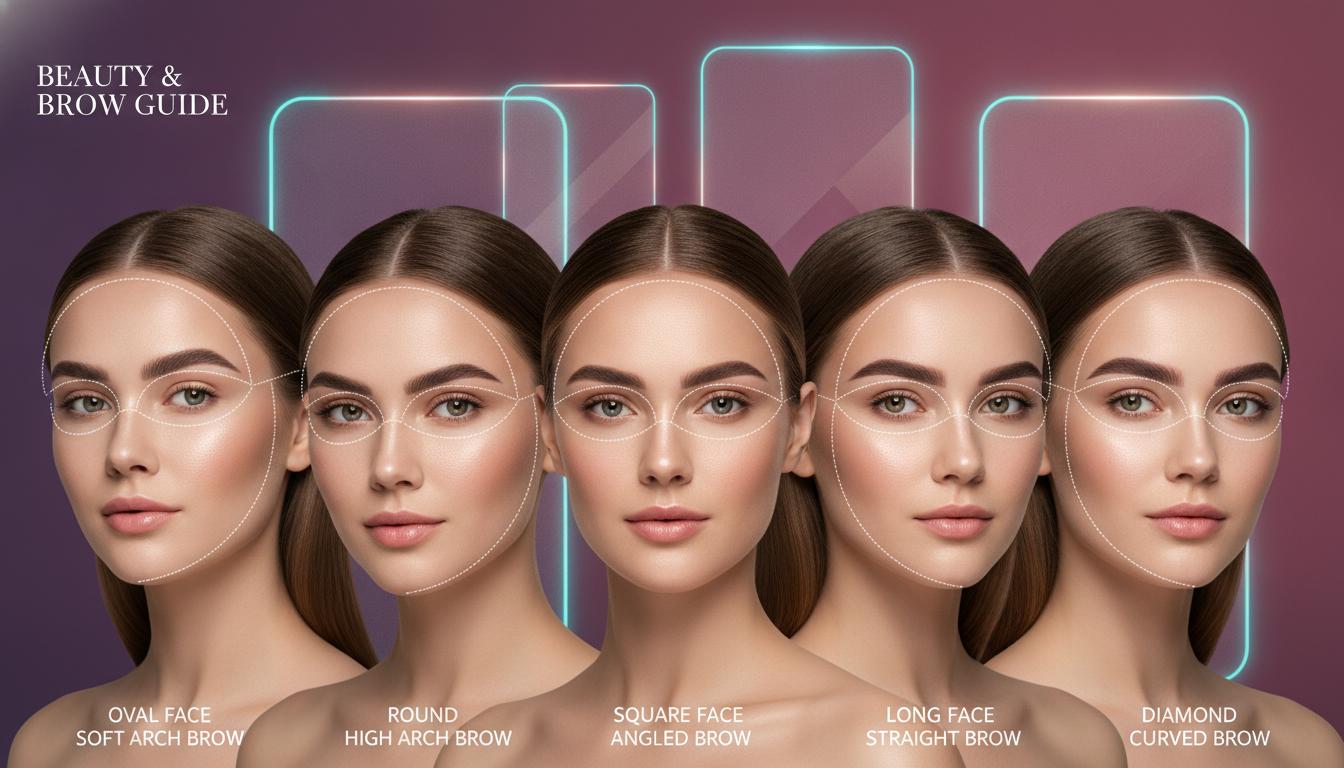
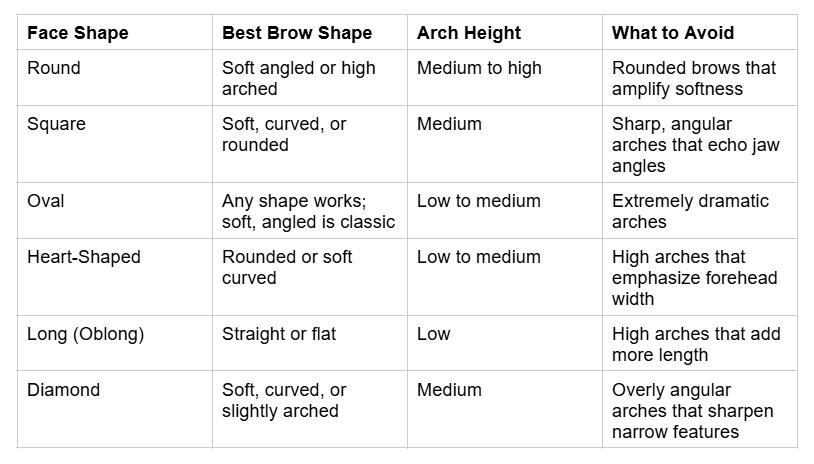
The right eyebrow shape for your face depends on your face shape, bone structure, and natural brow growth. Round faces benefit from high-arched brows. Square faces look softer with curved brows. Oval faces suit almost any shape. Heart-shaped faces need soft, rounded arches. Long faces look balanced with flat, straight brows. Diamond faces work best with curved, softly arched brows.


KEY TAKEAWAYS

  1. Your face shape is the single most important factor in choosing the right brow shape. Measure your forehead, cheekbones, jawline, and face length at home to identify it.
  2. Brow mapping uses facial landmarks and the golden ratio to find your brow start, arch peak, and tail end precisely. This prevents the most common shaping mistakes.
  3. Eye shape matters too. Hooded eyes need a higher arch to open the lid. Deep-set eyes benefit from a lighter, softer brow that does not add more shadow.
  4. Over-plucking the brow tail is the number one mistake that shortens the face visually. Always measure before you remove hair.
  5. Semi-permanent options like microblading, nano brows, and powder brows can lock in your ideal shape for one to three years, making daily grooming much easier.


Most people shape their brows without ever measuring their face. They follow a trend, copy a celebrity, or use whatever arch the threading salon produces.

Recent Post

The result? Brows that fight their face shape instead of working with it. You end up with a square jaw that looks heavier, a round face that looks rounder, or a long forehead that seems taller than ever.


At Symetrie Studio Spa, we see this every day. Clients come in with brows shaped from memory or habit, not from any real analysis of their features. The good news is that brow shape is one of the few things you can change to shift how your entire face reads in under five minutes.


This guide covers everything you need to find the ideal eyebrow shape for your face. You will learn how to measure your face shape at home, how brow mapping works, which brow styles flatter each face shape, and when professional shaping makes the biggest difference.


Why Does Eyebrow Shape Matter?


How Does Brow Shape Influence Facial Balance and Symmetry?

Eyebrows frame the eyes and anchor the upper face. Their shape, thickness, and arch height directly affect how your face reads at a glance.


A high arch draws the eye upward, making the face appear longer and more lifted. A flat, horizontal brow widens the upper face and adds a calm, youthful quality. According to a 2013 study published in Frontiers in Psychology, eyebrows contribute more to facial recognition and perceived attractiveness than almost any other facial feature, including the eyes themselves.


Symmetry plays an equally important role. Brows that differ in arch height or tail length pull attention immediately. Your brain is wired to notice asymmetry. Even small differences in brow angle can make one side of the face look higher or heavier than the other.


Why Does One Brow Shape Not Work for Every Face?

Consider two faces: one round, one long. A rounded brow on a round face amplifies the circular quality of the features. That same rounded brow on a long face adds width and balance. The brow shape has not changed. The face shape has.


Trends complicate this further. The thick, straight brow popularized in Korean beauty culture looks stunning on certain face shapes and completely wrong on others. The solution is not to avoid trends but to adapt them to your specific features. Understanding your face shape gives you the framework to do exactly that.


How Do You Identify Your Face Shape?

How to Measure Your Face at Home

You need a flexible tape measure or a piece of string and a ruler. Measure each of the following four areas and write the numbers down:

  1. Forehead width: Measure across the widest point, usually halfway between your hairline and eyebrows.
  2. Cheekbone width: Measure across from the outer corner of one eye to the other, at the widest point of your cheeks.
  3. Jawline width: Measure from the tip of your chin to the angle of your jaw, then double it.
  4. Face length: Measure from the center of your hairline straight down to the tip of your chin.

Compare these four numbers. Their proportions, not their raw size, tell you your face shape.


Round Face

Round face: a face shape where the width and length are nearly equal, with full cheeks and a soft, curved jawline with no sharp angles.


Your cheekbone measurement and face length are close in size. Your forehead and jaw are roughly the same width. The overall silhouette feels circular.


Square Face

Square face: a face shape where the forehead, cheekbones, and jaw are all similar in width, with a strong, angular jawline.


Your jaw measurement is just as wide as your forehead and cheekbones. The corners of your jaw create a noticeably sharp angle. Your face length and width are similar.


Oval Face

Oval face: a face shape where the face length is noticeably greater than the width, the forehead is slightly wider than the jaw, and the chin tapers gently.


The oval face is often described as the most versatile shape for brow styling because its balanced proportions allow almost any brow shape to work well.


Heart-Shaped Face

Heart-shaped face: a face shape with a wide forehead, high cheekbones, and a narrow, pointed chin.

Your forehead measurement is the widest number. Your jawline tapers to a defined point at the chin. This shape often comes with a widow's peak at the hairline.


Long (Oblong) Face

Long face: a face shape where the face length is significantly greater than the width, with a forehead, cheeks, and jaw that are all similar in width.


Your face length is your dominant measurement. The sides of your face run nearly parallel from forehead to jaw. You may notice a high forehead or a longer distance between nose and chin.


Diamond Face

Diamond face: a face shape with a narrow forehead, wide cheekbones, and a narrow, pointed chin. The cheekbones are the widest point.


Your cheekbone measurement is your largest number. Your forehead and jaw are both narrower than your cheeks. The combination creates a pointed effect at both the top and bottom of the face.


What Are the Main Eyebrow Shapes?

Soft Angled Eyebrows

Soft angled brows feature a gentle peak positioned slightly past the two-thirds mark of the brow, creating a gradual rise and a graceful tail. The angle is subtle rather than sharp.


This is one of the most universally flattering brow shapes because the soft peak adds definition without drama. It works across a wide range of face shapes and is one of the most requested styles in professional brow studios.


High Arched Eyebrows

High arched brows have a defined, elevated peak positioned close to the two-thirds point of the brow. The rise from the brow head to the arch is steep, and the tail descends clearly.


This shape creates a lifted, open-eyed effect and adds vertical length to the face. It reads as glamorous and polished. The risk is overdrawing: a sharp, overly high arch can look theatrical rather than refined.


Rounded Eyebrows

Rounded brows have a gentle, curved arc with no sharp peak. The transition from the brow head through the arch and into the tail moves in one smooth, circular motion.


Rounded brows soften strong features and add a youthful, approachable quality. They work especially well on square and angular face shapes. On round faces, they tend to amplify softness rather than create contrast.


Straight Eyebrows

Straight brows run horizontally with minimal arch. The line from brow head to tail is nearly flat, with just a slight curve at the tail end.


Straight brows have gained significant popularity through K-beauty trends because they create a clean, youthful appearance and visually shorten a long face. They also work beautifully on oval and oblong face shapes.


Soft Curved Eyebrows

Soft curved brows sit between a rounded brow and a soft angled brow. They have a gentle peak, but the overall shape is smooth and slightly curved rather than angled.


This is a forgiving, natural-looking shape that suits most face types. It mimics the natural brow growth pattern and is often the starting point for brow mapping adjustments.


How Do You Find Your Ideal Brow Shape with Brow Mapping?


What Is Brow Mapping?

Brow mapping is a technique that uses facial landmarks, precise measurements, and proportional guidelines to determine where your brows should start, peak, and end based on your unique features.


Professional brow artists use brow mapping before any shaping, microblading, or permanent makeup procedure. At home, you can use a straight makeup brush or a thin pencil to mark the three key points.

Book Into our Symetrie Studio Spa

Ready to take the next step? Book a consultation with a qualified permanent makeup artist.

Book Now

The Golden Ratio and Brow Mapping

Brow mapping draws from the concept of the golden ratio (approximately 1:1.618), a mathematical proportion that appears throughout naturally beautiful forms. Applied to the face, the golden ratio helps identify the ideal relationship between brow length, arch placement, and tail endpoint. Healthline has covered how the golden ratio applies to facial aesthetics, and brow artists use it as a proportional reference, not a rigid rule.


Step 1: Where Should Your Brows Start?

Hold a straight tool vertically along the side of your nose. The point where it crosses your brow bone is where your brow should begin. Brows that start too close together create a heavy, furrowed look. Brows that start too far apart widen the nose bridge visually.


Step 2: Finding the Highest Point of Your Arch

Angle the same tool from the outer edge of your nostril past the outer edge of your iris (the colored part of your eye). The point where it intersects your brow is the ideal arch peak. This position changes subtly depending on your eye placement and face shape.


Step 3: Identifying the Correct Brow Tail Endpoint

Angle the tool from your nostril to the outer corner of your eye and extend it past your brow. That intersection is where your brow tail should end. A tail that falls short makes the eye look smaller. A tail that extends too far can make the face appear droopy at the outer corners.


What Are Common Brow Mapping Mistakes to Avoid?

  1. Starting the brow too far in: this narrows the forehead and makes the nose look wider.
  2. Placing the arch too far toward the center: creates an angry or startled expression.
  3. Cutting the tail too short: this makes the eye appear smaller and the face shorter.
  4. Ignoring asymmetry: most faces are naturally asymmetrical. Brow mapping should aim for visual balance, not perfect mathematical mirroring.


What Is the Best Eyebrow Shape for Every Face Shape?

What Is the Best Brow Shape for Round Faces?

Round faces need contrast and vertical lift. A high-arched brow or a soft, angled brow with a peak positioned slightly past the iris creates the illusion of a longer, more oval face shape. The goal is to draw the eye up, not across.


Keep the brow tail slightly elongated. This horizontal extension at the outer corners widens the face in a flattering way without adding more circular softness. Avoid rounded brows entirely on a round face shape.


What Is the Best Brow Shape for Square Faces?

Square faces benefit from softness and curves. The strong, angular jawline is the dominant feature, and the goal of brow shaping is to introduce contrast by adding gentle curves higher on the face.


A soft, curved, or rounded brow with a medium arch draws attention to the eyes and softens the overall look. Keep the arch peak slightly forward, not at the two-thirds mark. This prevents any additional visual sharpness at the outer corners.


What Is the Best Brow Shape for Oval Faces?

Oval faces enjoy the most flexibility. Almost any eyebrow shape for your face works well when the proportions are balanced. The soft, angled brow at a medium arch height is the classic choice because it adds definition without altering the already-balanced proportions.


The one thing to avoid: going too extreme. A razor-thin brow or an exaggerated theatrical arch can pull attention away from the features and create a look that ages quickly.


What Is the Best Brow Shape for Heart-Shaped Faces?

Heart-shaped faces need brows that reduce forehead emphasis and soften the widest part of the face. A rounded brow or a softly curved brow with a low to medium arch accomplishes this by keeping the eye level calm and uncluttered.


Avoid high arches on a heart-shaped face. They sit directly within the widest forehead zone and make the forehead appear even broader. A gentler, rounder shape creates a visual bridge between the wide upper face and the narrow chin.


What Is the Best Brow Shape for Long Faces?

Long faces need horizontal width, not vertical height. A flat or straight brow with minimal arch interrupts the vertical line of the face and adds visual width across the center.


Keep the tail slightly lifted so the outer corners of the brow do not drag down. A slightly thicker brow body also helps here, as more mass in the middle of the face creates a centering effect. High arches do the opposite of what long faces need.


What Is the Best Brow Shape for Diamond Faces?

Diamond faces need brows that add width to the narrow forehead without sharpening the already prominent cheekbones. A softly curved brow with a gentle arch works best. The curve adds visual fullness to the upper third of the face.


Keep the brow head full and slightly extended toward the nose. This adds the horizontal presence the narrow forehead needs. Avoid angular or very high arches, which tend to echo the sharpness of the cheekbones.


How Does Eye Shape Affect Your Ideal Brow Shape?


What Brow Shape Works for Hooded Eyes?

Hooded eyes have a skin fold that partially or fully covers the eyelid crease. The brow shape above a hooded eye needs to work harder than usual because less lid space is visible.


A high arch with a clean, defined tail is the most effective choice. This creates the visual impression of a lifted lid by drawing the eye upward past the skin fold. Keep the underside of the brow clean. Heavy brow hairs close to the lid add weight in an area that already feels dense.


What Brow Shape Suits Almond Eyes?

Almond eyes are slightly elongated with a subtle upward tilt at the outer corners. They are the most symmetrical and versatile eye shape.


Almost any brow shape suits almond eyes. A soft, angled brow is the most popular choice because the gentle peak echoes the upward tilt of the eye without competing with it. Avoid a flat, straight brow if your eyes are close-set.


What Brow Shape Suits Round Eyes?

Round eyes are wide and circular, with a full, visible iris and very little angled elongation at the corners.

A soft, angled, or slightly arched brow introduces the elongation that round eyes lack. The arch point draws the eye outward and upward, creating the appearance of a more almond-like shape. Keep the tail extended.


What Brow Shape Works for Deep-Set Eyes?

Deep-set eyes sit further back in the skull, creating a natural shadow across the lid. Adding more arch and drama to the brow increases that shadow.


A softer, flatter brow with minimal arch and clean, neat grooming is the better choice here. This keeps the upper face open and reduces the heavy, recessed look that deep-set eyes can sometimes create. Avoid very thick, dark brows.


What Other Factors Influence Your Best Brow Shape?

Does Your Natural Brow Growth Pattern Matter?

Yes, significantly. Your natural brow hairs grow in a specific direction, at a specific angle, and at a specific density. Fighting against this pattern takes constant effort and often produces an unnatural result.


A skilled brow artist works with your natural growth pattern, not against it. This is one reason why professional brow mapping and techniques like microblading produce longer-lasting, more natural results than self-shaping alone.


How Does Brow Thickness and Density Affect Shape?

Thicker brows carry more visual weight and can balance larger, stronger features. Very fine, sparse brows can look lost on a face with bold features and work better with filling techniques.


Density also affects how well a shape holds. A sparse tail will not create a defined endpoint, no matter how carefully it is drawn. Brow-building techniques like powder brows or nano brows address this by adding pigment precisely where natural hair is missing.


How Does Forehead Size Affect Brow Placement?

A high forehead creates more space between the brow and the hairline. Placing brows too low in this zone makes the forehead look larger. A slightly higher brow position, closer to the hairline, reduces that gap.


A low forehead has the opposite problem. Brows placed too high compete with the hairline and create a crowded, heavy look above the eyes. The rule is to let the brow sit at its natural bone position and adjust the shape rather than the height.


How Do Age and Facial Changes Over Time Affect Brow Shape?

Faces change with age. Skin loses elasticity, brows descend slightly, and the natural brow tail often thins. The ideal brow shape at 25 may not serve you as well at 45.


A slightly higher arch position and a fuller body through the center of the brow can counteract the visual heaviness that comes from skin descending over time. Professional brow consultations every few years are a smart way to reassess and adjust your approach as your face evolves.


What Are the Best Tips for Shaping Your Brows at Home?


Why Should You Start Shaping from the Center, Not the Edges?

Most shaping mistakes happen at the edges because people remove hair from the tail or the underside before understanding where the brow should actually end. Starting from the center means you shape the arch and the overall line first.


Once the center shape is defined, you can remove stray hairs from the underside and beyond the tail with far less risk of over-removing. This method also makes it easier to match both brows to the same shape.

Book Into our Symetrie Studio Spa

Ready to take the next step? Book a consultation with a qualified permanent makeup artist.

Book Now

Why Should You Avoid Over-Plucking the Brow Tail?

A short brow tail is one of the most common problems in DIY brow shaping. It makes the eye look smaller, and the face look shorter. The brow tail should extend to the point where an imaginary line from your nostril past your outer eye corner meets your brow bone.


If your natural brow ends before this point, you need to fill, not trim. Tweezing past this point shortens the tail further and creates an imbalance that requires professional correction.


Should You Brush and Trim Brow Hairs Before Shaping?

Yes. Brush your brow hairs straight up with a spoolie brush. Any hairs that extend above the natural upper brow line are candidates for trimming with small scissors. Trim only one to two millimeters at a time.


Skipping this step causes a common mistake: plucking hairs at the top of the brow that were actually long hairs lying flat, not hairs outside the natural brow shape. Trim first, then shape.


What Are Common Mistakes That Distort Your Face Shape?

  1. Making the arch too sharp creates an angry or surprised expression.
  2. Removing too much hair from the inner brow, which widens the nose bridge.
  3. Shaping both brows at the same time, which leads to comparison errors.
  4. Shaping in poor lighting, which causes you to miss hairs or remove too many.
  5. Using a magnifying mirror, which distorts the overall face proportion and leads to over-plucking.


How Do You Keep Your Brows Symmetrical at Home?

Symmetry is relative, not absolute. Your two brows will never be perfectly identical because your face is not perfectly symmetrical. The goal is visual balance, not mathematical mirroring.


Work on both brows alternately, removing one or two hairs per side, then stepping back from the mirror to assess at full-face distance. Always check your brows from arm's length. What looks balanced close up can appear uneven when you see the whole face.


How Do You Maintain Your Eyebrow Shape?


How Often Should You Tweeze or Trim?

For most people, tweezing every one to two weeks is sufficient to maintain a clean shape. Trimming with scissors can be done every two to three weeks, depending on how quickly your brow hairs grow.


Resist the urge to tweeze stray hairs every day. Daily tweezing leads to incremental over-removal that compounds over months. Keep a photo of your ideal brow shape as a reference. Hold it next to your reflection before each session.


When Should You Book a Professional Brow Appointment?

Book a professional appointment any time your shape has gone significantly off track, when you want to establish a new shape you are not confident doing yourself, or when natural thinning makes DIY shaping difficult.


A professional brow artist at Symetrie Studio Spa will map your brows based on your face shape, bone structure, and natural growth pattern before making any changes. The result is a shape that works with your face rather than against it.


What Are the Professional and Semi-Permanent Brow Shaping Options?


What Is Brow Lamination?

Brow lamination is a non-permanent treatment that restructures brow hairs by straightening and setting them in an upward direction, creating a full, brushed-up effect that can last six to eight weeks.


It does not add pigment or change the actual shape of the brow through hair removal. Instead, it maximizes the appearance of existing hairs and creates a fuller, more defined look. Lamination works especially well for thin or flat brows.


What Is Microblading and How Does It Define Shape?

Microblading is a semi-permanent brow technique that uses a fine blade to deposit pigment into the skin in hair-like strokes, creating the appearance of individual brow hairs.


Results typically last twelve to eighteen months, depending on skin type and aftercare. Microblading is ideal for clients who want to correct sparse areas, add shape to over-tweezed brows, or simply eliminate the daily task of filling in brows. Learn more about permanent brow options at Symetrie Studio Spa.


What Are Nano Brows and Powder Brows?

Nano brows use a single digital needle to create even finer, more precise hair strokes than microblading. The result is highly realistic and works on a wider range of skin types, including oily skin that breaks down microblading pigment faster.


Powder brows (also called ombre brows) deposit pigment in a soft, shaded pattern that resembles the look of filled-in brows with powder or pencil. They last longer than hair-stroke techniques (two to three years on average) and produce a makeup-like finish that many clients prefer.


What Should You Expect During a Professional Brow Consultation?

A professional brow consultation typically begins with a review of your face shape, natural brow growth, and skin type. The artist will map your brows using measurements and facial landmarks before discussing style options.


Expect the consultation to take fifteen to thirty minutes for a shaping appointment and longer for a semi-permanent procedure. You should leave with a clear understanding of which shape works for your face and why, not just with a result that looks good in the mirror of the studio.


How Do You Choose the Right Brow Specialist?

Look for a specialist who performs brow mapping before any work rather than diving straight into shaping. A skilled artist will talk you through their proportional reasoning.


Review before-and-after portfolios carefully. Look for results on clients with your face shape and skin tone. Certifications in brow design, cosmetic tattooing, or facial mapping training are strong indicators of technical knowledge. The American Academy of Dermatology also advises clients to verify the hygiene standards and tool sterilization practices of any studio before any skin-contact procedure.


Conclusion

Finding the right eyebrow shape for your face is not about following trends. It is about understanding your face shape, your natural brow pattern, and the proportional principles that bring balance to your features. Whether you are shaping at home or sitting in a professional studio chair, the starting point is always the same: know your face before you touch a hair.


At Symetrie Studio Spa, we approach every brow appointment as a facial mapping consultation first. Our artists assess your bone structure, your natural growth pattern, and your long-term goals before recommending any shape, technique, or treatment. That process is what separates a brow that looks good in the studio from one that works with your face every single day.


If you are ready to stop guessing and start wearing brows that actually fit your face, we would love to help. Book your brow mapping and shaping consultation with us today, or explore our permanent brow services to see how microblading, nano brows, and powder brows can give you lasting shape without the daily effort.


Frequently Asked Questions


Can I have an eyebrow shape that flatters my face if my brows are very thin or sparse?

Yes. Sparse brows can still be shaped into a flattering style using filling techniques. Powder brows or nano brows add pigment precisely where natural hair is thin or missing, allowing your artist to build the ideal shape based on your face structure rather than your existing hair density.


Does face shape change over time, and do I need to adjust my brow shape?

Faces do change with age as skin loses elasticity and soft tissue shifts. Brows that worked beautifully at 30 may appear heavier or lower-set by 50. Reassessing your brow shape every few years, ideally with a professional, is a practical way to keep your look current and flattering.


How long does brow mapping take during a professional appointment?

Brow mapping typically takes ten to twenty minutes at the start of an appointment. For semi-permanent procedures like microblading or nano brows, the mapping and design phase may take up to thirty minutes. This time investment is essential. A rushed mapping leads to corrections later.


What is the difference between microblading and powder brows in terms of shape?

Both techniques can achieve the same overall brow shape, but they produce different textures. Microblading creates individual hair strokes that mimic natural brow hairs. Powder brows create a soft, shaded fill similar to a pencil or powder product. The shape itself is determined by brow mapping, not by the technique.


Is professional brow shaping worth it if I can shape my brows at home?

Professional shaping is worth it at a minimum once to establish a shape customized to your face. From that foundation, many people maintain at home between appointments. Without an established baseline, DIY shaping tends to drift incrementally in the wrong direction over time.


Can brow shape make my nose look smaller, or my eyes look wider?

Yes. The position of the brow head directly influences how wide the nose bridge appears. Brows that start too close together narrow the bridge visually and add perceived width to the nose. A wider brow start opens the inter-brow space and makes the nose look slimmer. A lifted arch position also makes eyes appear larger and more open.

Book Into our Symetrie Studio Spa

Ready to take the next step? Book a consultation with a qualified permanent makeup artist.

Book Now