Aging Eyebrows: Causes, Fixes, and What Actually Works

Aging Eyebrows: Causes, Fixes, and What Actually Works


19 minute read · 06/29/2026 04:31:00

Aging eyebrows thin because follicle activity slows, estrogen levels drop, and years of over-plucking cause cumulative damage. Many women over 40 see noticeable thinning, loss of the tail end, or fading definition. Some thinning can be reversed with serums and nutrition. Permanent loss responds best to professional treatments like powder brows or nano brows.


KEY TAKEAWAYS
• Eyebrow thinning after 40 is mainly driven by hormonal changes and declining estrogen, not just age alone.
• Over-plucking over many years can permanently damage follicles and prevent regrowth, even with treatments.
• Brow growth serums with peptides or bimatoprost (Latisse) can help, but results take 3 to 6 months of consistent use.
• Powder brows and nano brows are the most effective semi-permanent fixes for mature skin because they work with skin texture, not against it.
• If thinning is sudden or paired with fatigue or hair loss elsewhere, see a doctor first to rule out thyroid or autoimmune conditions.


You looked in the mirror one morning and noticed your eyebrows had all but disappeared. Maybe it happened gradually, one thin patch at a time. Or maybe you compared a recent photo to one from ten years ago and barely recognized your own face. Either way, you are not imagining it, and you are far from alone.

Recent Post

Eyebrow thinning affects most women in their 40s, 50s, and 60s, and the causes run deeper than simply getting older. Hormones, follicle health, past grooming habits, and even nutrition all play a role. The good news is that modern solutions, both natural and professional, have never been better at giving brows their definition back.


In this guide, you will learn exactly why aging eyebrows thin, when the problem is reversible, what products and treatments actually work, and how to choose the right fix for your specific situation. By the end, you will have a clear path forward.


What Happens to Eyebrows as You Age?


How Does the Hair Growth Cycle Slow Over Time?

Every brow hair goes through three phases: anagen (active growth), catagen (transition), and telogen (resting and shedding). In younger skin, the anagen phase lasts longer, so hairs grow thicker and stay in place longer.


With age, the anagen phase shortens. Hair spends less time actively growing and more time resting. The result is thinner, sparser brows that shed faster than they regrow. According to research published by the American Academy of Dermatology, this slowdown accelerates after age 40 in women.


Why Do Eyebrows Become Thinner and Less Defined?

Eyebrow thinning with age is driven by a combination of slower follicle activity, reduced skin density, and hormonal shifts. The skin around the brows also loses collagen and elasticity over time, which changes how individual hairs sit and appear.


Pigmentation also fades. Even hairs that are still present may appear lighter and less visible. This creates the illusion of even greater thinning when the actual hair count has only dropped modestly.


What Are the Common Signs of Aging Eyebrows?

Recognizing the pattern early helps you act sooner. The most common signs include:

  1. Thinning or complete loss of the outer third of the brow
  2. Shorter hair that no longer reach their previous length
  3. Patchiness or gaps, especially in the arch and tail
  4. Lighter color or ashy tone where the brow used to be defined
  5. Brows that no longer hold their shape without makeup


These signs tend to worsen faster in women going through perimenopause or menopause, which points to the role hormones play.


Why Do Eyebrows Thin With Age?


How Do Follicle Activity and Genetics Affect Brow Thickness?

Each brow follicle has a genetically determined lifespan. Some people are simply born with fewer, finer follicles. Over time, those follicles become less efficient at producing thick, pigmented hair. Genetics also determines where thinning starts first, often at the tail end of the brow.


You cannot change your genetic blueprint, but you can support what follicles you still have. That is where targeted care makes a real difference.


How Does Menopause and Declining Estrogen Affect Brow Growth?

Menopause is the single biggest driver of eyebrow thinning in women over 40. Estrogen supports hair follicle function and extends the growth phase. As estrogen levels fall during perimenopause and menopause, follicles respond by producing thinner, slower-growing hairs.

At the same time, the relative increase in androgens after menopause can miniaturize follicles, the same process that causes male-pattern hair loss. For brows, this often shows up as progressive thinning starting at the outer corners and tail.


Do years of Over-Plucking, Waxing, and Threading Cause Permanent Damage?

This is one of the most underestimated causes of thinning brows. Repeated hair removal, especially plucking, creates micro-trauma around the follicle. Over time, scar tissue can form, and chronically damaged follicles stop producing hair entirely.


If you over-plucked heavily in the 1990s or early 2000s, some of that follicle damage may be permanent. The brow style trends of those decades, thin arched brows with almost no tail, left many women with regrowth problems they are still dealing with today.


What Nutritional Deficiencies Affect Brow Growth?

Hair follicles are among the fastest-cycling cells in the body. They need a steady supply of nutrients to stay active. Deficiencies in the following are commonly linked to brow and hair thinning:


  1. Biotin (Vitamin B7): supports keratin production in hair strands
  2. Iron: low ferritin levels are directly linked to hair follicle shedding
  3. Zinc: supports follicle repair and cell division
  4. Vitamin D: low levels are associated with follicle dormancy
  5. Protein: Amino acids are the building blocks of every hair strand


A basic blood panel from your doctor can identify deficiencies that may be making your brow thinning worse.


Can Thyroid Disorders and Autoimmune Conditions Cause Brow Loss?

Thyroid dysfunction, both hypothyroidism and hyperthyroidism, is one of the most common medical causes of eyebrow thinning. The outer third of the brow, called the lateral third, is particularly vulnerable to thyroid-related loss. This is often called Hertoghe's sign.


Autoimmune conditions like alopecia areata can also cause patchy or total brow loss. If your thinning is sudden, asymmetrical, or paired with other symptoms, a medical evaluation is the right first step.


What Other Factors Like Stress and medications, contribute to thinning?

Chronic stress elevates cortisol, which disrupts the hair growth cycle and pushes follicles into early rest phases. The brows are often among the first places stress-related shedding appears.


Certain medications, including beta-blockers, anticoagulants, retinoids, and some antidepressants, list hair and brow thinning as known side effects. If your thinning started after a medication change, discuss it with your prescribing doctor.


Next, the question many women ask most: Can thinning brows actually grow back?


Can Thinning Eyebrows Grow Back?


When Is Eyebrow Regrowth Possible?

If thinning is caused by a correctable factor, such as a nutritional deficiency, a thyroid condition that gets treated, stress that is managed, or a medication that is adjusted, regrowth is often possible. Follicles that are still alive but dormant can be reactivated with the right support.


Women in early perimenopause sometimes see partial regrowth after addressing nutrition and reducing trauma to the brow area. Full restoration to your 25-year-old brows is rarely realistic through natural means alone.


When May Follicle Damage Be Permanent?

Follicle damage from decades of over-plucking or waxing can be permanent if scar tissue has replaced the follicle entirely. A dermatologist can assess whether follicles are still present using dermoscopy. If no follicles remain in a specific area, natural regrowth is not possible, and a semi-permanent or permanent solution becomes the most realistic path.

Book Into our Symetrie Studio Spa

Ready to take the next step? Book a consultation with a qualified permanent makeup artist.

Book Now

How Long Does It Take for Eyebrows to Grow Back?

For follicles that are still active, the regrowth timeline is:


  1. Weeks 1 to 4: dormant follicles begin to reactivate with consistent nutrition and serum use
  2. Months 2 to 3: fine, short hairs start to appear in previously bare areas
  3. Months 4 to 6: visible improvement in density and length with consistent treatment
  4. Month 6 onward: maximum natural regrowth is usually achieved by this point


If you see no change after six months of consistent effort, the remaining options are clinical or cosmetic.


When Should You See a Doctor About Eyebrow Thinning?


What Are the Signs of an Underlying Medical Condition?

See a doctor if your eyebrow thinning is accompanied by any of the following:

  1. Fatigue, cold sensitivity, or unexplained weight gain (thyroid symptoms)
  2. Hair thinning on your scalp, lashes, or body simultaneously
  3. Patchy or asymmetrical loss that appeared suddenly
  4. Skin changes, itching, or inflammation near the brow area
  5. Recent significant weight loss or dietary restriction


What Will a Dermatologist Assess?

A dermatologist will typically examine the brow under dermoscopy to evaluate follicle density and health. They may order a blood panel including thyroid function (TSH, T3, T4), complete blood count, ferritin, zinc, and vitamin D levels.


What Are the Treatment Options for Medically Caused Thinning?

Depending on the diagnosis, medical treatments may include:

  1. Thyroid hormone replacement for hypothyroidism
  2. Iron or vitamin supplementation for confirmed deficiencies
  3. Topical corticosteroids or immunotherapy for alopecia areata
  4. Prescription of minoxidil or bimatoprost for hormone-related follicle miniaturization


Addressing the root cause is always the starting point. Cosmetic solutions work best as a second layer, not a replacement for medical care.


How Can You Fix and Restore Aging Eyebrows Naturally?


How Can You Protect the Existing Brow Hairs You Still Have?

The most important thing you can do right now is stop removing hairs that are still growing. Give your brows at least three to four months without plucking, waxing, or threading to allow dormant follicles a chance to reactivate. Use a brow pencil or powder to fill gaps during this period instead.


Avoid aggressive rubbing when removing eye makeup. Use a gentle oil-based remover and pat, rather than wipe. Physical friction around the brow area contributes to cumulative follicle damage over time.


Which Key Nutrients Support Brow Growth?

Nutrition is the foundation of follicle health. Focus on these consistently:

  1. Biotin: found in eggs, nuts, and seeds; also available as a supplement (2,500 to 5,000 mcg daily)
  2. Iron-rich foods: lean red meat, spinach, lentils, and fortified cereals
  3. Omega-3 fatty acids: salmon, walnuts, and flaxseed support skin and follicle health
  4. Zinc: shellfish, pumpkin seeds, and legumes
  5. Vitamin D: sunlight exposure plus supplementation, especially in winter months


Which Habits Make Eyebrow Thinning Worse?

Several everyday habits accelerate brow loss without you realizing it. Avoiding them is just as important as adding positive routines.

  1. Sleeping face-down on a rough pillowcase, which creates friction against the brow area
  2. Using heavy waterproof eye makeup that requires aggressive removal
  3. Applying strong retinoids or exfoliants directly near the brow zone
  4. Chronic under-eating or crash dieting, which starves follicles of nutrients


How Do You Build a Consistent Brow Care Routine?

A simple daily routine makes a significant difference over time. In the morning, apply a lightweight brow serum or castor oil to clean brows. Fill gaps with a brow pencil or powder that matches your natural tone. In the evening, remove all makeup gently and reapply serum before bed.

Consistency over three to six months is what separates women who see results from those who give up too early.


What Do Brow Growth Serums and Prescription Treatments Offer?


Which Over-the-Counter Brow Growth Serums Actually Work?

The most effective OTC brow serums contain peptides, biotin, and growth factors that support the anagen (active growth) phase. Look for ingredients like:


  1. Keratinocyte growth factor (KGF) peptides
  2. Panthenol (pro-vitamin B5)
  3. Adenosine, which prolongs the growth phase
  4. Castor oil as a base for conditioning and circulation


Brands like Vegamour, RapidBrow, and RevitaBrow are widely reviewed and have demonstrated results in user studies. Expect to wait 8 to 12 weeks before visible improvement.


What Is Bimatoprost (Latisse) and Does It Work for Eyebrows?

Bimatoprost, sold under the brand name Latisse, is the only FDA-approved medication for eyelash growth. Doctors commonly prescribe it off-label for eyebrow regrowth. It works by extending the anagen phase of hair follicles and has shown consistent results in clinical settings.


According to a study published in the Journal of the American Academy of Dermatology, bimatoprost applied to the brow areas showed measurable improvements in hair density and thickness over 16 weeks. It requires a prescription and should be used under medical supervision due to potential side effects, including skin darkening around the application site.


Does Topical Minoxidil Help With Eyebrow Regrowth?

Minoxidil, the active ingredient in Rogaine, is widely used off-label for brow regrowth, particularly in women with hormone-related thinning. It works by increasing blood flow to follicles and extending the growth phase.


Research from the American Academy of Dermatology supports its use for eyebrow regrowth, though studies specific to brows are smaller than those for scalp hair. Concentrations of 2% to 5% solution are most commonly used. Apply sparingly to avoid transfer to other facial areas.


What Are Realistic Results and Timelines for These Treatments?

Be honest with yourself about expectations:

  1. OTC serums: mild to moderate improvement in 8 to 16 weeks
  2. Bimatoprost (Latisse): moderate improvement in 12 to 20 weeks with a prescription
  3. Minoxidil 2% to 5%: moderate improvement in 12 to 24 weeks
  4. All options require continuous use; results reverse when you stop


For women with significant follicle loss, serums and prescriptions will not restore full brows. That is where semi-permanent solutions take over.


What Are the Best Professional and Semi-Permanent Solutions?


For aging eyebrows with significant thinning, semi-permanent makeup is the most reliable solution for lasting definition. The right treatment depends on your skin type, existing hair, and desired look. Here is how each option compares.


Is Microblading a Good Option for Aging Eyebrows?

Microblading uses a fine blade to deposit pigment in shallow strokes that mimic natural brow hairs. It works beautifully on younger, firm skin. However, on mature skin with reduced elasticity, the strokes can spread or blur over time, reducing crisp definition.


Microblading is not the top recommendation for women over 50 unless their skin is still relatively firm. An experienced artist will assess your skin before recommending it. Learn more about the full range of options at Symetrie Studio Spa's permanent brows.


Why Do Powder Brows Work So Well for Mature Skin?

Powder brows create a soft, airbrushed finish that looks natural and works exceptionally well on mature or textured skin. Rather than individual strokes, this technique deposits pigment in a gradient pattern, denser at the tail and lighter at the front.


Because the technique does not rely on crisp hairline strokes, it holds up far better on skin with reduced firmness. Results last two to three years, and the healed appearance is soft and makeup-like rather than tattooed. Powder brows are consistently the top recommendation for women over 45.


What Are Nano Brows and How Do They Differ From Microblading?

Nano brows use a single electrically powered needle rather than a blade, which creates finer, more precise hair strokes with less trauma to the skin. This technique is gentler and holds definition better on mature skin than traditional microblading.


If you want a natural, hair-by-hair result and your skin still has reasonable firmness, nano brows are an excellent choice. The results last 18 to 24 months and heal with exceptional detail.

Book Into our Symetrie Studio Spa

Ready to take the next step? Book a consultation with a qualified permanent makeup artist.

Book Now

When Are Combination Brows the Right Choice?

Combination brows blend nano or microblading strokes at the front with powder shading through the body and tail. This creates the fullest, most defined look while keeping the inner brow natural.

For women with very sparse brows or flat, undefined shape, combination brows deliver the most dramatic improvement. The technique also offers the best longevity, lasting two to three years on most skin types.


When Should You Consider an Eyebrow Hair Transplant?

An eyebrow hair transplant is a surgical procedure where individual follicles are taken from the scalp and implanted in the brow area. It is a permanent solution best suited for women with:

  1. Total or near-total brow loss from alopecia, scarring, or injury
  2. No response to serums, medications, or topical treatments
  3. A preference for a truly permanent result over semi-permanent options

The procedure requires significant downtime and costs significantly more than PMU options. Most women with age-related thinning find semi-permanent makeup a more practical and equally effective path.


How Do You Choose the Right Treatment for Your Needs?

Here is a quick comparison to help you decide:
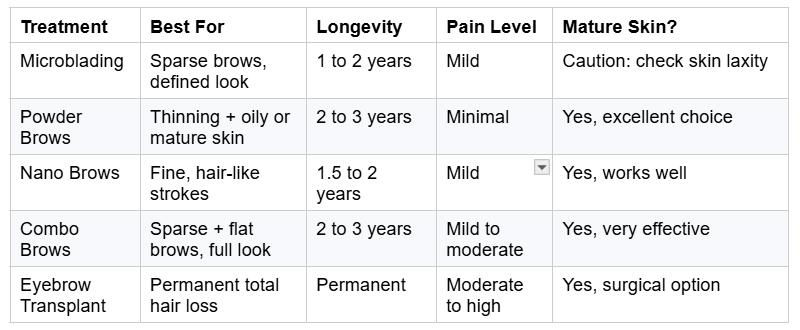


At Symetrie Studio Spa, every consultation starts with a thorough skin and brow assessment so you get the treatment that is actually right for your skin, not just a popular trend.


How Can You Shape Aging Eyebrows for a More Youthful Look?


How Do You Choose the Right Brow Thickness and Arch?

As brows thin with age, the instinct is often to draw them on thinner to mimic what is left. This backfires. A slightly fuller, softer shape actually lifts the face and opens the eye area.

The rule of thumb for mature brows: aim for a thickness that is about one and a half times your natural remaining brow width. A gentle, not dramatic, arch just past the outer edge of your iris frames the eye without looking harsh.


What Mistakes Make Aging Eyebrows Look Thinner?

Avoid these common brow mistakes that add years instead of erasing them:

  1. Drawing a single thin line with a brow pencil instead of using feathering strokes
  2. Using a shade that is too dark or too cool-toned for your current hair color
  3. Continuing to pluck or wax any hairs that are still growing
  4. Filling brows in a solid block of color rather than in hair-like strokes
  5. Ignoring the inner brow, which grounds the face and keeps the look natural


What Tips Help Create Fuller, more defined brows day-to-day?

You can create the illusion of fuller brows in minutes with the right technique:

  1. Use a spoolie first to brush hairs upward, which creates instant volume
  2. Apply brow gel with fibers, like Benefit's Gimme Brow or Maybelline's Brow Fast Filler, for texture
  3. Use a flat angled brush with brow powder to fill in the tail and arch with soft strokes
  4. Outline the lower edge of the brow lightly with a concealer one shade lighter than your skin tone to sharpen definition
  5. Set with a clear brow gel to hold shape through the day

Once you have the technique down, the whole process takes under three minutes. Semi-permanent options can eliminate it entirely.


Conclusion


Aging eyebrows thin for real, specific reasons, from falling estrogen levels and follicle slowdown to past over-plucking and nutrient gaps. Understanding the cause is the first step to choosing the right fix. For some women, targeted nutrition and a quality serum restore meaningful density. For others, the follicle loss is too significant for natural remedies alone to address.


The semi-permanent solutions available today are nothing like the harsh, tattooed brows of the past. Powder brows, nano brows, and combination brows are designed to look soft, natural, and age-appropriate. They work with mature skin rather than against it, and they remove the daily effort of filling brows in from scratch. For many of our clients, the change in confidence is immediate.


At Symetrie Studio Spa in Youngsville, LA, we specialize in brow restoration for mature skin. Whether you are exploring powder brows, nano brows, or combination brows, we will help you find the right treatment for your skin and goals. Book your consultation today and walk out with brows that look like yours again, just better.


Frequently Asked Questions


At what age do eyebrows typically start thinning?

Most women notice eyebrow thinning starting in their late 30s to mid-40s, coinciding with perimenopause and declining estrogen. Significant loss, especially in the outer third, becomes more common after 50. The timeline varies based on genetics, past grooming habits, and overall health.


Can castor oil really regrow eyebrows?

Castor oil has not been proven in clinical trials to regrow eyebrows. However, it contains ricinoleic acid, which may support scalp and follicle health by improving circulation. Many women find it helpful as a conditioning treatment. It is best used as a complement to proven serums, not as a standalone solution.


Does microblading work on older skin?

Microblading can work on mature skin, but it is not always the best choice. Skin with reduced elasticity does not hold hair strokes as crisply, and results may fade faster. Powder brows or nano brows generally perform better on women over 45 and produce more natural-looking results over time.


How long do powder brows last on mature skin?

Powder brows typically last two to three years on mature skin, making them one of the longest-lasting semi-permanent options. A touch-up at the 12 to 18 month mark keeps the color fresh and the shape defined. Lighter-complexioned skin may fade faster than deeper tones.


Is eyebrow thinning a sign of thyroid disease?

Loss of the outer third of the eyebrow is a recognized clinical sign of hypothyroidism. If your thinning is concentrated at the tail end and accompanied by fatigue, weight gain, or cold sensitivity, ask your doctor for a thyroid panel. Treating the thyroid condition often leads to partial brow regrowth.


Can I combine a brow serum with semi-permanent makeup?

Yes, and many specialists recommend it. Using a growth serum supports the natural hairs you still have, while powder brows or nano brows fill in areas where follicles no longer produce hair. The two approaches work together, not against each other. Wait until your brows are fully healed from PMU, usually 4 to 6 weeks, before restarting serum use.

Book Into our Symetrie Studio Spa

Ready to take the next step? Book a consultation with a qualified permanent makeup artist.

Book Now